
California
HJ Res 210 California Vessel Emissions: House Moves to Overturn EPA Rule
Content Files PDF XML TEXT Metadata download Descriptive Metadata (MODS) Preservation Metadata (PREMIS) All Content and Metadata files, including granules ZIP

About HJ Res 210 California Vessel Emissions
Last updated:
Key points
- House lawmakers passed H.J. Res. 210 to nullify an EPA decision granting California regulatory control over docked ocean vessels.
- Critics warn that California’s shore power rules increase supply chain costs and disrupt freight movement across the United States.
- The resolution relies on the Congressional Review Act to restore federal oversight over national and international maritime commerce.
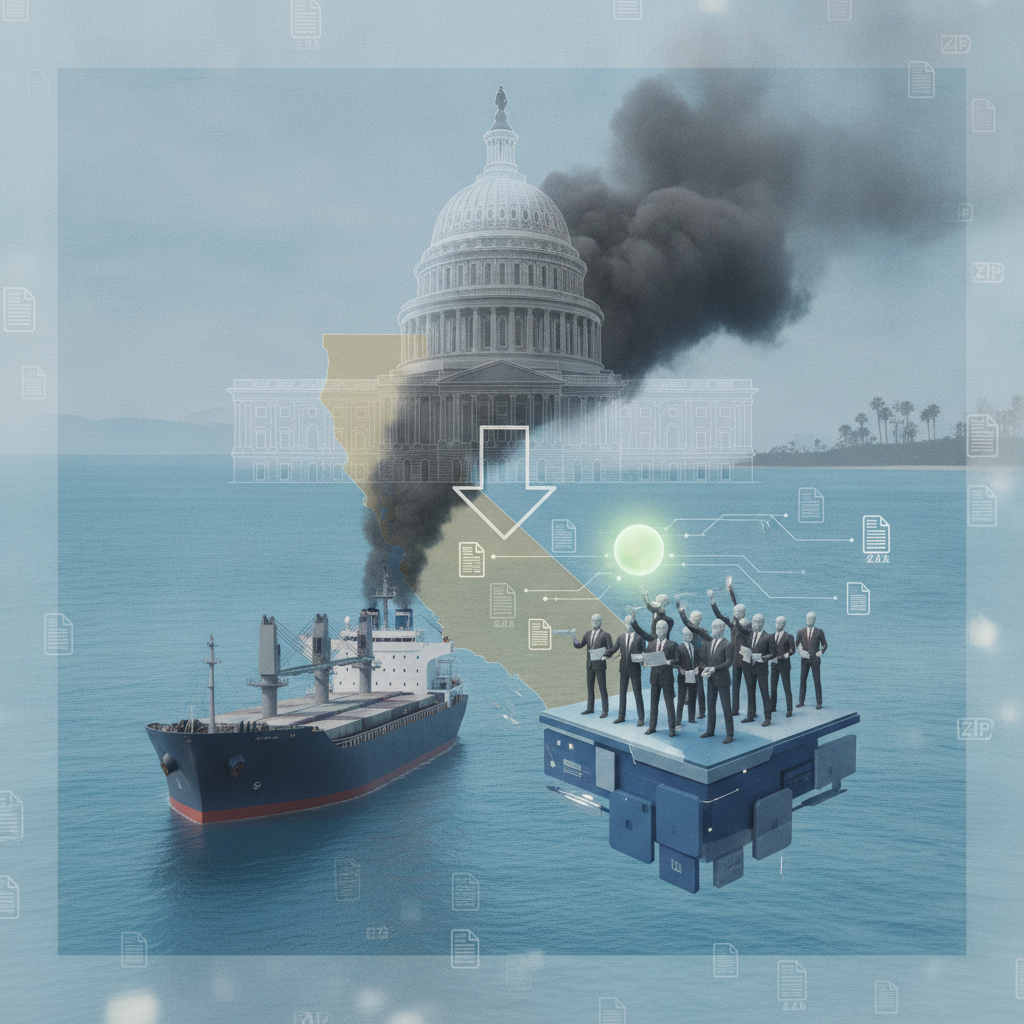
NewsWK — Federal lawmakers are taking direct aim at stringent West Coast environmental mandates. The United States House of Representatives recently advanced House Joint Resolution 210. This measure targets federal approval of California maritime mandates that affect ocean cargo traffic nationwide.
Specifically, the resolution formally disapproves of an Environmental Protection Agency decision. That EPA determination authorized California regulators to enforce strict pollution standards on docked commercial ships. Now, federal lawmakers want to stop the standard before costs ripple through the national supply chain.
Why it matters
Supply chain stability affects every American household and business. California ports handle a massive share of the nation’s imported goods and farm exports. Stricter mandates raise operating costs for shippers, dockworkers, and carriers. Consequently, consumer prices rise at grocery stores and retail shelves across the entire country.
Furthermore, the conflict raises core constitutional questions regarding interstate commerce. Under federal law, individual states typically cannot dictate standards for nationwide maritime trade. By approving California’s waiver, the EPA effectively allowed one state to establish rules for global carriers. Lawmakers argue this overreach sets a dangerous regulatory precedent.
How Does the Congressional Review Act California EPA Rule Challenge Work?
The Congressional Review Act allows Congress to overturn federal executive branch regulations through joint resolutions. Under this mechanism, lawmakers can review and nullify newly finalized agency actions with a simple majority vote. If both chambers pass the resolution and the president signs it, the targeted agency rule becomes void immediately.
Additionally, the statute bars the agency from issuing substantially similar rules without explicit congressional authorization. House Joint Resolution 210 relies precisely on this legislative pathway. Lawmakers introduced the resolution under Chapter 8 of Title 5 of the United States Code.
The measure specifically cites the EPA’s formal notice of decision. That executive decision endorsed California’s state nonroad engine pollution standards. By invoking the review act, lawmakers seek to reassert congressional authority over interstate transport and ocean commerce.
What Sparked the California Ocean-Going Vessels At-Berth Rule Pushback?
California’s at-berth rule sparks pushback because it forces docked vessels to plug into shore power or deploy costly capture technology. Shipping operators argue the mandate creates major logistical hurdles and raises operational expenses. Furthermore, it risks local power grid instability during peak energy shortages. Consequently, freight advocates warn that these port rules trigger nationwide shipping delays.
California environmental officials designed the maritime regulations to compel vessel operators to shut off auxiliary engines while docked. Instead of running shipboard generators, operators must plug into local shoreside electrical grids. Alternatively, crews must deploy approved emissions capture technology to capture smokestack output.
However, shipping operators face major logistical and financial obstacles under the mandate:
- Massive infrastructure costs to retrofit commercial cargo vessels
- Limited availability of high-voltage shore power systems at dock terminals
- Risk of local power grid instability during peak regional energy shortages
- Added port turnaround delays for container ships and bulk commodity carriers
Therefore, industry advocates warned that the policy creates bottlenecks at major West Coast ports. These trade hubs handle trillions of dollars in commercial freight. Disruptions there quickly translate into freight delays across America’s heartland.
What Is the History Behind California Port Emissions Regulations EPA Approved?
California port emissions rules stem from the state’s longstanding practice of seeking Clean Air Act preemption waivers. The federal EPA granted a formal waiver that cleared California to enforce its strict at-berth vessel program. However, this approval provoked swift resistance from supply chain groups, agricultural exporters, and transport businesses nationwide.
Historically, California regulators have long pursued unique statutory exemptions under the federal Clean Air Act. The state frequently requests waivers from federal preemption to enforce stricter environmental caps than national standards require. In this case, California regulators targeted ocean-going vessels that enter local waterways.
Industry groups noted that foreign-flagged ships and domestic shippers cannot easily adapt to a patchwork of state-level maritime rules. Meanwhile, conservative leaders emphasized the broader threat to constitutional federalism. The United States Constitution grants Congress exclusive authority to regulate interstate and foreign commerce. Allowing a single state agency to impose operational mandates on international vessels challenges that division of power.
What Comes Next for HJ Res 210 EPA Disapproval Efforts?
House Joint Resolution 210 now heads to the United States Senate for consideration under expedited legislative procedures. Supporters need only a simple majority to pass the measure through the upper chamber. However, the resolution faces an expected presidential veto threat. Overriding a presidential veto demands a two-thirds majority in both legislative chambers.
Because the measure utilizes expedited Congressional Review Act procedures, supporters can bypass typical procedural hurdles in the Senate. Yet, passing the resolution forces lawmakers onto the record regarding federal regulatory limits.
Ultimately, the battle over House Joint Resolution 210 underscores a broader national debate. Lawmakers must decide whether federal agencies or elected representatives determine trade rules. For working families and domestic businesses, the outcome will directly influence freight reliability and household goods costs for years to come.
This article was produced with the assistance of AI and reviewed by our editorial team.
Sources
Related: House Resolution 1499 Clears Way for Critical Votes on Mining, Higher Education, and Maritime Rules
Related: Study Examines Women on Parole Mental Health and Reentry Crises Across the US
See a typo? Report it here.