
California
Constitutional Clash Grows Over Immigrant Detention Center Inspections
Concerned about conditions in federal immigrant detention facilities but often barred from entering them, some Democratic-led states are fighting to enforce their own health and safety standards at the sites. The Trump administration, citing the Supremacy Clause of the U.S.…

About Immigrant Detention Center Inspections
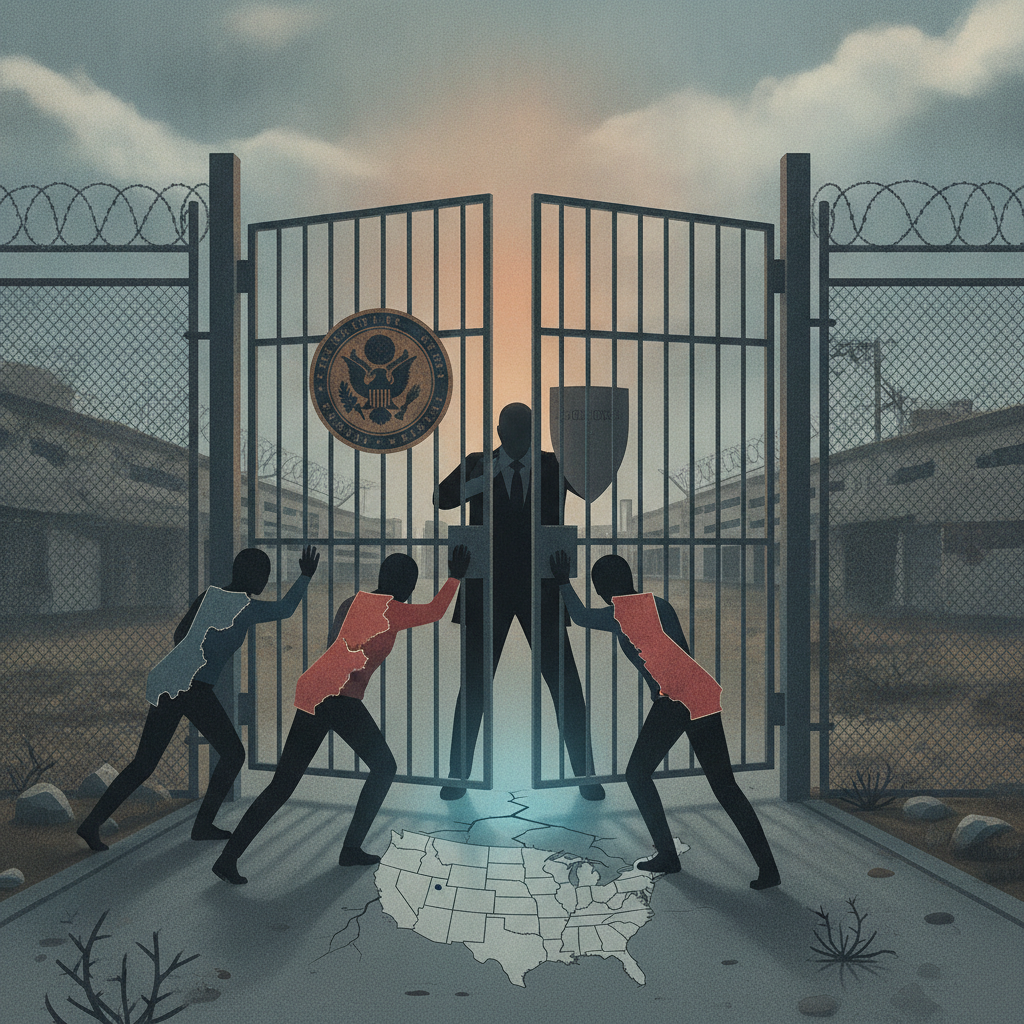
Last updated:
Key points
- States face growing legal barriers in their attempts to conduct immigrant detention center inspections at private federal contractor facilities.
- Federal courts and detention contractors contend the U.S. Constitution’s Supremacy Clause prohibits states from regulating federal immigration operations.
- Major legal battles in Washington and Colorado highlight mounting tension between state inspection mandates and national border enforcement authority.
NewsWK — An escalating legal battle between state officials and federal immigration contractors is testing constitutional limits across the nation. Several states now seek unannounced immigrant detention center inspections. However, federal authorities and operators assert that national supremacy shields these operations from local interference.
Why it matters
This jurisdictional clash directly affects community health oversight and taxpayer dollars spent on litigation. Furthermore, it impacts federal immigration law enforcement. When states challenge federal detention administration, court battles draw significant public resources. These disputes also raise questions about whether local rules can disrupt nationwide border contracts.
How does state oversight of ICE detention facilities spark constitutional battles?
State oversight sparks constitutional battles by colliding directly with federal supremacy over national immigration policy. While states assert broad police powers over local health standards, contractors argue that federal policy overrides state mandates. Consequently, federal judges must determine whether state-level inspection rules unconstitutionally infringe upon sovereign federal duties.
The central debate hinges on the U.S. Constitution’s Supremacy Clause. In practice, the federal government contracts with private facility operators to manage detention sites. State lawmakers argue that private contractors must still obey local health codes. Meanwhile, operators contend that private contractors execute federal policy and cannot face piecemeal local burdens.
During an investor call, GEO Group Chief Executive George Zoley defended the constitutional structure of the federal programs:
“As some blue states are considering more active involvement in oversight of facilities, I think the logical solution to much of that is federal ownership of the facilities. They are federal facilities to begin with, in my opinion.”
In addition, federal officials point out that Immigration and Customs Enforcement maintains strict internal protocols. Federal authorities state that immigrant processing sites follow high national standards. Therefore, federal oversight entities audit these operations continuously.
What drives the recent wave of state legislation?
Frustration over federal transparency and detainee conditions drives the recent wave of state legislation. Lawmakers have passed aggressive statutes requiring unannounced inspections and hefty civil penalties for noncompliance. However, these state measures continually face legal challenges. As states exert control, federal judges frequently freeze local enforcement pending higher review.
Several state legislatures recently enacted statutory inspection mandates:
- Washington: Directed local inspectors to review private sites, sparking ongoing litigation over access disputes.
- Colorado: Passed legislation imposing fines up to $50,000 for denied entries before a federal judge paused portions of the law.
- Massachusetts: Granted its state auditor authority to review detention sites for local safety compliance.
- California: Lawmakers advanced efforts to extend state attorney general reviews of holding centers indefinitely.
What sparked the dispute at the Northwest ICE Processing Center Tacoma?
The dispute at the Northwest ICE Processing Center in Tacoma began when state officials demanded entry following operational complaints. The private operator blocked state inspectors by asserting federal preemption defenses. Consequently, Washington state prosecutors sued the contractor to force facility access, creating a crucial legal test for state inspection authority.
Washington health officials claim they received thousands of operational complaints about the site. Yet the facility operator maintains that federal contracts govern daily operations. Ellen Range, a section chief in the Washington Attorney General’s Office, argued that federal protections should not extend to commercial partners:
“Our point is that GEO is a private entity, and so it doesn’t get to claim these federal preemption defenses because those are reserved for the federal government.”
However, industry representatives counter that state inspections often serve political goals rather than standard safety enforcement.
Why are GEO Group detention facility lawsuits escalating nationwide?
Lawsuits against the GEO Group are escalating because state statutes directly target federal vendors rather than federal agencies. Consequently, legal battles have expanded into multiple federal district courts. These ongoing cases examine whether states can inspect federal vendor facilities or levy severe fines without explicit permission from Washington.
For example, conflict erupted in Colorado after local officials sought data on medical conditions at an Aurora holding facility. The state sued the operator over access. However, a federal judge quickly halted key provisions of that state oversight measure. Thus, similar disputes demonstrate the growing friction between local political agendas and unified national immigration management.
How do private immigrant detention health standards balance with border enforcement?
Balancing private detention health standards with border enforcement requires reconciling humane care with rapid detainee population surges. As national detentions rose above 65,000, federal agencies expanded processing capacity. Therefore, authorities rely on standardized national health guidelines to maintain order, provide essential medical services, and ensure security across all contracted facilities.
Department of Homeland Security officials stress that external oversight bodies already audit ICE operations. Federal teams conduct regular evaluations to ensure facilities provide proper meals, water, and medical care. Furthermore, analysts note that state-level regulatory barriers could force authorities to transfer detainees across state lines. As a result, such transfers complicate logistical support while increasing overall costs for taxpayers.
Ultimately, these disputes highlight fundamental questions of American governance. The Constitution assigns immigration authority to the federal government to ensure consistent enforcement nationwide. Therefore, until federal courts establish definitive boundaries, states and federal contractors will continue to clash over authority, oversight, and the rule of law.
This article was produced with the assistance of AI and reviewed by our editorial team.
Sources
Related: Study Examines Women on Parole Mental Health and Reentry Crises Across the US
Related: House Resolution 1499 Clears Way for Critical Votes on Mining, Higher Education, and Maritime Rules
See a typo? Report it here.