California
How the Noncitizen Voter Purge Supreme Court Decision Impacts Local Election Security
Five weeks before Election Day, President Donald Trump’s sprawling effort to identify and remove noncitizen voters hasn’t produced the kind of large purges that could meaningfully affect the midterm elections. Even a recent U.S. Supreme Court decision giving states access…

Last updated:
Key points
- The Supreme Court ruled 6-3 to allow states access to the federal SAVE database to verify voter citizenship.
- The National Voter Registration Act‘s 90-day quiet period prevents states from conducting systematic, mass voter purges close to the election.
- While federal audits show noncitizen voting remains extremely rare, administrative errors and software glitches sometimes mistakenly register ineligible individuals.
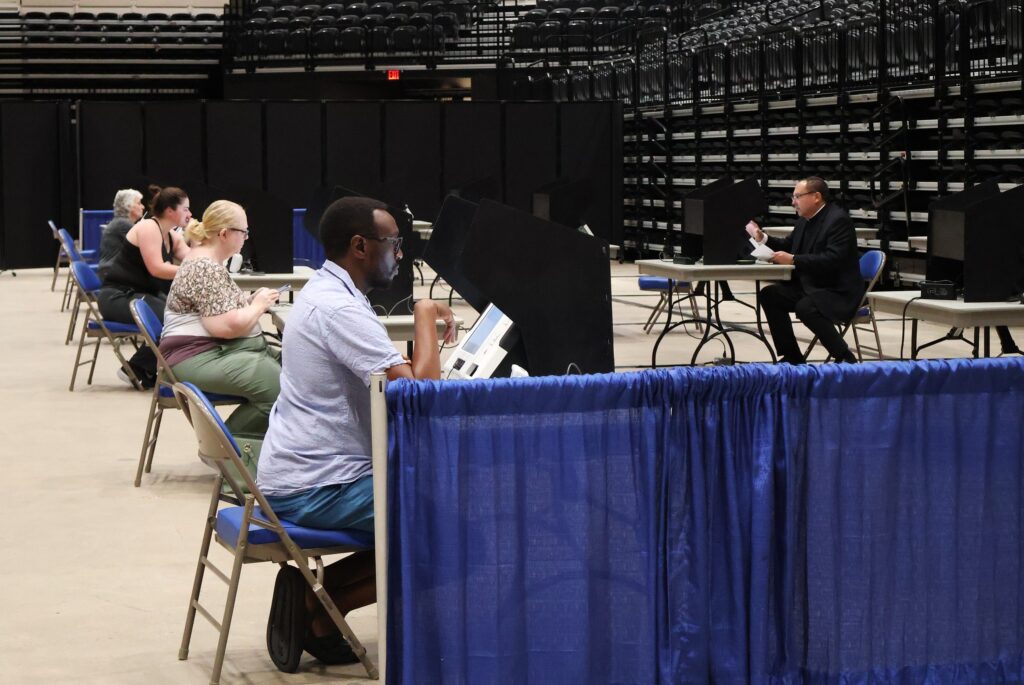
NewsWK — Local election offices across the United States are preparing for the upcoming midterm elections under new federal guidance. A recent high court ruling allows states to use federal databases to check voter eligibility. However, federal law restricts how quickly officials can act on this information before Election Day.
Why it matters
Clean voter rolls ensure election integrity and build public trust in democratic institutions. However, local election administrators must balance security measures with federal laws. This balance prevents the accidental removal of eligible citizens. The recent ruling shapes how states manage their voter databases both now and in future election cycles.
What Is the Noncitizen Voter Purge Supreme Court Ruling?
On September 25, 2026, the U.S. Supreme Court ruled 6-3 that states may access a federal database. This decision allows state officials to use Department of Homeland Security records to verify voter citizenship. Therefore, states can now audit their voter rolls, reversing a lower court block from June.
The high court’s decision represents a victory for advocates of stricter election security. Trump and his allies have spent the past year seeking to root out noncitizen voting. They argue that tighter controls prevent illegal voting and protect the ballot box. But the timing of the ruling limits its immediate impact on the upcoming midterms.
Federal officials designed the SAVE system to verify eligibility for government benefits. Last year, the Trump administration repurposed the database to assist state election officials. Homeland Security officials stated that the system can quickly scan millions of names. Yet, election experts expect minimal changes before voters head to the polls this November.
How Does the National Voter Registration Act Quiet Period Limit Immediate Purges?
The national voter registration act quiet period prohibits states from conducting systematic voter roll cleanups. This restriction begins 90 days before a federal election. Because of this law, officials must investigate individual files rather than running mass automated sweeps. Therefore, the immediate impact of the database remains limited.
The Supreme Court’s conservative majority acknowledged this limitation in their unsigned opinion. They wrote that the quiet period restricts how states can use the database right now. Meanwhile, the court will hear oral arguments in December for a related case. This upcoming case could give states more leeway to manage voter rolls in the future.
Some election analysts emphasize that voters will experience a secure and familiar process this year. For example, David Becker of the Center for Election Innovation & Research noted that systematic voter list maintenance is prohibited close to elections. He affirmed that the Supreme Court explicitly confirmed this rule.
Why Do Officials Enforce the Voter Roll Maintenance 90 Day Limit?
The voter roll maintenance 90 day limit protects eligible citizens from sudden administrative errors just before an election. This buffer period ensures that voters have enough time to resolve any registration disputes. Consequently, local officials cannot remove large groups of voters without individual reviews during this window.
Critics of rapid voter purges argue that federal databases often contain outdated information. For example, some naturalized citizens in Texas previously faced registration challenges due to outdated Social Security data. Also, civil liberties advocates warn that false positives can accidentally disenfranchise eligible voters. They argue that the SAVE database was not originally designed for voter registration checks.
However, proponents of the database argue that the tool is entirely voluntary for states. James Percival, Homeland Security’s general counsel, defended the program. “American elections are for Americans,” Percival stated in a release. He argued that states should use every available resource to ensure only eligible citizens vote.
How Does the DHS SAVE System Voter Registration Process Work?
The dhs save system voter registration process allows states to voluntarily cross-reference voter rolls. This program verifies citizenship status by checking records across multiple federal databases. However, critics warn that administrative lag can sometimes produce inaccurate matches. Therefore, local officials must carefully verify any potential discrepancies.
The administration has faced other legal hurdles regarding this system. For example, a federal judge recently blocked an effort to link emergency grants to database usage. Judge Amir H. Ali ruled that federal agencies exceeded their authority by imposing these election-related requirements on states. Still, the administration continues to promote database access as a key security measure.
Meanwhile, legislative efforts to require proof of citizenship remain stalled in Congress. The SAVE America Act passed the House but faces opposition in the Senate. White House spokeswoman Lauren Bis criticized the delay. She stated that the American people overwhelmingly support basic election security measures like voter ID.
What Are the Realities Behind Trump Noncitizen Voting Claims?
The trump noncitizen voting claims highlight ongoing debates over election security and voter eligibility. Proponents argue that even a few illegal votes can undermine public trust. However, studies show that confirmed instances of noncitizen voting remain extremely low across the nation. Most registration errors stem from administrative mistakes.
Recent studies and federal reports highlight the following findings on voter eligibility:
- The 2020 Census Analysis: Researchers identified about 24,000 instances of noncitizen voting out of 160 million ballots cast. This represents 0.015% of all votes.
- The 2016 Election Study: Analysts placed the rate of confirmed noncitizen voting at 0.0001%.
- New Jersey Glitch: A software error mistakenly registered 6,600 noncitizens, and about 400 of those individuals voted.
- Texas Clerical Errors: Local officials registered some individuals who explicitly marked on their forms that they were not citizens.
However, Homeland Security officials suggest that potential registrations could be higher. In July, the department flagged over 250,000 potential noncitizens on voter rolls in four states. These states included California, New Jersey, Nevada, and Pennsylvania. But local audits often reveal that many flagged individuals are actually legal citizens.
For example, federal officials initially flagged nearly 16,000 potential noncitizens in Nevada. State officials later received a refined list of 185 names. Ultimately, all of those individuals proved to be legal citizens. Also, Democratic lawmakers have expressed skepticism about the accuracy of these initial federal estimates.
When noncitizens do appear on voter rolls, administrative errors are often the cause. In New Jersey, a software glitch registered about 6,600 noncitizens. Approximately 400 of those individuals cast ballots before officials resolved the issue. In Texas, clerical errors registered some individuals who explicitly marked that they were not citizens.
Therefore, state officials continue to encourage the use of all available tools to verify eligibility. Former Texas Secretary of State Jane Nelson urged local registrars to use SAVE data alongside other resources. She noted that these checks help maintain accurate rolls while protecting eligible voters.
This article was produced with the assistance of AI and reviewed by our editorial team.
Sources
Related: Supreme Court Lifts Injunction on Federal Mail-In Ballot Security Standards Ahead of Midterms
Related: Supreme Court mail in ballot ruling allows states to accept votes arriving after Election Day
See a typo? Report it here.