California
Can Balcony Solar Panels Lower Your Energy Bills? New State Laws Face Safety Hurdles
Over the past year and a half, a dozen states have embraced a new vision for solar power: small, cheap panels that can be hung from a balcony or porch, be plugged into a standard wall outlet and take a…

Last updated:
Key points
- A dozen states have passed laws authorizing small, plug-in balcony solar panels to help residents lower energy bills.
- While these systems offer cheap and easy installation, safety guidelines from national organizations are still lagging.
- Electrical safety concerns and grid stability issues currently prevent widespread retail availability in the United States.
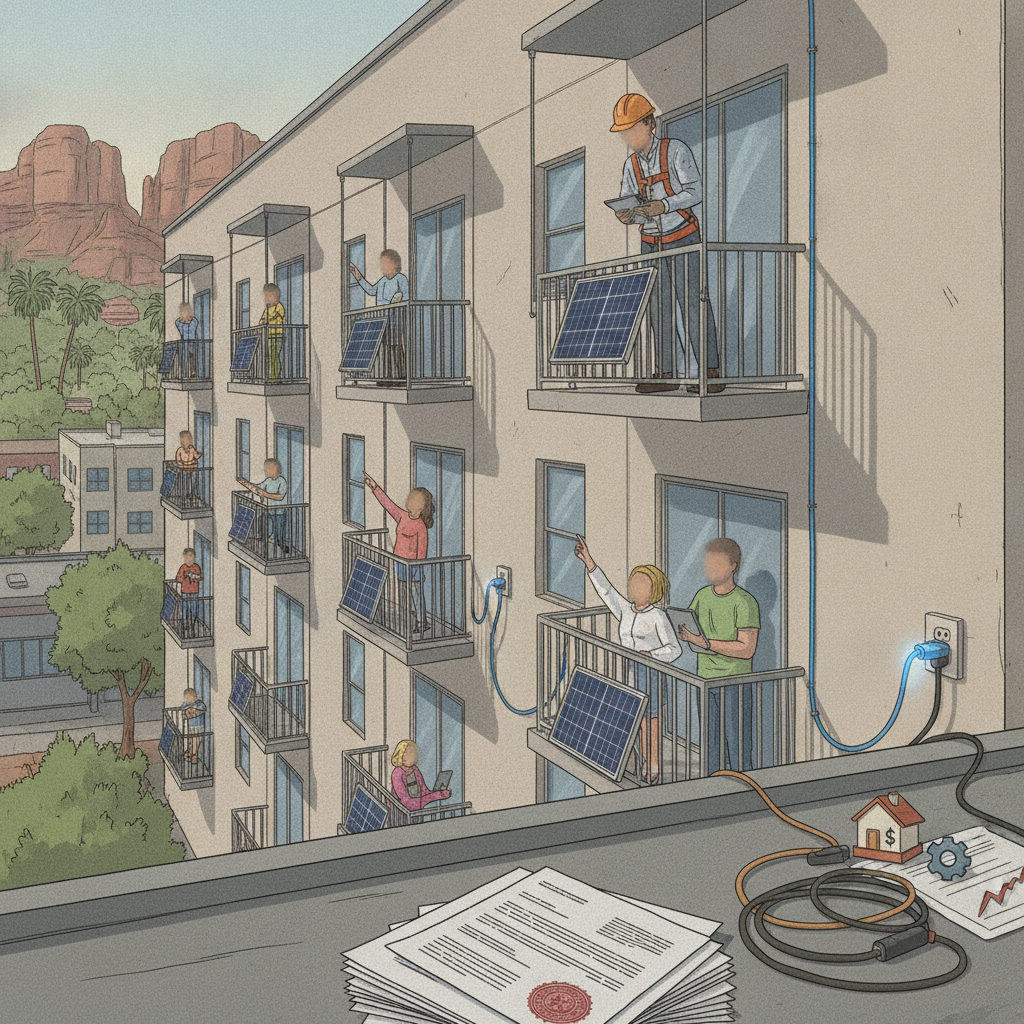
NewsWK — American families face skyrocketing electricity bills. Many residents want to control their own energy costs. However, traditional rooftop solar systems cost thousands of dollars. Renters cannot install them at all. Now, a new technology offers a cheaper alternative. Residents can hang small solar panels on their balconies. They simply plug them into standard wall outlets.
Why it matters
This technology could democratize green energy. It gives renters and middle-class families a way to lower their bills. It also reduces strain on local power grids during peak hours. However, regulatory delays and safety concerns are holding back widespread adoption. Homeowners must navigate a confusing landscape of state laws and outdated electrical codes.
What Are Plug In Solar Systems and How Do They Work?
Plug in solar systems allow residents to generate electricity by hanging small, inexpensive panels on balconies or porches. Users simply plug the devices directly into standard outdoor wall outlets. This process bypasses the need for expensive professional installers, complex utility contracts, or permanent roof modifications.
These systems are incredibly simple. A basic kit includes one or two solar panels and a small inverter. The inverter converts solar energy into household electricity. Then, the power flows directly into the home’s electrical grid through a standard outlet. This power feeds appliances like refrigerators or computers first. As a result, the home draws less power from the utility company.
Advocates expect these devices to save users up to 10% on monthly electric bills. For apartment tenants, this is a game-changer. They can finally participate in energy savings without owning a home. Also, some systems include small battery backups. These batteries can keep the lights on during local power outages.
Why Did the Utah Balcony Solar Bill Start a National Trend?
The historic Utah balcony solar bill launched a nationwide legislative movement to cut energy red tape. Passed unanimously, the law eliminated the requirement for complex utility contracts for small solar setups. This change allowed residents to generate up to 1,200 watts of self-made power without government interference.
State Representative Ray Ward, a Republican, sponsored the pioneering Utah bill. He noticed the massive popularity of these systems in Germany. In Germany, citizens have installed over one million balcony systems. These systems generate more than two gigawatts of power. Ward noted that Germany proved these devices can operate safely with the right standards.
Following Utah’s lead, eleven other states drafted similar laws. These states include:
- Colorado
- Virginia
- New York
- Maryland
- New Jersey
- California
Many of these new laws protect consumer rights. They prevent landlords and homeowners associations from banning balcony installations.
What Are the Current Balcony Solar Laws US Residents Must Navigate?
Currently, balcony solar laws US states have passed create a patchwork of legal permissions and safety requirements. While twelve states authorize these plug-and-play systems, local utilities and safety regulators still struggle to keep pace. Consequently, many consumers find themselves in a legal gray area regarding installation and grid connection.
Nine states have officially signed these bills into law. Meanwhile, three governors are currently reviewing passed legislation. But passing a law does not immediately put solar panels on balconies. Many state statutes require systems to meet strict national safety certifications. Currently, those certifications do not exist for standard plug-and-play models in the United States.
Because of this gap, manufacturers cannot sell compliant systems in several states. Some advocacy groups sell basic kits at cost. However, they cannot ship them to states with strict certification mandates. Consequently, consumers must wait for regulators to catch up.
Why Are Safety Standards Lagging for Apartment Balcony Solar Panels?
Safety standards for apartment balcony solar panels lag because U.S. grids are not designed for two-way power. Sending electricity backward into a standard outlet can bypass safety breakers. This flaw risks overloading household wires, creating potential fire hazards or shock risks for line workers.
Underwriters Laboratories recently issued preliminary safety guidelines. However, these rules require homeowners to modify their electrical circuits before plugging in panels. This requirement defeats the main appeal of plug-and-play systems. It adds costs and requires hiring a professional electrician.
Furthermore, utility companies worry about grid stability. Unregistered solar panels can feed electricity back into the grid during blackouts. This backfeed poses a severe threat to utility line workers. David Eisenhauer, a spokesperson for Southern California Edison, highlighted this concern.
“We just need people to let us know what they’re plugging in, so we can track anything that feeds back into the grid and can be a danger to line workers,”
Eisenhauer stated.
National electrical codes will not address these issues until 2029. Until then, manufacturers must develop smarter onboard safety technology to satisfy regulators.
This article was produced with the assistance of AI and reviewed by our editorial team.
Sources
Related: Democrats aim to emulate Republicans in building state power
Related: House Lawmakers Introduce Grid Modernization Bill Aimed at Lowering Household Energy Costs
See a typo? Report it here.