California
Trump Administration Naturalization Delays Highlight Expanded Vetting and Security Screening
The Trump administration cut naturalization sharply over the past year, leading to accusations it’s holding back hundreds of thousands of people who might have voted in the midterms. It’s hard to say how those people might have voted had they…

Last updated:
Key points
- USCIS citizenship approvals dropped significantly following expanded security vetting, civics requirements, and social media screenings.
- Official agency data shows quarterly naturalization approvals fell from over 230,000 last year to roughly 55,000 during the same quarter this year.
- Federal officials emphasize that citizenship is a privilege requiring strict screening, while experts point to routine executive authority over agency timelines.
NewsWK — Federal immigration authorities have slowed citizenship approvals. Meanwhile, officials are expanding background vetting across the country. Also, USCIS introduced new applicant screening standards late last year to enhance security. These measures include social media reviews for potential anti-American activities. Furthermore, officials mandated stronger civics knowledge and English language proficiency evaluations.
Why are USCIS citizenship processing delays increasing nationwide?
Federal officials attribute the longer timelines to intensified background checks and stricter verification standards. Because immigration officials implemented enhanced security procedures, application processing now takes significantly longer. These updates require applicants to demonstrate clear English skills, civics proficiency, and constitutional commitment. Consequently, official naturalization approvals dropped sharply over the past four quarters.
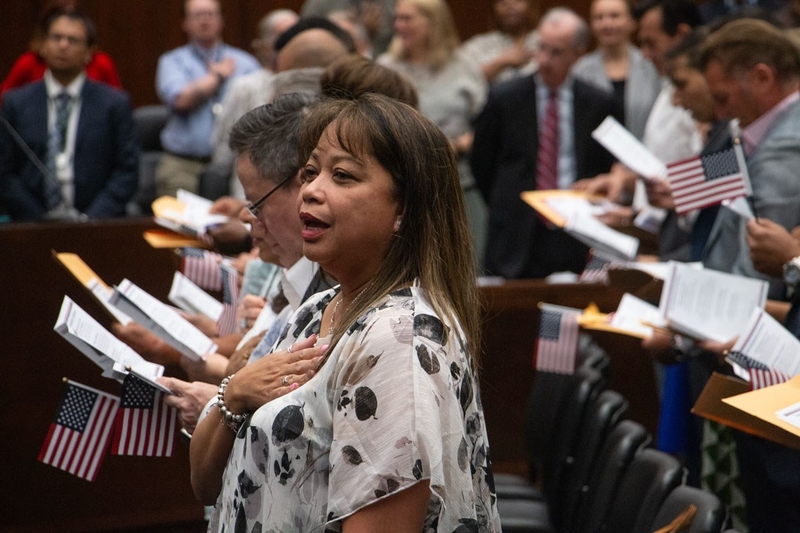
Quarterly agency reports show USCIS approved roughly 55,000 naturalization requests between April and June. By contrast, the agency approved more than 230,000 applications during the same period last year. USCIS spokesperson Zach Kahler emphasized that naturalization remains an earned privilege rather than an automatic right. Moreover, Kahler noted that the agency will not take shortcuts during security vetting procedures. Therefore, federal screeners must verify every applicant’s good moral character before the oath ceremony.
What does the USCIS citizenship slowdown mean for local communities?
The reduction in approval rates directly affects legal permanent residents residing nationwide. For example, states with high foreign-born populations see the most immediate operational shifts. California, New Jersey, New York, Florida, and Texas host millions of lawful immigrants. Because approvals take longer, qualified applicants experience extended wait times before taking their final oath.
Naturalized citizens currently comprise about 10 percent of all eligible voters nationwide. That total represents approximately 25 million registered or potential voters today. In 2000, naturalized citizens made up only 6.2 percent of the national electorate. However, concentration varies heavily by geographic region across the United States.
Key state proportions include:
- California leads the nation with 22 percent of eligible voters.
- New Jersey follows closely with 20 percent.
- New York sits at 19 percent.
- Florida accounts for 17 percent of eligible voters.
- Texas records roughly 11 percent of eligible voters.
What is the new US citizen voter impact on upcoming elections?
The lower approval pace created a calculated lag of nearly 380,000 potential new voters. Specifically, USCIS approved about 871,000 citizens between mid-2024 and mid-2025. However, approvals fell to roughly 481,000 over the subsequent twelve-month span. Consequently, this decline altered the overall growth rate among newly naturalized adults ahead of elections.
Political analysts observe that voting trends among foreign-born citizens have shifted over time. In 2020, naturalized voters heavily supported Democratic candidates in federal contests. However, Pew Research Center data showed nearly half voted for Donald Trump in 2024. Meanwhile, advocacy organizations argue that extended wait times disenfranchise prospective immigrant voters. Notably, midterm candidates often target these voters. Nicole Melaku leads the National Partnership for New Americans. She called the delays a deliberate effort to curb legal pathways. Still, administration officials maintain that thorough security vetting protects national integrity and public safety.
How do executive policy shifts affect survey data and federal oversight?
Executive administrative decisions frequently influence broader statistical surveys and agency measurements. For example, recent U.S. Census Bureau data showed surprising changes in self-reported legal status. The monthly survey reached about 1.7 million households during the year. Ultimately, it recorded 1.2 million fewer noncitizens and 1.3 million more self-reported naturalized citizens.
Texas State Demographer Lloyd Potter noted that immigration enforcement creates notable self-reporting changes. Specifically, Potter explained that noncitizens sometimes identify as citizens on surveys due to deportation concerns. Additionally, consultant Christopher Dick noted that noncitizens may simply decline survey participation. Therefore, these factors can distort public survey data regarding immigrant populations across states.
Policy experts frame the naturalization backlog as part of broader executive branch authority. Meanwhile, highlighted long-standing executive power trends. Camarota noted that both political parties utilize executive authority when administering immigration policy. Because Congress routinely fails to pass updated legislation, executive agencies set operational priorities. Next, administrative leadership will continue determining how quickly citizenship applications move through federal channels.
This article was produced with the assistance of AI and reviewed by our editorial team.
Sources
Related: Supreme Court birthright citizenship ruling rejects Trump executive order
Related: Trump Mail in Voting Executive Order Blocked by Federal Court
See a typo? Report it here.