Arizona
Protecting Miranda Rights for Kids Act Introduced in House to Address Youth Interrogations
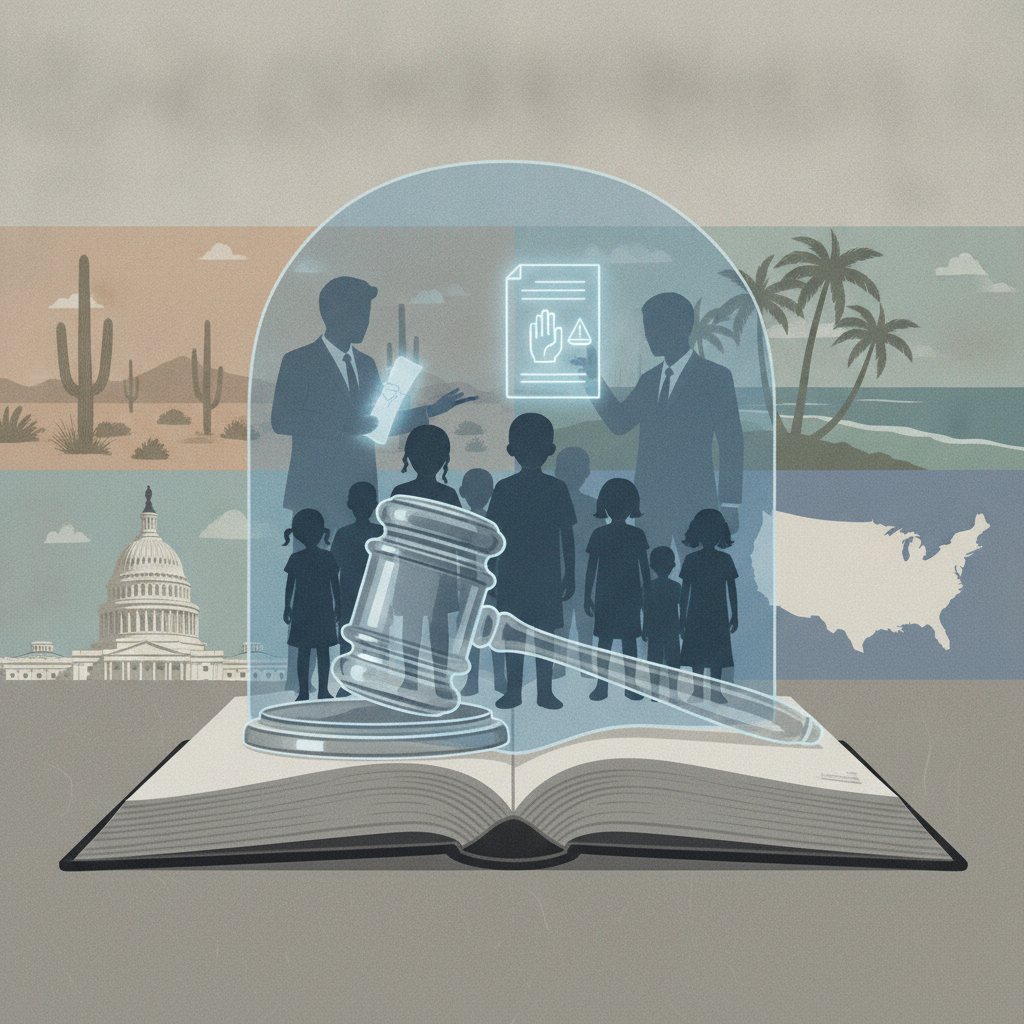
Representative Sydney Kamlager-Dove has introduced the Protecting Miranda Rights for Kids Act to prevent youth from prematurely waiving their constitutional rights during police interrogations, establishing stronger procedural safeguards for minors under federal criminal law.


Last updated:
Key points
- Representative Sydney Kamlager-Dove introduced H.R. 11136 to prevent minors from prematurely waiving constitutional rights during police interrogations.
- The Protecting Miranda Rights for Kids Act proposes amendments to federal criminal procedure under Title 18 of the United States Code.
- The measure was referred to the House Committee on the Judiciary and awaits further legislative action in the 119th Congress.
NewsWK — Lawmakers in Washington have introduced new legislation. This bill aims to change how federal law enforcement agencies handle youth questioning. Representative Sydney Kamlager-Dove introduced the proposal on November 20, 2026. Specifically, the measure addresses constitutional protections for juveniles during police questioning.
What is the Protecting Miranda Rights for Kids Act?
The Protecting Miranda Rights for Kids Act aims to protect young suspects. It stops them from quickly surrendering their constitutional rights. Formally designated as HR 11136, the proposal also targets custodial interrogations involving minors. Specifically, it amends federal criminal procedure rules. Therefore, youth will understand their legal protections before answering questions.
Under the current federal framework, officers must inform suspects of their constitutional rights before custodial questioning. Specifically, these rights stem from the Landmark Supreme Court decision Miranda v. Arizona. They include the right to remain silent and the right to legal counsel.
However, legal experts note youth often struggle to comprehend these protections. In many cases, young individuals yield their rights without consulting parents or legal counsel. Therefore, HR 11136 amends Title 18 of the United States Code. Specifically, it updates Chapter 223. This chapter covers witnesses and evidence in federal judicial proceedings.
What does federal legislation on Miranda rights for minors mean for local communities?
Federal standards on Miranda rights for minors establish precedent for law enforcement agencies across the nation. The bill directly targets federal procedures. However, local police departments often align their protocols with federal standards. In addition, this proposal highlights ongoing debates over juvenile justice, police accountability, and public safety.
Local law enforcement officers must balance effective investigation techniques with constitutional guarantees. For example, officers often question young suspects. Statements made without proper counsel can complicate criminal prosecutions. As a result, courts sometimes suppress evidence. This happens when judges determine a youth did not knowingly waive constitutional protections.
Supporters emphasize that children require extra safeguards due to developmental differences. Conversely, public safety advocates urge caution from lawmakers. They want law enforcement to retain necessary tools to investigate violent crime effectively.
How could HR 11136 alter juvenile custodial interrogation rights in practice?
Proposed changes to juvenile custodial interrogation rights would enforce clearer boundaries before questioning begins. First, the legislation seeks to prevent premature waivers. It requires law enforcement officers to ensure minors fully grasp their choices. Consequently, federal agents might need additional legal verification or legal counsel present before initiating formal questioning.
Under the bill, procedural changes would impact several key aspects of questioning:
- Legal Representation: Minors may receive mandatory access to counsel before waiving constitutional rights.
- Parental Notification: Questioning protocols could require explicit parental consent or presence during federal interviews.
- Court Admissibility: Statements obtained without proper safeguards could become inadmissible in judicial proceedings.
Federal evidentiary standards set benchmarks for state courts. Consequently, local jurisdictions often mirror federal updates. Therefore, law enforcement agencies may need to update training materials and officer guidelines.
What is the legislative background and current status of the Sydney Kamlager Dove bill?
The Sydney Kamlager Dove bill remains in the initial stage of the federal legislative process. Representative Kamlager-Dove is a Democrat from California. She introduced the legislation in the House of Representatives on November 20, 2026. House leaders immediately referred the measure to the House Committee on the Judiciary for preliminary review.
Additionally, as of late November 2026, the bill has not recorded official cosponsors. Currently, Congress has not yet scheduled committee hearings or floor votes for the measure. Moreover, the full bill text remains designated as “Introduced in House” without accompanying regulatory amendments.
To become federal law, HR 11136 must complete several legislative steps:
- Committee Review: The House Committee on the Judiciary must consider and approve the bill.
- House Floor Vote: The full House of Representatives must vote to pass the measure.
- Senate Passage: The United States Senate must approve identical legislative language.
- Presidential Approval: The President must sign the bill into law.
Currently, the bill remains in committee. Therefore, lawmakers may modify its provisions during future markups. Meanwhile, constitutional scholars and law enforcement groups continue to monitor the bill’s progress in the 119th Congress.
This article was produced with the assistance of AI and reviewed by our editorial team.
Sources
Related: Rising Costs of Youth Sports Draw Attention from State Officials