
Kansas
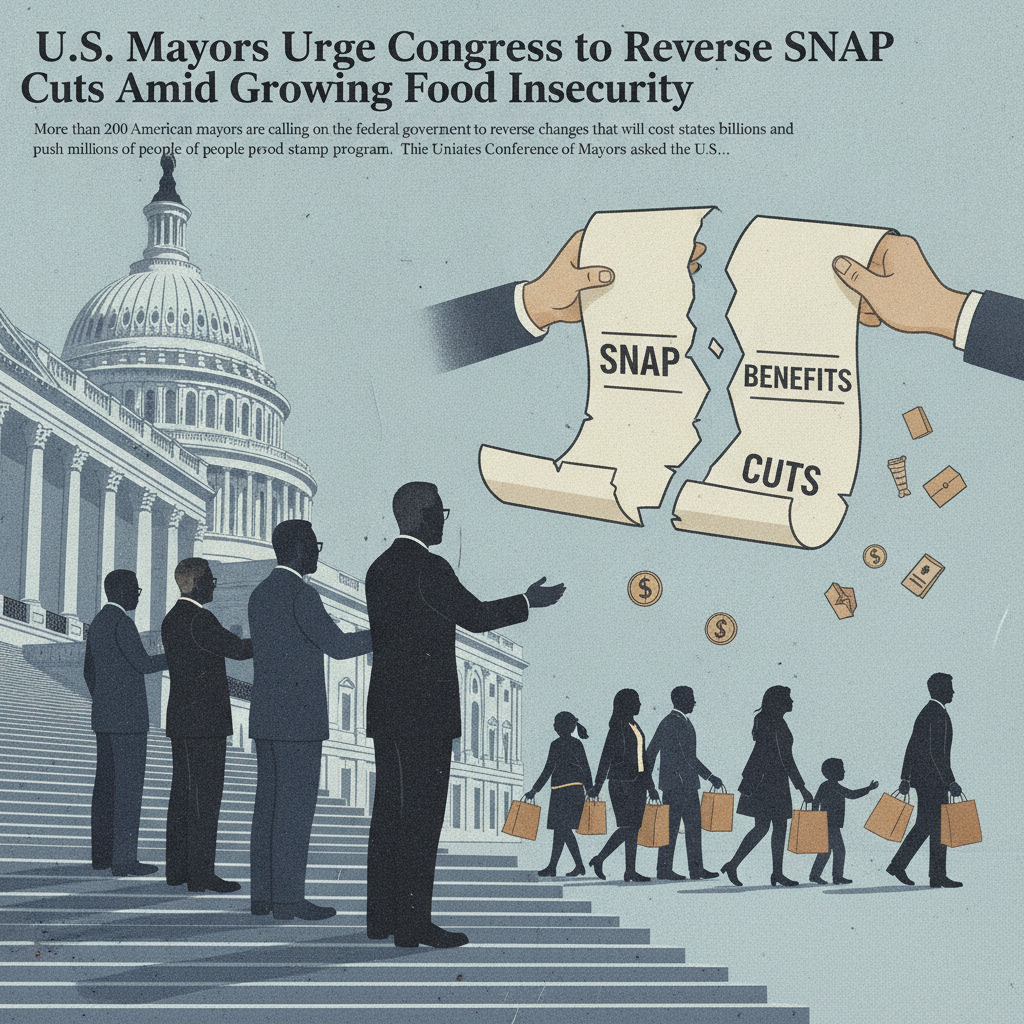
U.S. Mayors Urge Congress to Reverse SNAP Cuts Amid Growing Food Insecurity
More than 200 American mayors are calling on the federal government to reverse changes that will cost states billions and push millions of people off the food stamp program. This week, the United States Conference of Mayors asked the U.S.…

Last updated:
Key points
SNAP cuts
- Over 200 mayors are urging the federal government to reverse cuts to SNAP.
- Changes to SNAP may cost states billions and impact millions relying on food assistance.
- There is a growing concern over food insecurity as more Americans lose SNAP benefits.
NewsWK — In a significant move, over 200 mayors from various cities across the United States are advocating for the federal government to reconsider recent changes to the Supplemental Nutrition Assistance Program (SNAP), which could result in substantial financial burdens for states and affect millions of individuals reliant on food assistance.
The United States Conference of Mayors has formally requested the Senate agriculture committee to address the steep cuts enacted in the One Big Beautiful Bill Act, which includes new eligibility and work requirements for SNAP recipients. Notably, starting in fall 2027, states will be required to fund a portion of SNAP benefits, a shift that could cost states billions.
Among the mayors expressing their concerns are leaders from major cities such as Baltimore, Las Vegas, and Oklahoma City, as well as smaller municipalities like Lima, Ohio; Manhattan, Kansas; and Muskegon, Michigan. The mayors’ letter emphasizes their role in addressing a growing food security crisis, advocating for expanded access to food instead of new barriers.
“When we’re talking about how to make sure that our residents are fed, that is something that worries Republican mayors, it worries Democratic mayors, it worries independent mayors. It worries everybody,” stated Matt Tuerk, the Democratic mayor of Allentown, Pennsylvania.
Mayor Tuerk highlighted the struggles faced by constituents amid rising living costs, warning that the loss of SNAP benefits could further exacerbate their challenges in affording essential groceries.
Currently, more than 4 million Americans have already seen a reduction in SNAP benefits, increasing the demand on food banks and pantries nationwide. While federal officials argue that the changes aim to combat fraud and waste within the program, mayors contend that philanthropic organizations lack the resources to act as a sufficient safety net.
The mayors are also urging Congress to postpone the implementation of new requirements that may impose an additional burden of over $9 billion on states. The law’s penalties, based on states’ payment error rates—which measure overpayments and underpayments—could further strain budgets already stretched thin by rising costs of living and stagnant wages.
“Rising costs of living, stagnant wages, and reduced federal support are converging to create conditions that municipal governments are increasingly challenged to address on their own,” the mayors’ letter noted.
Based on reporting by Kevin Hardy originally published by Stateline. Read the original story.