
National News
Senate Resolution Challenges Federal Regulator Over State Interest-on-Escrow Banking Laws
Content Files PDF XML TEXT Metadata download Descriptive Metadata (MODS) Preservation Metadata (PREMIS) All Content and Metadata files, including granules ZIP

Key points
Senate Resolution Challenges Federal Regulator Over
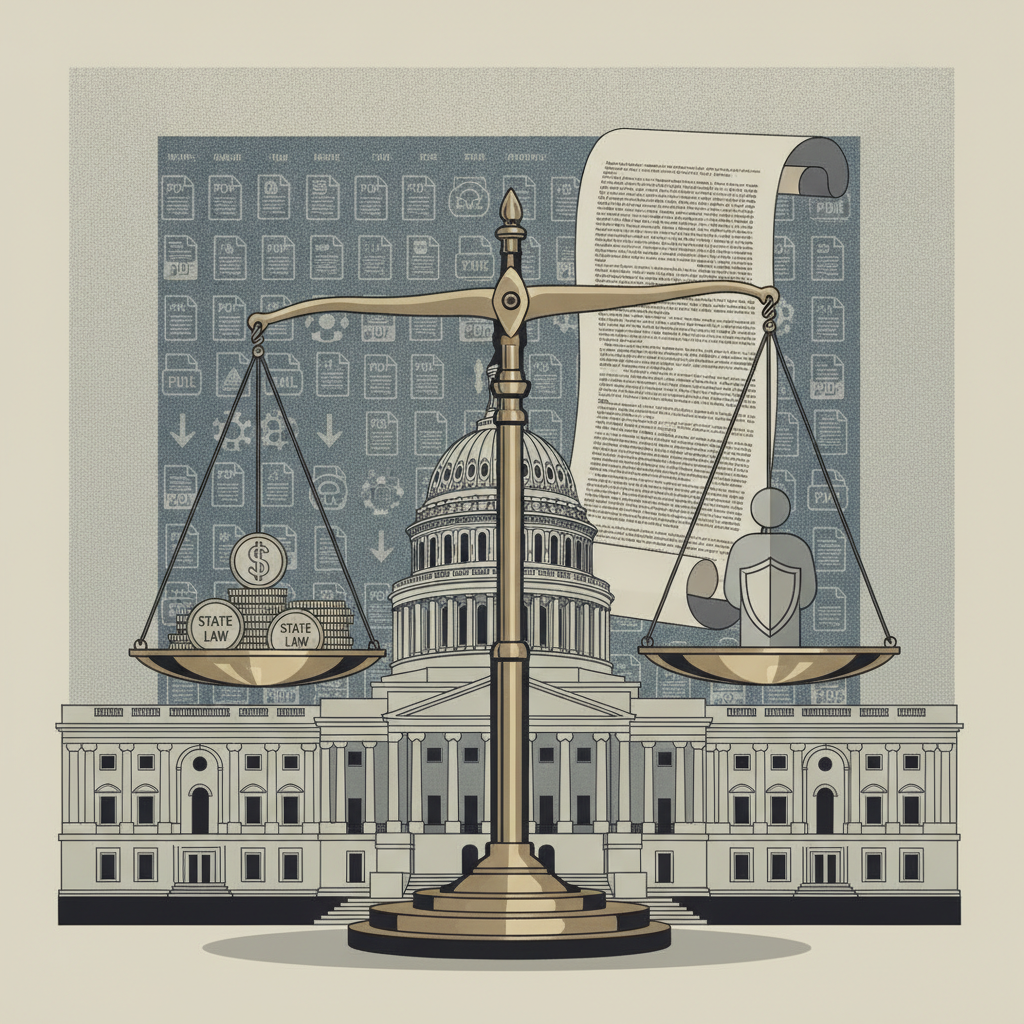
- Senate Joint Resolution 203 uses the Congressional Review Act to challenge an Office of the Comptroller of the Currency rule.
- The rule under scrutiny addresses federal preemption of state statutes requiring interest payments on mortgage escrow accounts.
- The resolution highlights efforts by lawmakers to maintain oversight over federal agency rules affecting state-level banking laws.
NewsWK — Lawmakers in the United States Senate have introduced a joint resolution aimed at overturning a federal banking regulation that addresses state-level laws regarding interest on mortgage escrow accounts.
Congressional Review Act Invoked
According to official legislative documents published by GovInfo, Senate Joint Resolution 203 utilizes Chapter 8 of Title 5 of the United States Code—commonly known as the Congressional Review Act—to express formal disapproval of a rule issued by the Office of the Comptroller of the Currency (OCC).
The agency rule under challenge is titled “Preemption Determination: State Interest-on-Escrow Laws.”
State Sovereignty and Banking Oversight
The OCC determination focuses on whether federal banking regulations supersede state statutes requiring financial institutions to pay interest on funds held in mortgage escrow accounts. Multiple states have established rules directing lenders to pay interest on escrow balances set aside for property taxes and insurance premiums.
By filing the joint resolution, members of Congress are seeking to reassert legislative authority over executive agency actions, highlighting ongoing debates surrounding federal regulatory power, state sovereignty, and banking policy.
Based on reporting originally published by GovInfo (U.S. GPO). Read the original story.
Senate Resolution Challenges Federal Regulator Over coverage on NewsWK includes background, context, and related reporting for readers following this story.
NewsWK publishes local and national news with clear headlines, source context, and follow-up when developments change. This article is part of ongoing coverage intended to help readers stay informed.
For more on Senate Resolution Challenges Federal Regulator Over, browse related NewsWK stories and check back for updates as new information becomes available.
Our editors review developing stories and update articles when material facts change, so readers can rely on NewsWK for clear, timely reporting.
See a typo? Report it here.