National News
Congressional Measure Proposes ‘Dollar-for-Dollar’ Cuts to Offset Federal Debt Increases
Content Files PDF XML TEXT Metadata download Descriptive Metadata (MODS) Preservation Metadata (PREMIS) All Content and Metadata files, including granules ZIP

Last updated:
Key points
Congressional Measure Proposes
- H.R. 10078, titled the Dollar-for-Dollar Deficit Reduction Act, has been introduced in the 119th Congress.
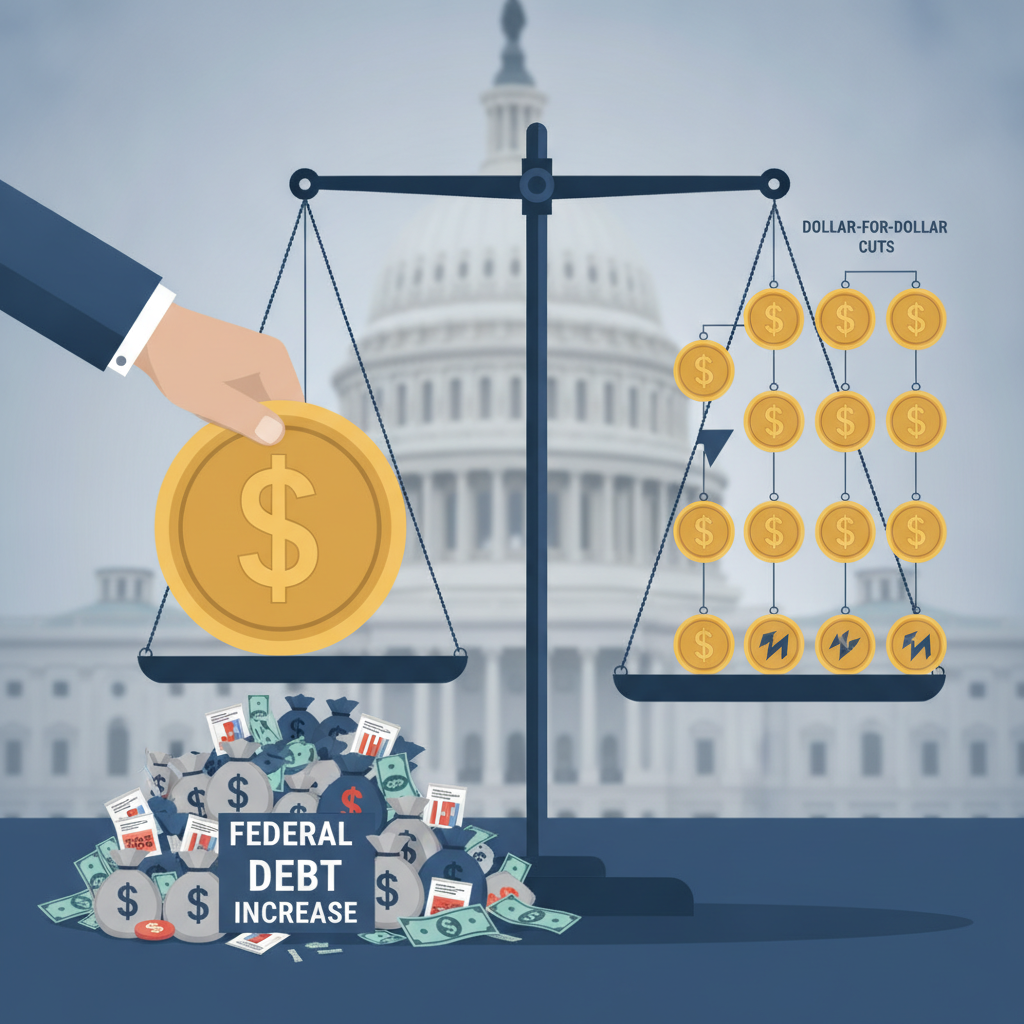
- The legislative proposal would require federal spending reductions to match any increases in debt ceiling or deficit authority.
- Proponents argue the offset framework is necessary to curb rising national debt and protect taxpayers from long-term economic instability.
NewsWK — As concerns over national debt and federal spending continue to dominate Capitol Hill debates, federal lawmakers have formally introduced H.R. 10078, officially titled the Dollar-for-Dollar Deficit Reduction Act. The legislative proposal seeks to institute strict fiscal discipline by establishing a statutory framework requiring federal spending cuts to match any dollar increases in federal debt authority or deficit adjustments.
The introduction of H.R. 10078 reflects a growing push among fiscal conservatives to impose structural guardrails on federal spending. Under traditional budgeting mechanisms, national debt expansion has frequently occurred without mandatory offsets, compounding the long-term national debt load. Proponents of dollar-for-dollar rules argue that tying new spending or borrowing authority directly to verifiable cuts is necessary to hold Congress accountable to taxpayers.
Why it matters here
For working families, small business owners, and taxpayers across the country, federal fiscal policies directly influence everyday economic realities. Rapid expansion of the national debt contributes to sustained inflationary pressures, elevated borrowing costs, and potential tax liabilities for future generations. When the federal government incurs trillions of dollars in annual deficits, the resulting debt burden places upward pressure on interest rates for home mortgages, auto loans, and commercial credit.
Furthermore, persistent federal deficit spending threatens the long-term stability of essential public programs. As interest payments on the national debt consume an increasingly large share of the annual federal budget, fewer resources remain available for core infrastructure, national defense, and baseline federal functions. Enforcing spending discipline through offset requirements aims to protect the economic stability of local communities by reining in unchecked national debt growth.
Core Mechanics of Dollar-for-Dollar Offset Proposals
The underlying concept of a dollar-for-dollar deficit reduction rule is straightforward: for every dollar added to federal debt limits or designated for new spending initiatives, federal agencies and lawmakers must identify and execute an equal dollar amount in spending reductions across existing programs.
In legislative practice, such frameworks typically focus on several key budgetary areas:
- Mandatory Spending Offsets: Identifying inefficiencies and reducing spending growth in non-essential federal programs to offset mandatory entitlement spending or deficit expansion.
- Discretionary Spending Caps: Establishing hard statutory caps on discretionary agency budgets to ensure spending levels align with historical baseline revenue.
- Deficit Reduction Targets: Requiring explicit legislative certification that any proposed increase in borrowing limits is accompanied by enforceable spending cuts over a multi-year budget window.
Proponents point out that household budgets operate under similar basic principles. When household expenses rise in one category, families must adjust or reduce spending in other areas to maintain financial solvency. Tying federal government operations to the same economic logic is designed to prevent structural deficit spending from becoming an unmanaged routine.
Background and the Broader Federal Budget Landscape
The introduction of H.R. 10078 comes at a critical juncture for federal finances. Annual federal budget deficits have consistently measured in the hundreds of billions—and frequently trillions—of dollars over recent fiscal cycles. Consequently, the total national debt has crossed unprecedented milestones, making interest payments on the debt one of the fastest-growing line items in the federal spending landscape.
In previous legislative sessions, similar offset frameworks have been debated during high-stakes budget negotiations and debt ceiling deliberations. While statutory spending controls such as the Budget Control Act of 2011 previously imposed discretionary budget caps, spending caps have frequently been adjusted or bypassed through emergency designations and bipartisan budget agreements.
Critics of spending constraint proposals often argue that rigid offset rules limit congressional flexibility during economic downturns or national emergencies. However, fiscal reform advocates contend that without mandatory statutory constraints, Congress lacks the institutional incentive to curb spending voluntarily, leading to perpetual budget expansion regardless of economic conditions.
Next Steps in the Legislative Process
Having been formally introduced in the 119th Congress, H.R. 10078 has been submitted for official committee consideration. The bill must undergo review, potential amendment, and committee clearance before advancing to the floor of the House of Representatives for a full vote.
As committee hearings and budget negotiations proceed, taxpayers and civic observers will be monitoring whether the proposal gains broader legislative momentum. Whether enacted as standalone legislation or incorporated into broader budgetary packages, the Dollar-for-Dollar Deficit Reduction Act highlights ongoing efforts to institutionalize fiscal responsibility in federal governance.
This article was produced with the assistance of AI and reviewed by our editorial team.