
National News
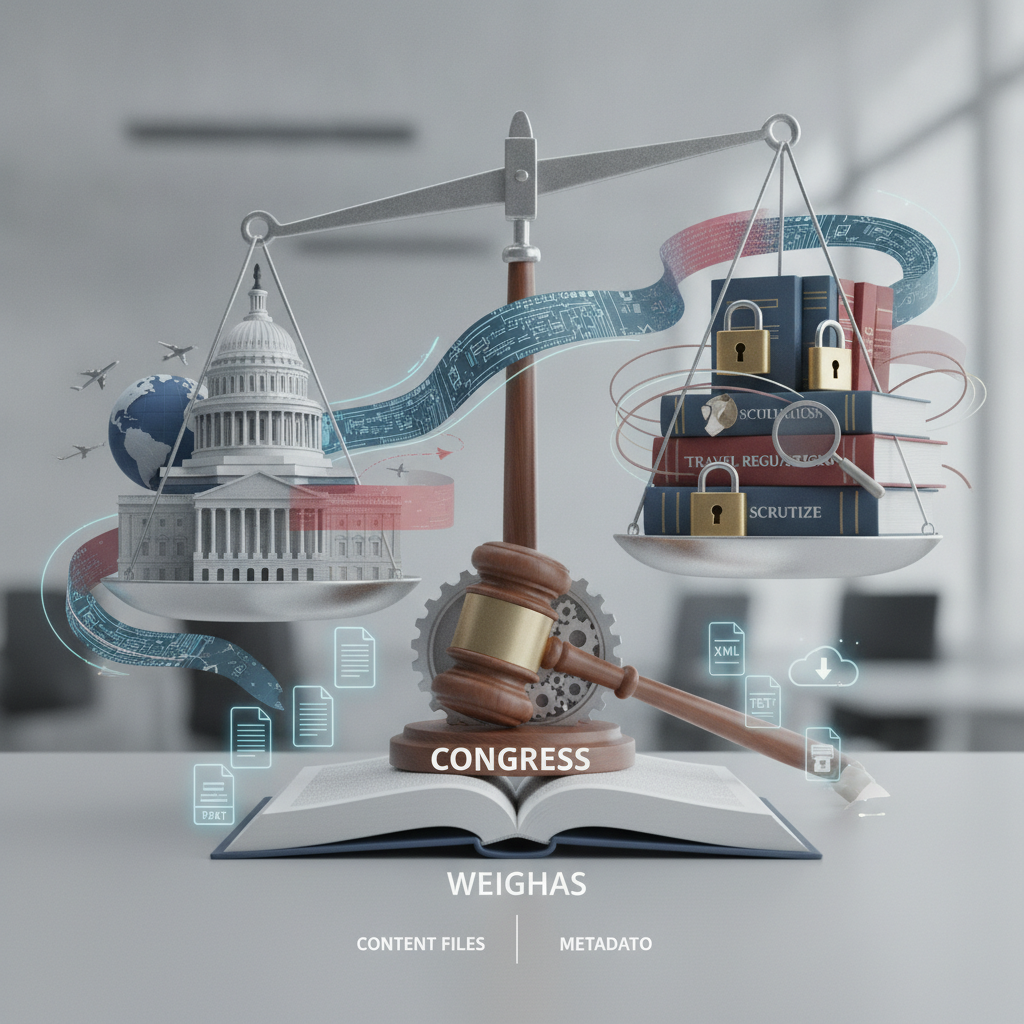
Congress Weighs VISITOR Act to Overhaul Visa Processing, Boost Tourism and Scrutinize Travel Regulations
Content Files PDF XML TEXT Metadata download Descriptive Metadata (MODS) Preservation Metadata (PREMIS) All Content and Metadata files, including granules ZIP

Last updated:
Key points
VISITOR Act
- House lawmakers introduced H.R. 10106, the Visa Improvement, Streamlined Investment, and Tourism Optimization Reform (VISITOR) Act.
- The proposed legislation seeks to address visa backlogs, optimize administrative workflows, and boost international business and tourism.
- The measure now moves to House committees for review to balance economic development with rigorous vetting and security standards.
NewsWK — Lawmakers in the United States House of Representatives have formally introduced a legislative measure aimed at modernizing federal travel policy, targeting visa processing bottlenecks, and encouraging foreign commerce across the United States. The measure, designated as House Resolution 10106 and titled the Visa Improvement, Streamlined Investment, and Tourism Optimization Reform Act—or the VISITOR Act—seeks to balance economic interests in the travel sector with the procedural integrity of the nation’s entry screening mechanisms.
Understanding the Scope of H.R. 10106
The VISITOR Act enters the legislative docket at a time when communities nationwide are seeking avenues to expand local commerce, fill service-sector positions, and attract global capital without sacrificing federal oversight. As an introduced measure in the House, H.R. 10106 addresses several facets of the legal entry framework that govern how foreign business leaders, investors, and leisure travelers navigate federal clearance.
While full committee markups and debates are pending, legislative proposals targeting visa system optimization typically focus on reducing backlogs, standardizing consular interview timelines, and deploying updated digital systems across the State Department and the Department of Homeland Security. Lawmakers introducing such measures seek to resolve long-standing administrative inefficiencies that have caused visa application delays spanning several months—and in some regions, over a year—for qualified international applicants.
Why it matters here
For small business owners, tourism operators, and taxpayers across American communities, federal visa policies have a direct footprint on local balance sheets. Travel and hospitality remain foundational economic drivers for regional economies, encompassing hotel operations, independent restaurants, cultural venues, and regional convention centers.
- Support for Main Street Commerce: International travelers typically register higher average spending per trip than domestic visitors, injecting private capital directly into local retail, dining, and transportation networks.
- Attracting Legitimate Investment: By creating more predictable procedural pipelines for foreign entrepreneurs and investors, legislative reform seeks to direct lawful capital into domestic infrastructure and private enterprise, helping sustain local employment.
- Taxpayer and Resource Efficiency: Lengthy backlogs and outdated bureaucratic workflows at federal processing centers strain agency budgets. Streamlining administrative checkpoints aims to maximize existing fee-funded resources while cutting red tape.
- Preserving National Security and Vetting: Any updates to entry policy remain under intense scrutiny to ensure that streamlining efforts do not weaken biometric checks, background vetting, or enforcement mechanisms intended to uphold national sovereignty and the rule of law.
Balancing Economic Growth with the Rule of Law
Reforming the federal visa apparatus frequently sparks an essential debate on Capitol Hill: how to enhance economic competitiveness while safeguarding national security. Conservative lawmakers and rule-of-law advocates have consistently maintained that while legitimate international business and tourism are vital to a flourishing economy, entry standards must remain rigorous and fully enforced.
Administrative delays at consular posts abroad have occasionally incentivized reliance on non-standard entry avenues, underscoring the necessity for clear, efficient, and lawful pathways for vetted travel. By standardizing statutory expectations, proponents argue that statutory measures like H.R. 10106 can restore confidence in regulated, legal travel systems while ensuring that federal enforcement resources remain focused on border integrity and compliance.
Next Steps in the Legislative Process
H.R. 10106 has been introduced in the House of Representatives and must now proceed through the traditional committee referral process before it can be considered on the House floor. Relevant committees—including the House Judiciary Committee and the Committee on Foreign Affairs—will review the statutory text, assess potential budget impacts, and determine whether to advance the bill with amendments.
Should the measure clear committee scrutiny and pass the full House, it will move to the Senate for further deliberation. As federal lawmakers debate the path forward for administrative modernizations and entry policies, the trajectory of the VISITOR Act will remain a key focal point for domestic industries that depend on predictable, secure, and transparent international commerce.
This article was produced with the assistance of AI and reviewed by our editorial team.
Sources
Related: Texas Rep Beth Van Duyne Immigration Bill Targets Abuse with H-1B Visa Fraud Crackdown Act
See a typo? Report it here.