National News
Lawmakers Face Accountability Push Under Sell Your Stocks or Step Down Act
Content Files PDF XML TEXT Metadata download Descriptive Metadata (MODS) Preservation Metadata (PREMIS) All Content and Metadata files, including granules ZIP


Last updated:
Key points
- H.R. 10199, the Sell Your Stocks or Step Down Act, has been introduced in the U.S. House of Representatives to restrict lawmakers from holding or trading individual stocks.
- The legislation requires members of Congress to divest from individual equities or place their assets into qualified blind trusts, exempting broad-based funds.
- The measure responds to long-standing public concerns regarding ethics enforcement and conflicts of interest under the 2012 STOCK Act.
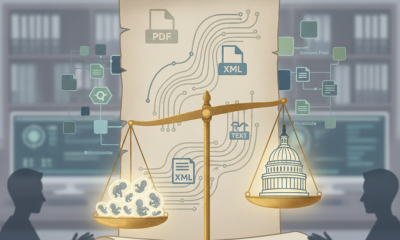
NewsWK — Federal lawmakers are facing renewed scrutiny over their personal financial dealings following the formal introduction of the Sell Your Stocks or Step Down Act in the U.S. House of Representatives. Designated as H.R. 10199, the measure seeks to overhaul ethics rules on Capitol Hill by imposing strict prohibitions on members of Congress buying, selling, or actively holding individual stocks while in office.
Why it matters here
For citizens across the United States who work, invest, and manage household budgets within standard market rules, the question of whether elected representatives possess unfair financial advantages remains a critical public trust issue. Congressional leaders regularly receive classified briefings, participate in closed-door committee investigations, and vote on vast appropriations that directly impact defense contractors, technology firms, healthcare systems, and energy markets.
When elected officials or their families trade equities in sectors they directly regulate, it fuels concerns about conflicts of interest and erodes confidence in the legislative branch. Ensuring that lawmakers operate under strict transparency reinforces the rule of law and guarantees that public servants prioritize the interests of everyday taxpayers rather than their personal investment portfolios.
Overview of the Congress Stock Trading Ban Bill
The measure introduced as H.R. 10199 represents the latest federal effort to establish clear boundaries between lawmaking and private wealth accumulation. Under the proposed framework, sitting members of Congress would be required to either divest from individual publicly traded securities or place their holdings into qualified blind trusts managed by independent financial fiduciaries.
Under standard practices across federal ethics proposals, exceptions are typically reserved for diversified assets that do not present direct individual conflicts, such as broad-based mutual funds, exchange-traded index funds, and U.S. Treasury securities. The bill’s core objective is to eliminate the potential for insider trading or the perception that legislative actions are guided by personal financial gain.
Key Provisions of the Sell Your Stocks or Step Down Act HR 10199
The legislative text establishes clear enforcement mechanisms and compliance requirements designed to address long-standing loopholes in federal oversight:
- Mandatory Divestment or Blind Trusts: Lawmakers subject to the statute must liquidate individual corporate shares or transfer management to a certified blind trust within an established post-swearing-in timeline.
- Strengthened Penalties: Unlike prior ethics regulations that imposed modest administrative fines, the proposal calls for substantive monetary penalties and potential referral to ethics committees for non-compliance.
- Enhanced Public Disclosure: Any permitted transactions must be reported through accelerated disclosure channels to maintain continuous transparency for constituents.
The Evolution of Congressional Stock Trading Legislation
Efforts to rein in Capitol Hill stock trading have developed steadily over the past decade. In 2012, Congress passed the Stop Trading on Congressional Knowledge (STOCK) Act, which explicitly affirmed that lawmakers and congressional staff are not exempt from federal insider trading laws and mandated 45-day transaction reporting.
However, enforcement data in the years following the STOCK Act revealed widespread non-compliance, late disclosures, and minimal penalties—often as low as $200 per violation—which critics from both parties argued did little to deter improper activity. As public awareness increased regarding well-timed stock transactions during economic crises, public health emergencies, and major defense procurements, demands for a total ban on individual stock transactions gained significant momentum across the political spectrum.
Accountability, Individual Rights, and the Path Forward
While advocates emphasize that restricting individual stock ownership is essential to restore faith in democratic institutions, constitutional scholars and legislative analysts continue to weigh the balance between public ethics and personal property rights. Some conservative policy experts have noted that ethics frameworks must be crafted carefully to avoid discouraging talented private-sector leaders from seeking public office, while maintaining rigorous safeguards against corruption.
The bill currently awaits referral to the appropriate House committees for consideration and review. As legislative debates unfold, taxpayers and watchdog organizations will be watching closely to see whether congressional leadership brings the measure forward for committee markup or a full floor vote.
This article was produced with the assistance of AI and reviewed by our editorial team.
Sources
Related: Sanctuary Policies Block Federal Jail Transfers as ICE Ramps Up Enforcement Across U.S. Communities
Related: Congress Receives New Legislation Aimed at Local Health Care Protection
See a typo? Report it here.