California
Supreme Court Mail In Voting Decision Halts Federal Election Changes Ahead of Midterms
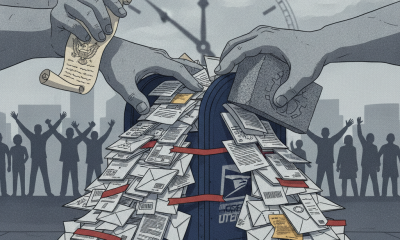
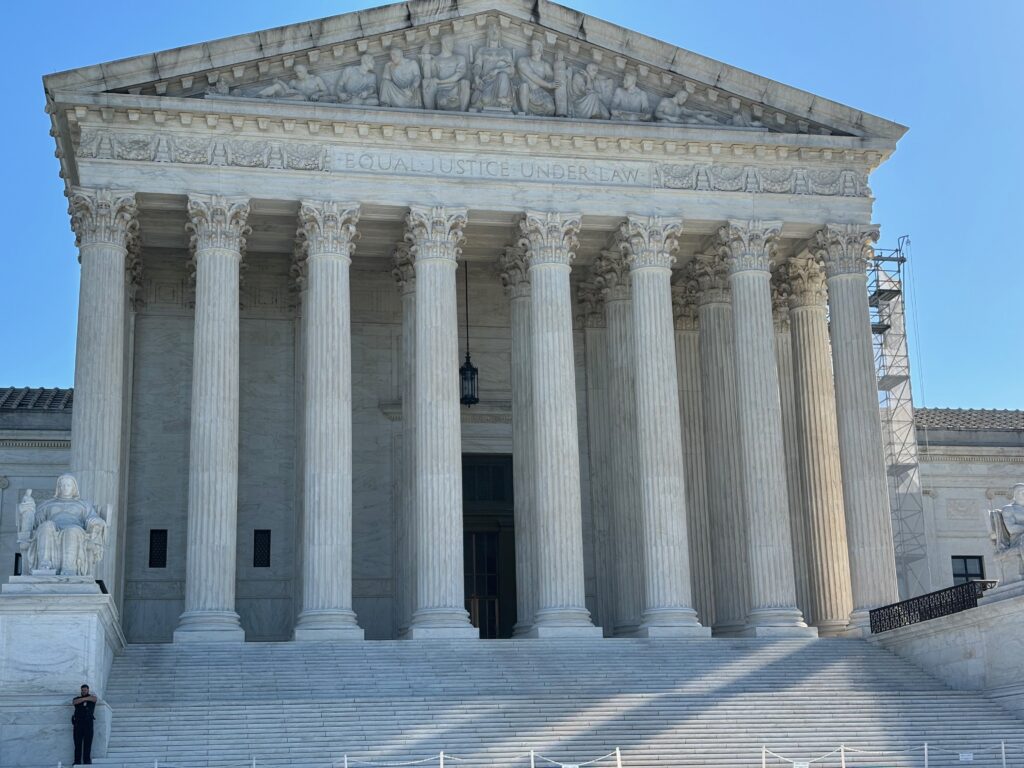
The U.S. Supreme Court on Monday kept in place a lower court’s order blocking President Donald Trump’s embattled plan to place new restrictions on mail ballots for this year’s midterm elections. The unsigned, one-paragraph order upheld a Massachusetts federal court’s injunction…

About Supreme Court Mail In Voting Decision
Last updated:
Key points
- The Supreme Court upheld an injunction blocking new federal mail-in voting requirements ahead of the 2026 midterm elections.
- Justice Brett Kavanaugh concurred that implementing the rules 50 days before the election was arbitrary and unworkable for state clerks.
- Justices Samuel Alito and Clarence Thomas dissented, noting the Postal Service holds broad regulatory power over mail operations.
NewsWK — Voters across the nation will cast ballots under existing state rules this November. On Monday, the justices preserved normal voting procedures for the upcoming midterm elections. The bench halted a contested federal effort to overhaul mail-in procedures just weeks before election day. Local election administrators now retain their current protocols without abrupt federal interference.
Why it matters
This order directly shapes how millions of Americans cast ballots this fall. Voters will navigate familiar rules rather than sudden procedural hurdles. Election offices across the states avoid hasty administrative overhauls days before polling deadlines. For taxpayers, local governments avoid expensive last-minute logistical changes to postal envelopes and registration systems.
Why did the Supreme Court block the Trump mail voting rule?
The high court paused the administrative changes because election officials could not implement them quickly. While justices debated federal statutory powers, the majority determined that rapid changes would disrupt ongoing operations. The short order keeps a Massachusetts federal injunction intact until after the November midterm elections conclude.
The dispute centers on changes drafted for the United States Postal Service. In Massachusetts, U.S. District Judge Indira Talwani previously issued an injunction halting the federal rule. Then, federal attorneys appealed to the Supreme Court. However, the justices left that injunction intact through an unsigned order.
Two conservative justices parted ways with the ruling. Justice Clarence Thomas and Justice Samuel Alito dissented from the majority. In his dissent, Alito noted that the Postal Service possesses “broad authority to regulate the mail” under federal law. Therefore, Alito argued that the agency rule should remain active while litigation proceeds.
Still, Justice Brett Kavanaugh joined the majority in a brief concurring opinion. Kavanaugh stated that the rule might fall within statutory bounds. However, he stressed that introducing complex regulations 50 days before an election is unworkable. Kavanaugh wrote that “applying the rule in the 2026 elections would be arbitrary and capricious.” He explained that local election officials lack sufficient implementation time.
How does the Trump mail in ballot ruling affect state authority?
The ruling preserves the constitutional principle that individual states govern their own elections. State officials argued that executive agencies cannot usurp powers reserved for state legislatures. By leaving current procedures alone, the bench reaffirmed core limits on administrative agencies. Specifically, agencies cannot abruptly impose nationwide voting mandates on local election boards.
Under the U.S. Constitution, state legislatures retain primary authority over election administration. Congress maintains oversight, but the executive branch exercises limited power over state ballot rules. Consequently, state attorneys general challenged the federal administrative action as unconstitutional executive overreach.
Several states, including California and Colorado, joined civil rights groups in the lawsuit. These states automatically send ballots by mail to every registered voter. Attorneys general argued that the federal standards violated state prerogatives.
Meanwhile, former President Donald Trump voiced sharp disapproval on social media following the decision. Trump argued that the ruling harms election integrity and aids his political opponents. In addition, he criticized judicial appointees who declined to revive the agency policy.
What are the Postal Service mail voting rule requirements?
The contested agency rule sought to standardize mail balloting through strict envelope guidelines and federal data collection. Supporters viewed the requirements as practical tools to safeguard mail-in integrity. However, election clerks warned that the mandates created immediate administrative burdens right before critical voting deadlines.
The proposed framework introduced specific mandates for mail-in processing:
- Technical envelope specifications for every outgoing and incoming postal ballot.
- Mandatory state reporting of registered voter lists directly to federal authorities.
- Strict timelines for postal sorting and tracking across regional distribution hubs.
Federal attorneys argued these policies ensure uniform standards across all fifty states. But local administrators testified they could not print compliant envelopes or transmit records in time. Also, the Postal Service did not present counter-evidence to dispute those implementation difficulties.
What happens next in federal court?
The temporary stay only resolves voting procedures for the upcoming 2026 midterm election. Judge Talwani will now evaluate the broader merits of the case in federal district court. That forthcoming review will formally determine whether the executive branch has legal authority to enforce these restrictions permanently.
Because Monday’s order addressed emergency relief, the high court did not issue a final judgment on the merits. Thus, the legal battle continues in Boston. Federal attorneys will seek to prove that federal postal statutes grant broad regulatory power over all mail handling.
Conversely, state officials will maintain that federal agencies cannot regulate election mechanics through mail rules. If the district court permanently blocks the rules, federal attorneys will likely appeal again. As a result, the question of federal authority over mail ballots could return to the Supreme Court in future election cycles.
This article was produced with the assistance of AI and reviewed by our editorial team.
Sources
Related: Supreme Court Lifts Injunction on Federal Mail-In Ballot Security Standards Ahead of Midterms
Related: Federal Judge Issues Temporary Halt on Postal Service Mail Ballot Verification Rules
See a typo? Report it here.