Washington
US Senate Advances Connected Vehicle Security Act of 2026 to Protect American Drivers
Content Files PDF XML TEXT Metadata download Descriptive Metadata (MODS) Preservation Metadata (PREMIS) All Content and Metadata files, including granules ZIP

Last updated:
Key points
- The Senate Commerce Committee unanimously approved S. 4429 to target connected vehicle technology from foreign adversaries.
- The legislation phases in software bans starting in 2027, followed by hardware restrictions in 2030.
- The bipartisan bill is co-sponsored by lawmakers from Ohio and Michigan, with a companion bill moving through the House.
NewsWK — Bipartisan lawmakers in Washington are moving to protect American roads from foreign cyber threats. The Senate Committee on Commerce, Science, and Transportation recently advanced a critical national security measure to restrict foreign-controlled technology in modern cars.
Why it matters
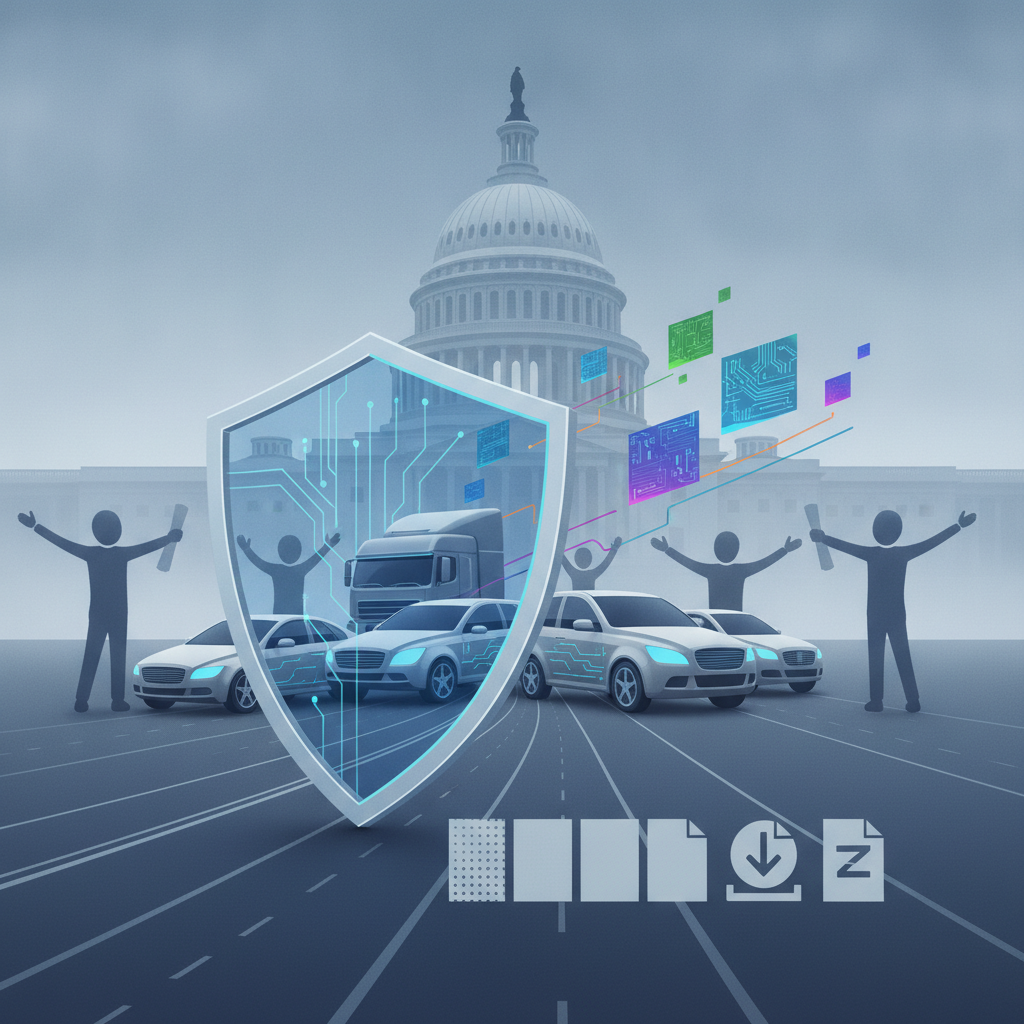
This legislation aims to safeguard national security by keeping hostile foreign technology out of American supply chains. By restricting software and hardware from adversaries, lawmakers hope to prevent foreign governments from accessing sensitive driver data.
Why does the S 4429 Connected Vehicle Security Act target foreign automotive technology?
The S 4429 Connected Vehicle Security Act bans the import, manufacture, and sale of connected vehicles linked to foreign adversaries. It targets technology controlled by China, Russia, Iran, and North Korea. This bipartisan effort addresses growing fears that foreign powers could weaponize connected car systems within American borders.
The legislation specifically targets vehicle connectivity systems (VCS) and automated driving systems (ADS). Under the bill, the U.S. Department of Commerce will enforce these prohibitions. The department will oversee compliance declarations, issue waivers, and penalize noncompliant companies.
When will the connected vehicle foreign adversary ban take effect?
The connected vehicle foreign adversary ban will roll out in phases starting next year. Connected vehicle and software restrictions will begin in 2027. Meanwhile, more complex hardware restrictions will take effect in 2030, giving manufacturers time to adjust their supply chains.
Senator Bernie Moreno (R-OH) and Senator Elissa Slotkin (D-MI) introduced the bill on April 29, 2026. On July 22, 2026, the Senate Commerce Committee approved the amended bill with unanimous bipartisan support. A companion bill, H.R. 8730, is also moving through the House under the sponsorship of Representatives John Moolenaar (R-MI) and Debbie Dingell (D-MI).
This article was produced with the assistance of AI and reviewed by our editorial team.
Sources
Related: House Resolution 1499 Clears Way for Critical Votes on Mining, Higher Education, and Maritime Rules
Related: Study Examines Women on Parole Mental Health and Reentry Crises Across the US
See a typo? Report it here.