District of Columbia
What to Know About the Medicare Low Income Subsidy Equality Act
Content Files PDF XML TEXT Metadata download Descriptive Metadata (MODS) Preservation Metadata (PREMIS) All Content and Metadata files, including granules ZIP

Last updated:
Key points
- HR 10874 proposes standardizing Medicare Part D prescription drug subsidies across Puerto Rico and all U.S. territories.
- The bill amends Titles XVIII and XIX of the Social Security Act to eliminate territorial funding disparities.
- If passed, Medicare Part D reforms would take effect on January 1, 2027, following Congressional committee review.
What is the Medicare Low Income Subsidy Equality Act?
NewsWK — The Medicare Low Income Subsidy Equality Act is a federal bill introduced in the House of Representatives on October 22, 2026. The measure seeks to equalize prescription drug benefits for seniors across all American jurisdictions. It focuses on low-income Medicare beneficiaries living in Puerto Rico and other island territories.
Federal lawmakers introduced the legislation as HR 10874 during the 119th Congress. Resident Commissioner Pablo José Hernández of Puerto Rico serves as the primary sponsor of the bill. Representative James C. Moylan of Guam and Representative Darren Soto of Florida joined as original cosponsors. House leaders referred the proposal to the Committee on Energy and Commerce and the Committee on Ways and Means.
Currently, the federal government uses different rules for Medicare prescription benefits in American territories. Under existing statutes, residents in these areas do not receive direct access to standard low-income drug subsidies. Instead, federal policy directs special block allocations through local Medicaid programs. HR 10874 aims to replace that framework with nationwide uniformity.
What does the bill mean for Puerto Rico Medicare Part D subsidies?
Puerto Rico Medicare Part D subsidies would match the assistance available in the 50 states if Congress passes the legislation. Low-income senior citizens in the territory would gain direct financial relief for prescription medication costs. The reform eliminates statutory language that restricts territory residents from standard Medicare Part D support programs.
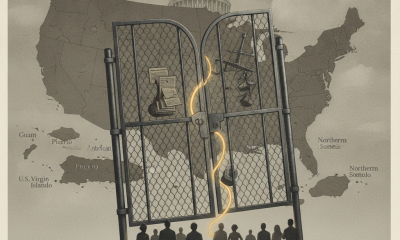
Under current law, low-income Medicare recipients in the 50 states and Washington, D.C., qualify for extra help. This program pays for prescription drug plan premiums, deductibles, and co-payments. However, current rules exclude residents of island territories from this direct program. The exclusion applies to Puerto Rico, Guam, the U.S. Virgin Islands, American Samoa, and the Northern Mariana Islands.
The proposed legislation targets this gap directly by amending Title XVIII of the Social Security Act. Specifically, it changes section 1860D-14(a)(3), located at 42 U.S.C. 1395w-114(a)(3). The revision requires federal administrators to compute eligibility using a standard baseline. It applies the poverty line established for the 48 contiguous states and the District of Columbia. Therefore, low-income territorial residents would qualify under identical income benchmarks.
How would HR 10874 modify Medicare Part D cost sharing US territories face?
HR 10874 alters Medicare Part D cost sharing US territories handle. It shifts financial assistance from indirect grants to direct beneficiary subsidies. The legislation updates federal law so seniors in territories receive direct help with prescription co-payments. This shift brings structural parity to federal healthcare programs across all United States regions.
The legislation sets distinct timelines for implementation across its main provisions:
- January 1, 2027: Direct Medicare Part D low-income subsidy changes become fully operational for territory residents.
- Date of Enactment: Medicaid statutory adjustments under Section 1935 take effect immediately upon signature into law.
- Committee Review: House committees must examine the fiscal details before sending the bill to the floor.
In addition, the bill amends Title XIX section 1935 of the Social Security Act, codified as 42 U.S.C. 1396u-5. This section governs Medicaid interaction with Medicare drug benefits. The new rules establish separate, standardized payment computation formulas for Puerto Rico and other island territories. As a result, federal agencies can process territory funding seamlessly without complex local administrative carve-outs.
What is the legislative background of Medicare Part D low income subsidy territories provisions?
When Congress established Part D prescription drug coverage, it created the Low Income Subsidy program. However, lawmakers excluded territory residents from direct subsidy enrollment, offering capped territorial grant funds instead.
Territory officials argue that capping federal support places a heavy burden on local territorial budgets. Meanwhile, taxpayers and fiscal analysts emphasize the need for clear budget transparency. They also demand equal statutory application across federal health systems.
House Speaker leadership routed HR 10874 to two key committees for detailed evaluation. The House Committee on Ways and Means handles tax policy and Medicare financing. Meanwhile, the House Committee on Energy and Commerce oversees general public health and Medicaid policies. Both committees will determine whether the bill moves forward to a full vote in the House of Representatives.
As the legislative process unfolds, federal oversight remains a primary consideration for lawmakers. Members of Congress will evaluate the long-term budget impact on federal healthcare expenditures. Because mandatory spending programs require careful fiscal management, analysts will study official cost estimates carefully. The future of the bill depends on balancing equitable healthcare access with responsible federal spending controls.
This article was produced with the assistance of AI and reviewed by our editorial team.
Sources
Related: House Lawmakers Introduce Fair Prescription Pricing Act of 2026 to Address Rising Drug Costs
Related: Medicare Dental Benefit Act of 2026: What Federal Lawmakers Propose for Senior Dental Care
See a typo? Report it here.