
Washington
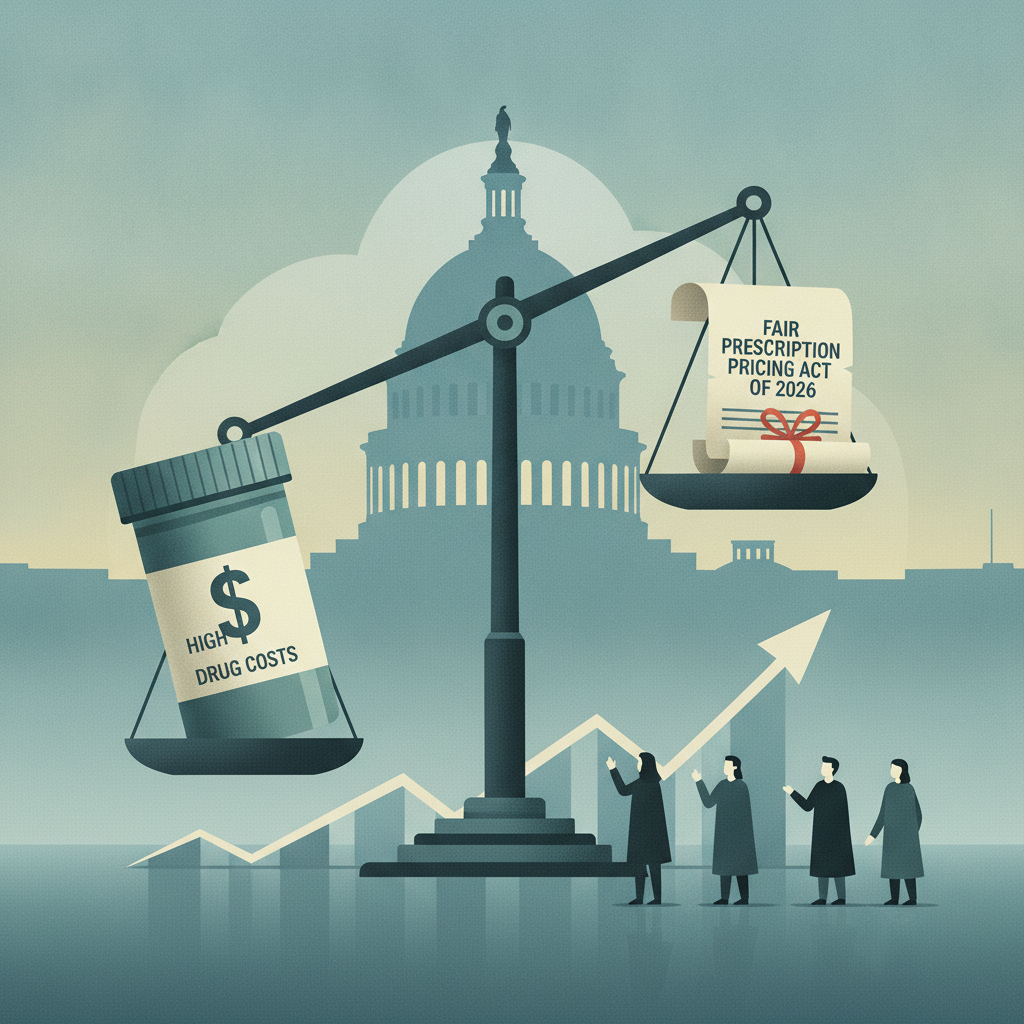
House Lawmakers Introduce Fair Prescription Pricing Act of 2026 to Address Rising Drug Costs
Content Files PDF XML TEXT Metadata download Descriptive Metadata (MODS) Preservation Metadata (PREMIS) All Content and Metadata files, including granules ZIP

Last updated:
Key points
Fair Prescription Pricing Act of 2026
- H.R. 10133, the Fair Prescription Pricing Act of 2026, has been formally introduced in the U.S. House of Representatives.
- The legislation targets prescription drug affordability and pricing transparency amid sustained economic pressure on American families and taxpayers.
- The bill must clear committee review and markup before advancing to the House floor for a full vote.
NewsWK — Federal lawmakers in Washington have formally introduced newly drafted legislation aimed at reforming prescription drug costs across the United States. Designated as H.R. 10133, the Fair Prescription Pricing Act of 2026 enters the legislative pipeline as Congress faces mounting pressure from American families and seniors grappling with rising healthcare expenses and inflation.
The measure, which has been referred to committee for initial review, represents the latest congressional effort to tackle pharmaceutical pricing transparency, regulatory oversight, and market competition. While legislative details will undergo committee scrutiny, the bill arrives at a critical juncture in the broader national debate over healthcare affordability, government intervention, and the protection of private-sector medical innovation.
Why it matters here
For millions of households across the United States, prescription medication expenses constitute a significant share of monthly living costs. Working families, retirees on fixed incomes, and small business owners sponsoring employer-based health insurance plans feel the direct economic impact of rising drug prices every year.
High prescription costs place a sustained burden on taxpayers through entitlement programs such as Medicare and Medicaid, which spend tens of billions of dollars annually on pharmaceutical treatments. Any federal policy change affecting wholesale acquisition costs, rebate structures, or price transparency directly influences insurance premiums, out-of-pocket copays, and municipal and state budgets across the country.
At the same time, communities across the nation benefit significantly from biomedical research, domestic manufacturing, and high-skilled clinical jobs. Industry analysts and market advocates frequently note that federal policy must balance cost-reduction objectives with the economic incentives necessary to foster research and development for life-saving treatments.
Legislative Background and Context
Federal legislation addressing prescription drug pricing has historically involved contentious debate over the appropriate role of government in the pharmaceutical marketplace. In recent legislative sessions, lawmakers from both sides of the aisle have examined different mechanisms to rein in healthcare expenses, ranging from reforming pharmacy benefit manager (PBM) business practices to enhancing patent transparency and expediting generic drug approvals.
Free-market policy analysts have long argued that increasing regulatory burdens or implementing government price controls risks stifling biomedical innovation, delaying the market entry of breakthrough therapies, and creating unintended shortages. Conversely, proponents of pricing reform argue that heightened transparency requirements are essential to curb anti-competitive practices, clarify complex rebate arrangements, and protect consumers from sudden price spikes.
The introduction of H.R. 10133 follows several years of targeted oversight into the pharmaceutical supply chain, where complex intermediary networks—including insurers, wholesalers, and pharmacy benefit managers—often obscure the true baseline cost of prescription drugs from the patients who purchase them at the pharmacy counter.
The Road Ahead in Congress
As an introduced measure in the U.S. House of Representatives, H.R. 10133 must navigate committee hearings, markup sessions, and potential amendments before it can be considered for a floor vote. Relevant congressional committees with jurisdiction over healthcare and commerce will examine the bill’s statutory text to determine its fiscal impact and feasibility.
Lawmakers will face questions from patient advocacy groups, healthcare providers, and industry representatives regarding how the proposed reforms will interact with existing Medicare Part D rules, private insurance standards, and patent protections. Observers expect substantial debate on whether the measure emphasizes market-driven transparency and competition or introduces new administrative mandates on the healthcare sector.
With healthcare consistently ranking among the top economic concerns for American voters, H.R. 10133 is poised to serve as a key focal point for lawmakers evaluating federal healthcare spending and consumer affordability ahead of future legislative deadlines.
This article was produced with the assistance of AI and reviewed by our editorial team.
Sources
Related: Sanctuary Policies Block Federal Jail Transfers as ICE Ramps Up Enforcement Across U.S. Communities
See a typo? Report it here.