National News
FAA Nationwide Ground Stop and NWS Radar Outage Disrupt Aviation and Weather Tracking
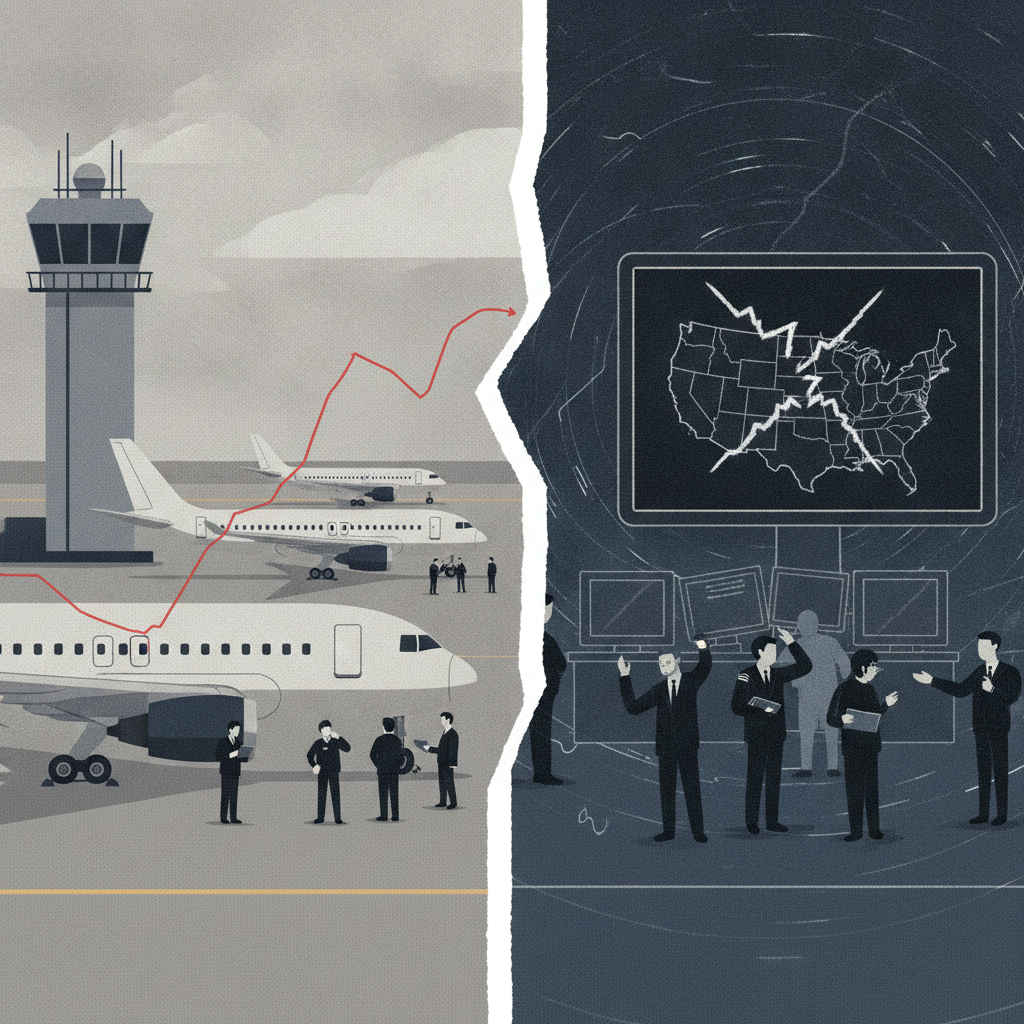
Simultaneous technical issues caused an FAA nationwide ground stop and an NWS radar outage on Friday afternoon. Air traffic controllers halted outgoing domestic departures, while the primary radar mapping portal experienced widespread access disruptions across the United States.

Last updated:
Federal agencies across the United States are investigating simultaneous technical disruptions affecting national aviation and weather infrastructure. Around 3:00 PM CST on Friday, an FAA telecom outage forced air traffic controllers to halt all outgoing flights nationwide. Meanwhile, a major NWS radar outage disabled the public mapping interface on radar.weather.gov.
Is National Weather Service Radar Down for All Users?
No, National Weather Service radar is not down for all users. The public mapping portal on radar.weather.gov experienced a national outage on Friday afternoon. However, regional forecasting offices remain fully operational across the country. Local staff are still issuing forecasts, advisories, and marine warnings, while third-party apps continue delivering live radar data.
Official field office websites posted banners acknowledging the National Weather Service radar outage on the main portal. Currently, agency technical teams are actively investigating the root cause of the website failure. Still, local forecasters continue monitoring severe weather conditions in every state.
For example, local offices issued Freeze Advisories for Saturday morning along with Small Craft Advisories for coastal waters. Furthermore, members of the public can still access critical radar data through alternative methods:
- Direct Level II and Level III Doppler radar data feeds
- Third-party weather applications such as RadarScope and Windy
- Local NOAA Weather Radio network broadcasts
What Triggered the FAA Nationwide Ground Stop?
Communication failures at regional air traffic control centers triggered the nationwide ground stop near 4:00 PM EST on Friday. The sudden mandate halted all domestic departures across the United States. Consequently, flight departures remain on hold while technical crews work to address the network failure across the affected traffic systems.
Secretary Mullin characterized the widespread technical issue as completely unprecedented.
Air traffic controllers are allowing airborne flights to proceed to their planned destinations. However, no new planes may depart from domestic runways until officials lift the order. In addition, controllers are reviewing incoming international flights on an individual case-by-case basis.
How Are Travelers and Communities Affected Across the United States?
Travelers face severe flight delays at major airport hubs nationwide, with passengers waiting on runways and in crowded gates. Meanwhile, local communities seeking storm updates must use alternative channels, as the main federal weather site is down. Fortunately, local emergency services report that regional weather advisories remain active and fully enforceable.
The sudden disruptions created widespread frustration for Friday afternoon commuters and travelers. As a result, major airports across the country reported growing crowds as flights remained held at departure gates. Also, local businesses and families face schedule changes while airlines work through mounting backlogs.
Because the standard web portal is nonfunctional, weather watchers must utilize direct data streams. Emergency management personnel emphasize that local forecast warnings are entirely operational. Therefore, residents should check local news outlets or weather radios for immediate safety updates.
What Caused the Radar Weather Gov Outage and FAA Telecom Outage?
Federal officials have not confirmed any technical link between the radar.weather.gov outage and the FAA aviation disruptions. Although both technical failures occurred during the same Friday afternoon timeframe, investigators have found no evidence of a shared cause. Specialized teams are currently analyzing network backbones and logs to determine the exact root defects.
The close timing of both system failures raised immediate questions among federal leaders. However, agency spokespersons noted that aviation and weather mapping rely on different primary systems. Engineers are inspecting national telecom lines and data relays to trace the problems. Meanwhile, agency leaders promise further public updates as technicians resolve the issues.
How Do Federal Aviation and Weather Infrastructure Systems Operate?
Federal agencies depend on dedicated telecommunications infrastructure to guide commercial flights and distribute weather data. Air traffic centers rely on uninterrupted telemetry to track aircraft safety across regional sectors. Simultaneously, National Weather Service servers compile central radar maps. As a result, telecommunication outages quickly affect critical public safety operations across multiple sectors.
The Federal Aviation Administration operates 22 Air Route Traffic Control Centers across the United States. These regional centers manage high-altitude commercial traffic across vast geographic sectors. When communication links fail between centers, controllers cannot safely track airplane movements. On the weather side, individual Doppler radar installations scan the skies continuously. Central servers then compile these regional feeds into the unified map on radar.weather.gov. Because individual radar stations remain operational, professional apps can still display raw weather data.
Related: FAA Nationwide Ground Stop Halts Domestic Air Travel Across the U.S.
Related: Study Examines Women on Parole Mental Health and Reentry Crises Across the US
Related: Officials Investigate FAA National Ground Stop Cause After Historic Flight Disruption
Related: Travel Gridlock Across U.S. as Nationwide FAA Ground Stop and Tech Failures Strand Passengers
Related: Travel Gridlock Across U.S. as Nationwide FAA Ground Stop and Tech Failures Strand Passengers
Related: FAA Lifts Nationwide Ground Stop After Critical Systems Outage
Related: FAA Nationwide Ground Stop Halts Air Travel After System Telecommunication Outage
See a typo? Report it here.