National News
FAA Lifts Nationwide Ground Stop After Critical Systems Outage
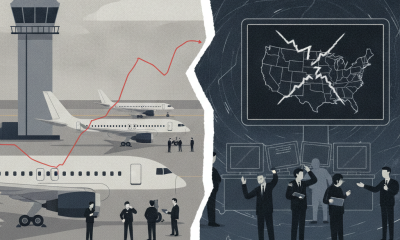
Federal authorities halted all U.S. flight departures Friday following a major telecommunications breakdown across air traffic control centers. The FAA restored critical systems later in the day, lifting the ground stop, but thousands of weekend flight delays remain expected.


Last updated:
Air travel ground to a halt across the United States on Friday, November 13, 2026. A major system failure forced federal authorities to halt departures nationwide. The Federal Aviation Administration Command Center issued an urgent directive to ground all departing traffic. Consequently, officials cited extraordinary circumstances to protect passenger safety while technical crews investigated the issue.
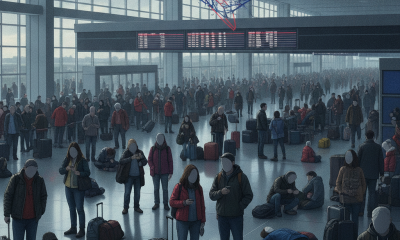
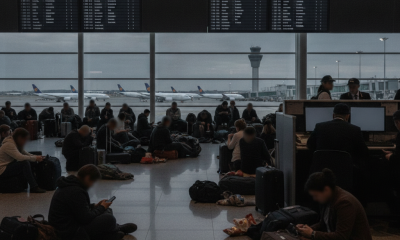
The sudden stoppage left thousands of travelers stranded at terminals nationwide. As a result, commercial airlines, cargo haulers, and international flights faced immediate delays. Fortunately, FAA technicians restored vital systems later in the day. This fix allowed controllers to resume departures safely.
What caused the FAA communication outage across air traffic centers?
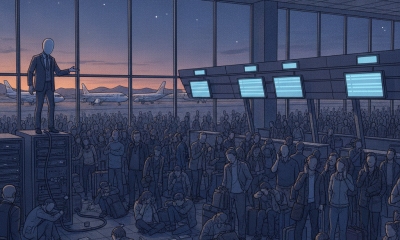
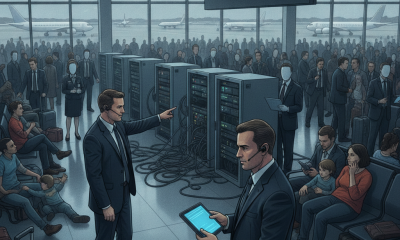
A sweeping technical breakdown across all 22 Air Route Traffic Control Centers caused Friday’s nationwide ground stop. Air traffic controllers temporarily lost critical telecommunications and infrastructure lines needed to coordinate flight paths safely. Consequently, federal officials halted departures across the country until technicians repaired damaged lines and restored core transmission networks.
Transportation Secretary Sean Duffy confirmed that the outage affected every primary control center in the country. Therefore, officials halted all departures to prevent potential hazards in crowded skies.
Homeland Security Secretary Markwayne Mullin addressed public concerns regarding potential security threats. Specifically, Secretary Mullin stated that investigators found no indication of a cyberattack or malicious activity. Instead, officials described the failure as a telecommunications and infrastructure issue. Meanwhile, technicians worked continuously until core transmission networks returned to normal service.
How will nationwide flight cancellations affect travelers and local airports?
The four-hour shutdown created immediate operational gridlock, causing over 4,000 nationwide flight cancellations and roughly 10,000 delays. Stranded passengers faced crowded gates, long lines, and missed connections across major U.S. transit hubs. Although flights resumed, airlines must now realign crews and aircraft across complex nationwide flight networks.
The operational pause hit major aviation hubs and regional airports alike. For instance, airlines struggled to reposition aircraft that remained stranded on tarmac ramps. Furthermore, flight crews reached their maximum working hours, compounding scheduling conflicts for major carriers.
The ground stop created severe operational bottlenecks across the domestic transit system:
- More than 4,000 canceled commercial, cargo, and international flights.
- Approximately 10,000 delayed flights stacking up across major U.S. transit hubs.
- Heavy terminal congestion as stranded passengers sought replacement itineraries.
- Extended crew scheduling conflicts that forced secondary flight changes.
How long will FAA flight delays persist after operations resume?
Federal officials warn that flight delays will persist through the weekend despite the reopened airspace. FAA leaders expect rolling schedule adjustments and delays to continue into Saturday. Because aircraft were out of position during the four-hour hold, carriers cannot instantly clear backlogs or resume standard flight schedules.
Consequently, travel experts urge passengers to monitor flight statuses closely before heading to local airports. In addition, travelers should confirm rebooking options directly through official airline mobile applications.
What is the history of federal ground stops and FAA infrastructure needs?
Friday’s breakdown marks only the third nationwide ground stop in U.S. aviation history. Previous full stops occurred after the September 11, 2001 terrorist attacks and during a January 2023 system failure. However, this latest failure highlights ongoing concerns about aging government infrastructure and urgent modernization needs.
The breakdown spotlights vulnerable federal transit infrastructure across the nation. Congress recently approved $12.5 billion to update federal aviation equipment and digital systems. However, official estimates indicate that the agency requires an additional $30 billion to finish full modernization. Essential upgrades include replacing legacy copper lines and modernizing aging radio networks across all centers.
As a result, lawmakers and taxpayers are increasing oversight of federal spending to ensure system safety. Efficient management of public funds remains vital for protecting both passenger safety and national commerce.
Sources
- Live updates: FAA says nationwide ground stop due to ‘temporary telecommunications outage’
- News 12 | Brooklyn | Live Updates Faa Grounds All Flights Nationwide Due To Communications Problems
- Federal Aviation Administration says airplane departures can resume following nationwide ground stop
- 2026 FAA communication outage
- FAA issues nationwide ground stop, college football teams’ travel plans impacted – On3
- The Latest: FAA lifts nationwide ground stop on flights that halted travel across the US
- Associated Press
- Associated Press
- FOX 6 Milwaukee
- News 12 Brooklyn
- Wikipedia
- On3 Devils Illustrated
This article was produced with the assistance of AI and reviewed by our editorial team.
Related: Flight 93 National Memorial Somerset County Stands as Lasting Testament to Courage
Related: Honoring Sacrifice at the Flight 93 Crash Site Shanksville PA as Milestones Near
Related: FAA Nationwide Ground Stop Strands Hundreds of Thousands at U.S. Airports
Related: Hundreds of Thousands Stranded After FAA Nationwide Ground Stop Halts U.S. Air Travel
Related: Hundreds of Thousands Stranded After FAA Nationwide Ground Stop Halts U.S. Air Travel
See a typo? Report it here.