Alabama
How Deep South Midterm Election Results Signal Shifting Power Dynamics
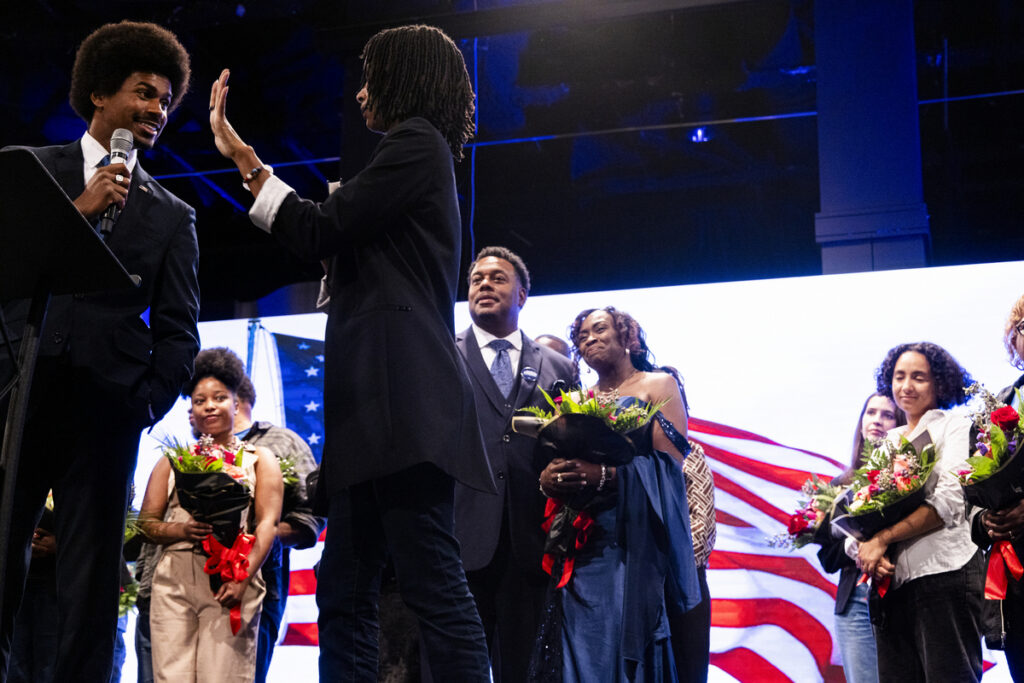
The midterms are over but Tennessee state Rep. Justin Pearson is back on the road, visiting churches and community centers across the congressional district he narrowly lost. He wants to thank voters who supported him. And he’s determined not to…


Last updated:
Key points
- Republicans retained core legislative supermajorities across the Deep South despite narrowing election margins.
- Redistricting and cost-of-living concerns energized voter turnout, narrowing major congressional and statehouse contests in Tennessee, Alabama, and Mississippi.
- Political analysts attribute voter shifts to economic frustration and candidate moderation rather than a permanent ideological realignment.
NewsWK — Recent midterm contests across the American South showed significant shifts in voter participation and tight margins. Even so, conservative leadership largely maintained key statehouses. Voters turned out in record numbers for contested legislative seats in suburban Tennessee. Similarly, high-stakes congressional battles in Mississippi and Alabama drew strong crowds. Ultimately, economic pressures, inflation, foreign policy concerns, and newly redrawn district lines brought millions of citizens to the polls.
What Do Tennessee Midterm Election Results Mean for Southern Voters?
The latest Tennessee midterm election results show how narrowing margins are testing traditional political strongholds. Conservative candidates preserved key seats across the state. However, competitive outcomes in suburban and urban districts reveal new trends. Specifically, economic pressures and redistricting decisions are driving higher voter participation among key local demographics.
Statewide turnout reached notable heights across multiple Southern contests. Conservative lawmakers retained legislative supermajorities in several states. However, narrowing margins in previously secure districts signaled changing voter dynamics. For example, voters expressed sharp concern over government spending, rising living costs, and legislative map changes. Furthermore, local political analysts noted that voters favored moderate policy stances over ideological rhetoric across both parties.
Why Did the Justin Pearson Memphis Election Draw National Attention?
The Justin Pearson Memphis election captured intense interest after lawmakers redrew the congressional district earlier in the year. Republican Brent Taylor ultimately secured the seat by roughly one percentage point. Still, this surprisingly close outcome occurred in a heavily conservative district. Consequently, the race highlighted shifting suburban voter behavior.
The competitive Memphis Tennessee congressional race followed new changes to district boundaries. Specifically, state leaders added more rural voters to the area. Because of past voting patterns, analysts initially projected a strong 21-point advantage for conservative candidates. However, intensive voter outreach narrowed the final margin significantly.
“I was campaigning in communities that were over 60% rural, white, Southern, and we came within one point,” stated Pearson following the election tally.
Despite the close defeat, the race illustrated how redistricting efforts can energize voter participation. In the end, conservative candidate Brent Taylor claimed victory. He secured another seat for the state GOP delegation in Washington.
How Will Shifted Map Boundaries Impact Local Communities?
Redrawn electoral boundaries alter local representation, government spending decisions, and community access to state resources across Southern neighborhoods. When district lines shift, residents experience changes in political constituent services, local tax policies, and legislative leadership.
Suburban counties saw surprising shifts during the voting cycle over high costs, the Iran war, and congressional redistricting. For example, local suburban voters altered representation in several key municipal areas:
- Rutherford County, Tennessee: Voters selected new representatives, flipping three local state House seats.
- Madison County, Alabama: Citizens changed local representation by flipping three state seats and replacing the incumbent sheriff.
- Mississippi Statewide Elections: Voters turned out near presidential-year levels, casting almost one million ballots.
- Louisiana Parishes: Local communities registered sharp spikes in voter turnout following redistricting updates.
Therefore, these local results demonstrate that county-level voters closely monitor state government actions.
What History Shapes Southern Politics Democrats Midterms Face?
Understanding Southern politics Democrats midterms navigate requires examining historic voter alignments and recent legal rulings. Following the U.S. Supreme Court decision in Louisiana v. Callais, several state legislatures reworked their district lines. These updates occurred across Alabama, Florida, Louisiana, North Carolina, Tennessee, and Texas. Consequently, the changes triggered intense community engagement and organized voter turnout drives.
The high turnout across the region reflected intense public focus on constitutional map drawing and legislative authority. In Mississippi, Democrat Scott Colom won a razor-thin Senate race against incumbent Republican Cindy Hyde-Smith. Meanwhile, in Alabama, Democrat Shomari Figures secured a newly established congressional seat designed during state redistricting.
However, political scholars caution against viewing these close contests as a permanent structural realignment toward progressive policies. Instead, economic frustration often drives short-term election trends during midterm cycles. For instance, voters frequently penalize incumbent parties when inflation and household expenses rise.
David Hughes serves as an associate professor of political science at the University of Louisiana at Lafayette. He noted that broader voter anger drove the outcome. “It’s interesting, but it’s largely a fluke and there will be a reversion to the mean,” Hughes stated regarding the unusual regional vote totals.
Meanwhile, conservative leaders point out that Republican candidates still won major governorships across the Deep South midterm election results. Furthermore, they preserved their legislative supermajorities. While individual district boundaries created tight contests, the fundamental conservative lean of the region remains intact heading into future legislative sessions.
This article was produced with the assistance of AI and reviewed by our editorial team.
Sources
Related: How Record Black Voter Turnout Deep South Is Transforming Recent Midterm Elections
Related: Study Examines Women on Parole Mental Health and Reentry Crises Across the US
Related: How Black Voter Turnout Southern Senate Races Reshaped the Midterm Landscape