California
Jonathan Rinderknecht Palisades Fire Verdict: Jury Convicts Defendant in Federal Arson Trial
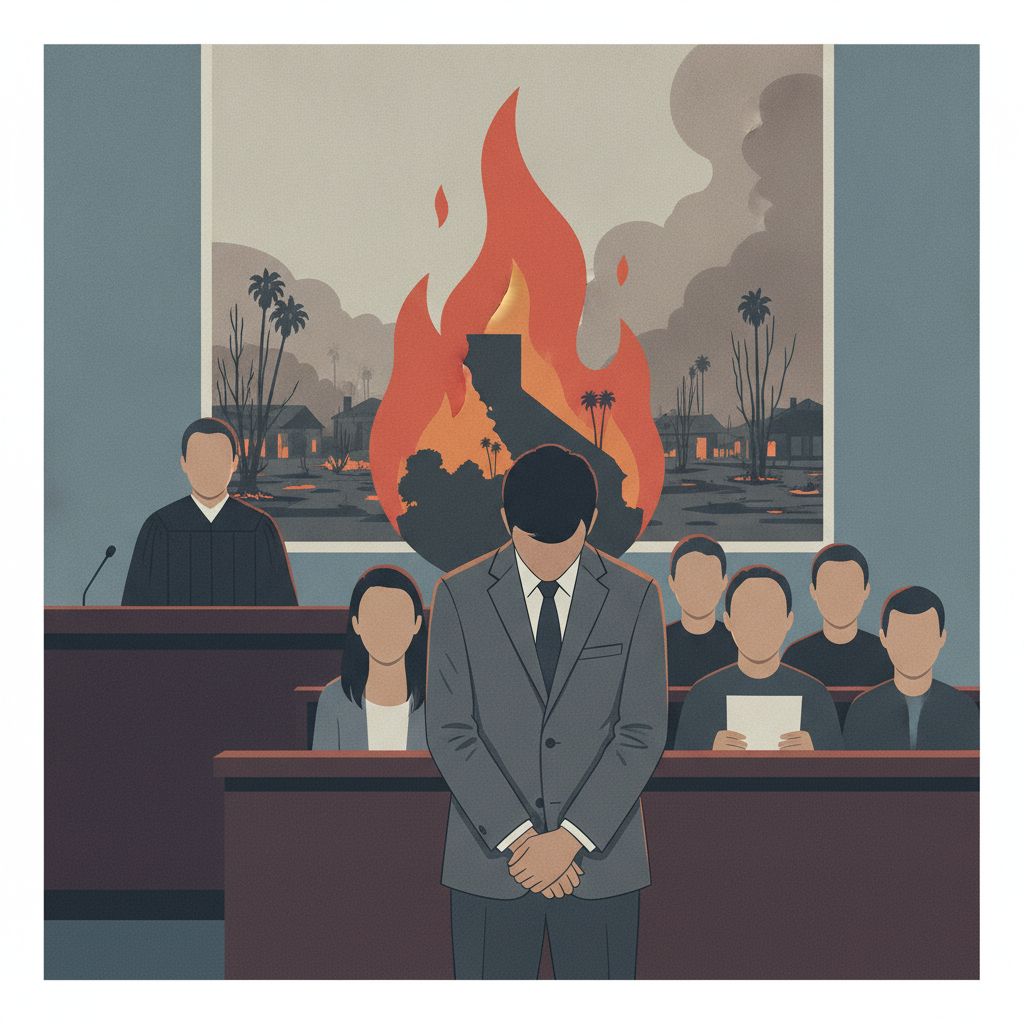
A former Los Angeles resident was found guilty by a jury today of starting what became the Palisades Fire of January 2025, the most destructive wildfire in the city’s history.


Last updated:
Key points
- A federal jury convicted Jonathan Rinderknecht on two felony arson counts for igniting the fire that became the Palisades Fire.
- The historic January 2025 wildfire resulted in 12 deaths, destroyed 6,837 structures, and caused $25 billion in total damage.
- Rinderknecht faces up to 40 years in federal prison, with formal sentencing set for March 17, 2027.
NewsWK — Federal jurors handed down a guilty verdict against former Los Angeles resident Jonathan Rinderknecht. They convicted him for igniting the destructive wildfire in Pacific Palisades. Consequently, the court decision holds Rinderknecht accountable for two federal felony arson counts. The initial brush fire quickly escalated into the most devastating disaster in the city’s history.
What were the findings in the Pacific Palisades fire arson trial?
Jurors convicted Jonathan Rinderknecht on two federal counts. These charges include destruction of property by fire and arson affecting interstate commerce. During the trial, federal prosecutors presented extensive physical evidence, phone records, and timeline data. Ultimately, this evidence proved Rinderknecht deliberately set the initial fire on New Year’s Day 2025 at Hidden Buddha Hill in Pacific Palisades.
The federal trial detailed how a localized brush fire transformed into a catastrophic surge. First, Rinderknecht set the flame around 12:12 a.m. on January 1, 2025. Firefighters initially contained the fire, known locally as the Lachman Fire. However, severe offshore winds on January 7 pushed subterranean embers back to the surface. Consequently, the flames rapidly spread across dry canyons, threatening thousands of homes.
How did investigators secure the Jonathan Rinderknecht guilty verdict?
Federal agents from the ATF worked alongside LAPD officers and U.S. Forest Service investigators to rebuild Rinderknecht’s movements. Specifically, authorities analyzed cell phone tower records, Uber passenger drop-off logs, and iPhone video files. As a result, these digital traces directly connected the defendant to the ignition point.
Because investigators acted quickly, they gathered crucial digital evidence from the scene. First, Rinderknecht dropped off his final Uber passenger in Pacific Palisades late on New Year’s Eve 2024. Then, he drove to “The Summit,” an area where he previously resided. Next, he walked up the Skull Rock Trailhead carrying His Mobile Device. Court records show he played a rap music video featuring fire imagery while walking. Shortly after setting the fire, he attempted to call 911. However, poor cellular coverage prevented the call from connecting immediately. Instead, a nearby resident alerted emergency services first. Rinderknecht eventually left the area. Soon after, he turned his vehicle around to follow responding fire engines. He then filmed additional footage at 1:02 a.m.
What impact did the Los Angeles Palisades Fire have on local residents?
The wildfire killed 12 people and destroyed 6,837 structures across Los Angeles neighborhoods. Furthermore, total monetary losses surpassed $25 billion, tearing apart historic coastal communities. Overall, the disaster disrupted local infrastructure and displaced thousands of families. It also strained municipal emergency response resources to unprecedented levels.
Local families faced sudden displacement as flames swept through steep hillsides. Additionally, property owners lost homes, personal possessions, and businesses during the week-long crisis. Insurance claims quickly mounted into billions of dollars.
What sequence of events led to the January 2025 ignition?
Investigators revealed that personal frustration preceded Rinderknecht’s actions on New Year’s Eve. Specifically, prosecutors showed he grew angry over failed personal relationships. He also resented his inability to find companionship that evening. Ultimately, this emotional state preceded his decision to drive into the hills. There, he set dry brush ablaze at Hidden Buddha Hill.
Court documents revealed Rinderknecht remained deeply upset about a brief dating relationship from March 2024 with a former co-worker. On December 31, 2024, he drove Uber passengers across Los Angeles while exhibiting agitated behavior. After dropping his last ride, he tried reaching a former friend. Next, he hiked toward Hidden Buddha Hill and carried his phone into a Small Trail clearing. There, he ignited dry vegetation right after midnight. Federal prosecutors Mark A. Williams, Matthew W. O’Brien, and Danbee C. Kim presented these details during the proceedings to establish intent.
What comes next after the Palisades Fire arson conviction Los Angeles?
Jonathan Rinderknecht faces a mandatory minimum sentence of 5 years in federal prison. Additionally, he faces a maximum sentence of 40 years. The court scheduled his formal sentencing hearing for March 17, 2027. Meanwhile, Rinderknecht remains in federal custody, where authorities have held him since his October 2025 arrest.
Federal sentencing laws mandate strict penalties for arson affecting interstate commerce. Finally, prosecutors aim to pursue restitution orders to help address the immense economic destruction from the blaze.
This article was produced with the assistance of AI and reviewed by our editorial team.
Sources