
National News
Ukrainian Drone Strike Benghazi Libya Sinks Russian Warship at Pier
Russian vessel hit by suspected Ukrainian drone at Libya’s Benghazi port | Russia-Ukraine war News Ukrainian drones sink Russian warship in North Africa Zelenskyy praises ‘exemplary’ drone operation that sank Russian warship in a Libyan port Ukraine Attacks Russian Ships…


Last updated:
Key points
- Ukrainian maritime drones struck and sank the Russian Navy corvette Merkury at the Port of Benghazi on November 22, 2026.
- The remote strike destroyed an onboard Ka-27 combat helicopter and targeted the sanctioned Russian cargo vessel MV Angara.
- Libyan leadership condemned the attack as a sovereignty violation, while Ukrainian officials stated Russian naval assets remain vulnerable worldwide.
How Did the Ukrainian Drone Strike Benghazi Libya Harbor?
NewsWK — Ukrainian sea drones executed a long-range raid on the Port of Benghazi on November 22, 2026. The attack targeted Russian naval assets in North Africa. Specifically, the precision strike sank a modern Russian warship alongside its onboard combat helicopter. Consequently, the operation demonstrated Ukraine’s ability to hit Russian logistics far from Black Sea battlefields.
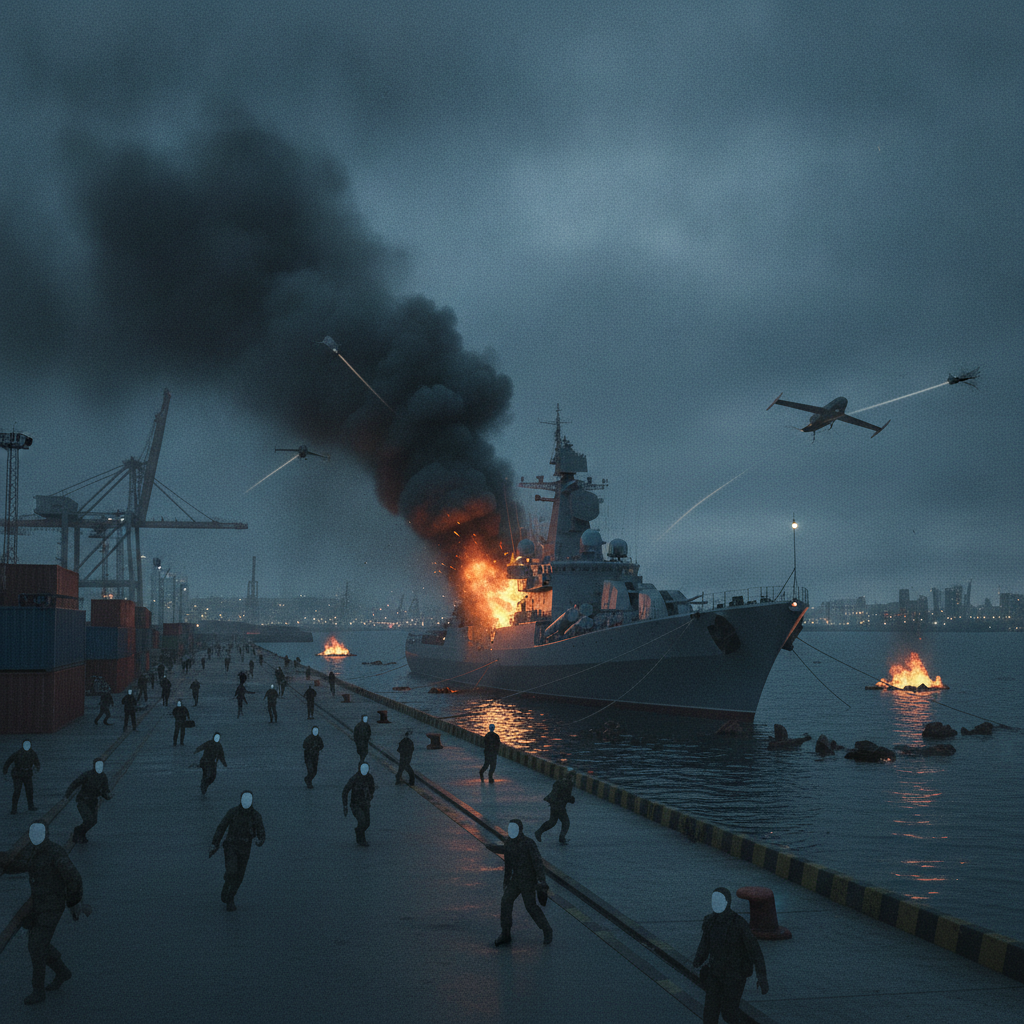
At dawn on Sunday, November 22, 2026, unmanned surface vessels struck the Russian Navy corvette Merkury. The vessel sat docked at the Benghazi Naval Base in eastern Libya. The Security Service of Ukraine, alongside national defense forces, planned and executed the remote assault. Later, satellite imagery from Planet Labs PBC revealed the warship burning at 05:47 GMT. Soon after, the vessel capsized entirely at the pier. Today, only the forward bow of the 344-foot warship remains visible above the Mediterranean water.
Furthermore, Ukrainian officials confirmed that the strike destroyed a Russian Ka-27 combat helicopter aboard the ship. Ukrainian drones also targeted a secondary vessel, the sanctioned Russian cargo ship MV Angara. According to intelligence sources, the cargo ship carried military supplies and munitions. These supplies supported Russian operations in Africa and Syria.
How Did the Ukraine Drone Operation Libya Unfold at Sea?
The Ukraine drone operation in Libya utilized seven surface craft to navigate Mediterranean shipping lanes undetected. Ukrainian personnel launched the explosive vessels from an offshore platform. Meanwhile, local officials claimed the attackers used nearby launch points. Ultimately, this coordinated strike bypassed port security to hit Russian hardware inside the naval facility.
However, conflicting accounts surround the exact launch point of the attack craft. Ukrainian military sources stated that forces transported the seven unmanned vessels on a covert mothership. Next, crews deployed them in international waters. Conversely, two Libyan military officials with the Libyan National Army offered a different explanation. They claimed that Ukrainian operators launched the drones from a ground base in western Libya. Additionally, those local officials reported intercepting four incoming vessels. Despite this effort, two drones successfully penetrated harbor defenses.
What Caused the Escalation as Ukraine Attacks Russian Ship Benghazi Port?
The raid marks a direct expansion of Eastern European hostilities into North African maritime ports. Russian naval vessels routinely use Libyan ports for refueling and resupply under bilateral military agreements. By striking outside the combat zone, Ukraine severed key supply links.
The targeted warship, the Merkury, was a modern Project 20380 corvette weighing 1,800 tons. The Russian Navy commissioned the vessel in May 2023 and assigned it to the Black Sea Fleet. Libyan officials from the eastern-based Government of National Stability explained the ship’s itinerary. Specifically, they stated the warship docked in Benghazi strictly to refuel and resupply. At the time, the ship was sailing its return route to Russia.
However, Ukrainian intelligence tracked the vessel continuously. Following the raid, Ukrainian President Volodymyr Zelenskyy released video footage of the operation. He also praised defense forces for an “exemplary” operation. Furthermore, the Security Service of Ukraine emphasized a clear message from the attack. They stated that Russian forces “have no safe routes even far beyond the Black Sea.”
What Are the Broader Security and Strategic Implications?
The Benghazi attack highlights growing global vulnerabilities surrounding unmonitored maritime logistics and port security. American defense observers note that expanding conflict zones complicate Mediterranean security. This shift affects both allied navies and international commercial shipping. Additionally, the strike challenges Moscow’s ability to maintain a presence across the Middle East and Africa.
The physical damage in Benghazi extended across multiple naval assets and commercial vessels:
- The Merkury Corvette: The 344-foot Russian Navy ship capsized and sank while docked at the Benghazi pier.
- Onboard Aircraft: Strikes destroyed an active Ka-27 combat helicopter parked on the corvette’s flight deck.
- The MV Angara: Drones damaged the sanctioned Russian cargo vessel, which Ukrainian officials identified as an arms transport.
- Commercial Shipping: Rescuers pulled injured crew members from the nearby bulk carrier Ascalon following secondary naval engagements.
Meanwhile, political fallout across North Africa continues to grow. Libyan leadership in the eastern territory condemned the raid as a severe breach of national sovereignty. Furthermore, officials noted that Libya remains neutral in the Russia-Ukraine conflict. Consequently, Libyan authorities launched a formal joint investigation alongside Russian officials. Together, they aim to determine how the stealth attack bypassed harbor defenses.
In Moscow, official reactions remained cautious. Kremlin spokesperson Dmitry Peskov told reporters that Russian officials took note of the Ukrainian statements. He then referred technical inquiries to the Defense Ministry. Ultimately, for U.S. analysts, the operation proves a vital point. Low-cost unmanned technology can disrupt major naval deployments far from active war fronts.
This article was produced with the assistance of AI and reviewed by our editorial team.
Related: Russian Ship Explosion Benghazi Libya: Warship Sinks Following Suspected Drone Attack
Related: Drone Safety Statement Modernization Act: Congress Weighs Updates to Drone Retail Rules


