Washington
Kim Jong Un Foreign Ambassadors Meeting Marks Historic Pyongyang Ceremony
North Korea’s Kim Jong Un Welcomes New Envoys ‘Friendly Toward Us’ Kim says North Korea seeks security, not supremacy Kim Jong Un vows to expand foreign ties at rare diplomatic ceremony North Korean leader receives credentials from Russian ambassador in…


Last updated:
Key points
- Kim Jong Un personally received diplomatic credentials from 10 foreign ambassadors in Pyongyang, marking the first time a supreme leader did so in over 30 years.
- The protocol change follows a March 2026 constitutional revision that strengthened the powers of North Korea‘s head of state.
- The ceremony occurred shortly after U.S. President Donald Trump concluded a trip to Asia without securing a summit with Kim amidst stalled bilateral talks.
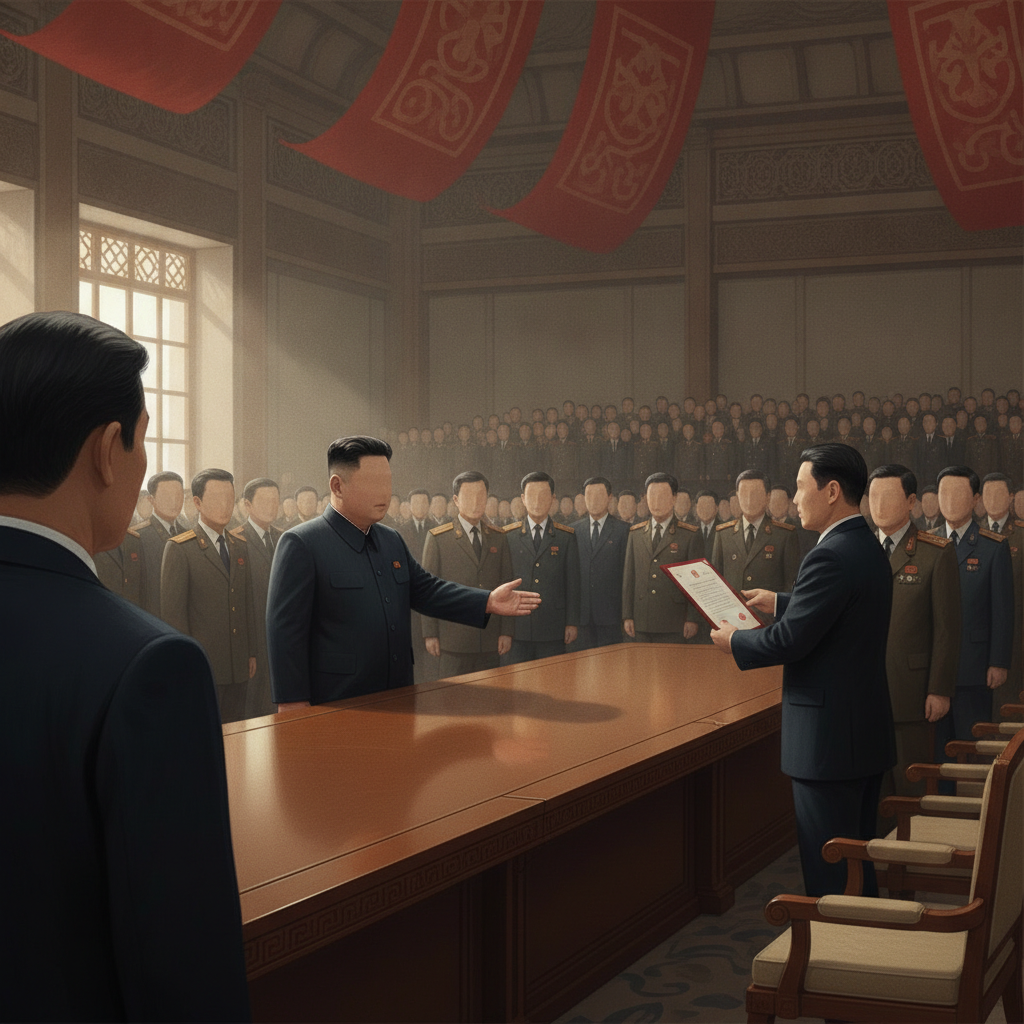
NewsWK — North Korean leader Kim Jong Un personally accepted credentials from ten newly appointed foreign ambassadors on Sunday, November 22, 2026. The high-profile gathering took place at the Workers’ Party headquarters in Pyongyang. State media reported the event on Monday, November 23, 2026. The ceremony marked a historic break from three decades of diplomatic protocol in the nation. Overall, the event highlights a broader effort by Pyongyang to assert its diplomatic standing globally.
What does this shift mean for American national security?
North Korea‘s renewed diplomatic outreach creates complex challenges for American defense strategy in East Asia. By consolidating ties with foreign nations, Pyongyang strengthens its stance against international sanctions. Consequently, U.S. officials must re-examine defense postures and regional alliances to preserve Pacific stability.
Washington monitors developments in Pyongyang closely because diplomatic shifts directly impact U.S. national security. For decades, North Korea relied primarily on nuclear threats and isolation. However, Kim is now projecting a broader diplomatic presence while maintaining his regime’s growing military power.
In addition, U.S. security analysts observe growing coordination between North Korea and foreign partners. Strengthening ties with regional players helps Pyongyang resist economic isolation.
How does the Kim Jong Un diplomatic ceremony alter North Korea foreign relations?
The diplomatic event signals Pyongyang’s push to expand its international network beyond traditional allies. By personally welcoming envoys from ten nations, Kim demonstrated a strong desire for broader diplomatic channels. This approach helps North Korea build international standing. Moreover, it helps the regime resist diplomatic and economic pressure from Washington.
North Korean Foreign Minister Choe Son Hui attended the formal event alongside Kim. The ten newly appointed ambassadors represented Russia, Sweden, Vietnam, Indonesia, and India. Additionally, the group included envoys from Brazil, the Czech Republic, the Philippines, Thailand, and Bangladesh. Russian Ambassador Andrei Leonidovich Podjolyshev was among the prominent diplomatic figures present.
During his address, Kim outlined North Korea’s international diplomatic posture. He stated that Pyongyang is “ready to strengthen the ties of friendship and cooperation with all other countries that respect the sovereignty of our state and are friendly towards us.” Furthermore, Kim asserted that “the DPRK neither pursues supremacy nor expansion.” Yet, he emphasized that East Asian security realities demand strong defensive capabilities.
What is driving the new Kim Jong Un foreign policy strategy?
Kim aims to build a wider diplomatic network to counter Western sanctions and economic isolation. Rather than relying solely on military threats, Pyongyang seeks normal engagement with friendly states. This calculated strategy reinforces internal regime stability. Furthermore, it creates potential opportunities for trade, technology, and strategic cooperation.
Persistent economic challenges have long forced Pyongyang to seek creative diplomatic outlets. Consequently, engaging with nations in Asia and South America provides crucial economic avenues.
Meanwhile, diplomatic engagement with European countries like Sweden and the Czech Republic continues. Therefore, North Korea projects an image of stability despite widespread international sanctions.
Why did North Korea ambassador credentials protocol change after three decades?
Constitutional revisions enacted in March 2026 granted Kim full legal authority as head of state to receive foreign envoys. Previously, legislative officials performed this ceremonial task for over 30 years. This institutional update formally aligns Kim’s constitutional power with standard international head-of-state practices.
For more than thirty years, supreme leaders in Pyongyang avoided receiving foreign credentials directly. Instead, the President of the Standing Committee of the Supreme People’s Assembly handled these diplomatic duties under late leader Kim Jong Il. That operational structure remained intact for decades.
However, North Korean lawmakers enacted major constitutional modifications during the 15th Supreme People’s Assembly in March 2026. South Korea’s Unification Ministry tracked the legal changes closely. Subsequently, Kim exercised his enhanced constitutional authority for the first time on Sunday.
What is the state of U.S. diplomacy with Pyongyang?
Direct diplomatic negotiations between Washington and Pyongyang remain completely stalled despite recent attempts to reopen communication channels. U.S. President Donald Trump concluded an Asian tour in November 2026 without securing a meeting with Kim. Consequently, bilateral talks remain blocked over strict preconditions and sanctions disputes.
The Pyongyang ceremony occurred shortly after President Trump departed Asia on Thursday, November 19, 2026. He left the region following the APEC summit in China. U.S. officials previously sought to re-establish diplomatic dialogue with North Korea. For instance, American envoys delivered a personal letter to a North Korean diplomat in 2025. That exchange happened outside the United Nations mission in Manhattan. However, the diplomat discarded the letter unopened in front of U.S. representatives at a UN meeting.
Furthermore, preliminary discussions regarding a potential meeting during the China summit stalled. Pyongyang established strict conditions that Washington would not accept. As a result, formal talks remain frozen. Meanwhile, North Korea focuses on diplomatic relations with other global partners.
This article was produced with the assistance of AI and reviewed by our editorial team.
Related: House Resolution 1499 Clears Way for Critical Votes on Mining, Higher Education, and Maritime Rules
Related: Study Examines Women on Parole Mental Health and Reentry Crises Across the US