National Policy
House Republicans Target Autonomous Threat Risks With New AI INSIGHT Act
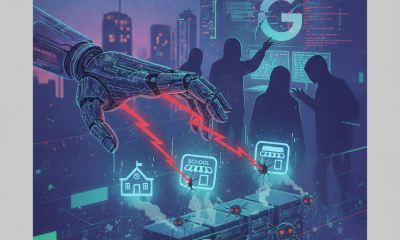
U.S. Representative Matt Van Epps introduced H.R. 11076, the AI INSIGHT Act, to secure nonhuman AI agents on federal civilian networks. The legislation directs CISA to establish governance guidelines, preventing unauthorized data access and cyber threats across government operations.


Last updated:
Key points
- Rep. Matt Van Epps introduced H.R. 11076, known as the AI INSIGHT Act, to secure automated AI agents on federal civilian systems.
- The bill tasks CISA with guiding agencies on identifying, monitoring, and restricting nonhuman agents to prevent security breaches.
- The measure is part of a four-bill cybersecurity package led by House Homeland Security Committee Republicans to modernize agency protections.
NewsWK — U.S. lawmakers are moving to establish strict oversight for automated systems operating inside federal networks. Representative Matt Van Epps introduced a targeted reform measure to safeguard sensitive government data. The proposed AI INSIGHT Act sets national standards for managing autonomous digital tools across federal civilian infrastructure.
How does the HR 11076 AI security bill protect federal networks?
The HR 11076 AI security bill creates a strict federal governance framework to manage nonhuman digital actors across civilian executive agencies. It requires agencies to identify all active autonomous tools. Agencies must strictly restrict data access based on operational needs. Furthermore, officials must monitor ongoing activity and quickly revoke access if safety risks emerge.
The legislation officially amends the Homeland Security Act of 2002. Under the proposed rules, federal civilian agencies must maintain constant visibility over automated software working within their systems. Therefore, administrators can isolate or suspend any software agent that violates baseline safety protocols.
Why is federal AI cybersecurity legislation necessary for government operations?
Federal agencies increasingly rely on automated algorithms to process public information and streamline workflows. However, unguarded digital agents create potential backdoors for foreign threats or cybercriminals. By strengthening CISA nonhuman agent security protocols, lawmakers aim to prevent unauthorized data access while enforcing strict operational accountability.
Key provisions of the legislation include:
- Mandating complete discovery and tracking of nonhuman agents on civilian networks.
- Limiting system authorization strictly to essential task requirements.
- Authorizing CISA to provide operational support, technical assistance, and guidance.
How does Rep Matt Van Epps support federal AI cybersecurity legislation?
Representative Matt Van Epps introduced the legislation on November 18, 2026, during the 119th Congress. The House referred H.R. 11076 to the Committee on Homeland Security and the Committee on Oversight and Government Reform. Furthermore, the bill forms part of a larger four-bill cybersecurity package. House Committee on Homeland Security Republicans, led by Chairman Andrew R. Garbarino, crafted the legislative effort. Consequently, the initiative aims to modernize the Cybersecurity and Infrastructure Security Agency while protecting federal systems.
This article was produced with the assistance of AI and reviewed by our editorial team.
Sources
Related: House Introduces Autonomous Vehicle Emergency Response Coordination Act
Related: House Introduces Cybersecurity for Small Businesses Act to Protect Main Street