National News
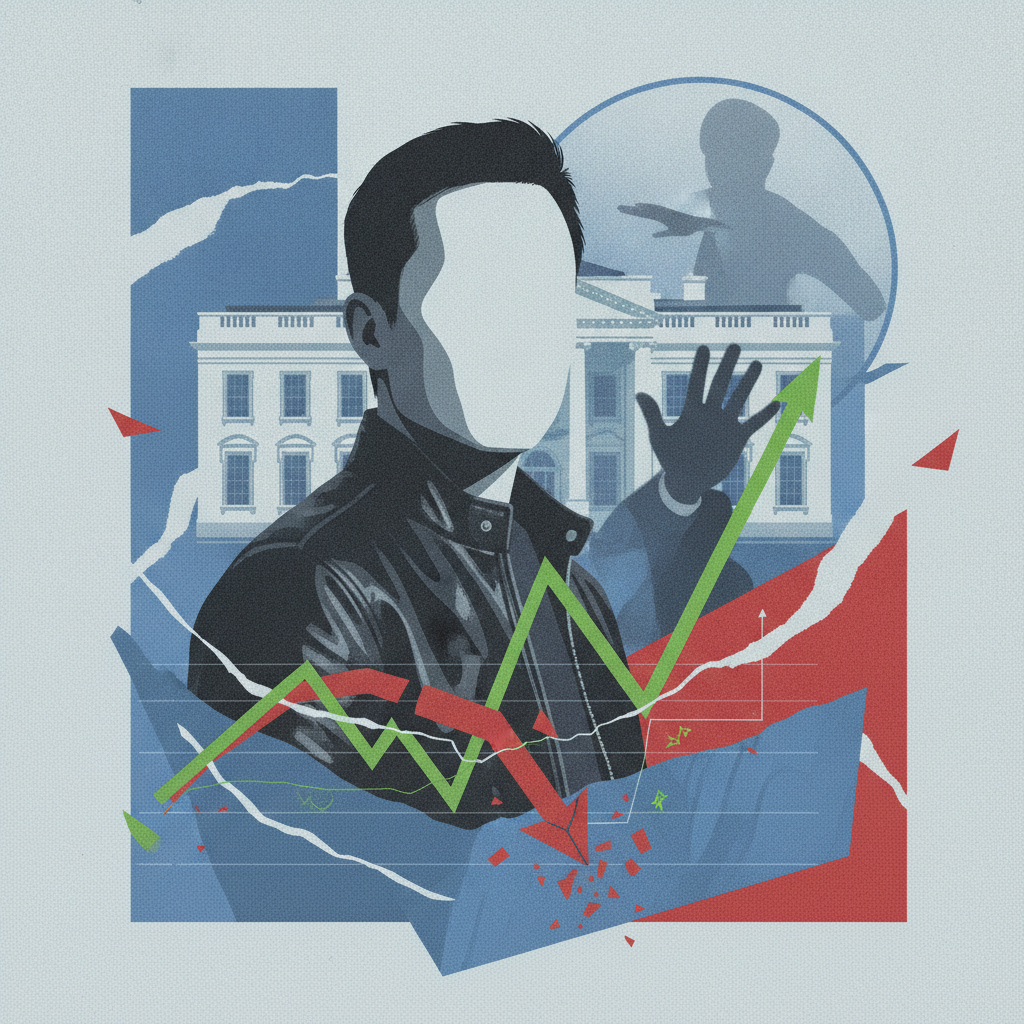
Nvidia Stock Jensen Huang Volatility Follows White House Reinstatement Push
Nvidia stock stumbles again after Jensen Huang’s spectacular comeback rally The Frantic White House Push to Get Jensen Huang Back Democrats say Trump risked US security over Nvidia as Huang apologises | First Thing Some Critics of Jensen Huang’s Reinstatement…


Last updated:
Key points
- Nvidia stock surged by nearly $1 trillion on Monday following Jensen Huang’s reinstatement before pulling back $250 billion on Tuesday.
- White House officials assured Nvidia directors that Huang was not the target of a federal espionage investigation prior to his return.
- Congressional lawmakers continue to press for export control oversight while internal corporate governance reviews remain active.
NewsWK — Nvidia stock experienced extreme price swings this week. This volatility followed the swift departure and return of chief executive officer Jensen Huang. First, federal officials cleared initial security concerns surrounding the executive. Subsequently, company directors voted unanimously to bring Huang back to his role. The move initially sparked a massive rally on Wall Street. However, market anxiety returned quickly as investors weighed governance concerns and sector-wide risk.
Why did the Jensen Huang reinstatement trigger massive market swings?
The Jensen Huang reinstatement initially restored investor confidence in Nvidia’s core executive leadership. Consequently, this return drove a single-day market value surge of nearly $1 trillion. However, lingering questions regarding corporate governance and ongoing national security investigations remained. These doubts, alongside general artificial intelligence market trends, quickly triggered a sell-off across global exchanges.
Markets reacted dramatically to the leadership changes at Santa Clara-based Nvidia. On Monday, November 23, Nvidia shares surged by over 31%. That single-session gain added roughly $950 billion to $1 trillion in market value. Consequently, Nvidia reached a corporate valuation of approximately $4 trillion once again. The broader market moved upward alongside the tech giant. For example, the S&P 500 gained 4.7%, while the Philadelphia Semiconductor Index surged 14%.
However, market enthusiasm faltered during the next trading session. On Tuesday, November 24, investors refocused on internal corporate investigations and broader semiconductor sector spending. As a result, Nvidia shares fell 5.9%, erasing approximately $250 billion in market value. Meanwhile, the Nasdaq Composite dropped 1.48%, and the Philadelphia Semiconductor Index plunged 7.88%. Premarket trading on Wednesday continued the slide with additional losses of 4% to 5%.
What caused the sudden Nvidia stock drop after Monday's record rally? Nvidia Stock Jensen Huang
Wall Street traders shifted their attention from the executive’s return to unresolved internal investigations. At the same time, they evaluated broader semiconductor sector risks. This rapid reversal erased billions in corporate valuation. Ultimately, investors reassessed the long-term impact of executive misconduct probes and international chip export regulations on future earnings growth.
Analysts noted that executive leadership stability does not remove broader economic uncertainties. Therefore, global markets felt the fallout immediately. In Asia, tech stocks reversed sharp gains on Wednesday morning. For instance, Taiwan’s Taiex index fell up to 9%, while chip manufacturer TSMC lost 9%. Similarly, South Korea‘s Kospi index dropped 7%. Furthermore, Japan’s SoftBank Group experienced a severe 17% plunge during trading.
In addition, traders monitored fluctuating Nvidia stock price trends as market participants evaluated corporate governance risks. Institutional funds adjusted positions quickly because uncertainty surrounding executive conduct persisted. Therefore, market experts expect continued volatility in semiconductor equities over coming weeks.
What does this semiconductor volatility mean for American tech investors?
Rapid price shifts in semiconductor equities directly affect retail portfolios, retirement funds, and broader U.S. market stability.
Nvidia holds a vital role in major American market indexes. Therefore, sharp movements in its market cap ripple through pension plans and index funds nationwide. Many American workers hold indirect investments in advanced technology manufacturers through 401(k) accounts. Consequently, when tech giants experience wild valuation swings, retirement balances react immediately.
Industry observers highlighted several key metrics during the three-day trading period:
- Historic single-day rally: Nvidia added nearly $1 trillion in valuation on Monday after Huang returned.
- Subsequent market pullback: Shares dropped 5.9% on Tuesday, erasing $250 billion in equity value.
- International market reaction: Key Asian supply partners faced steep drops on Wednesday morning.
Reliable corporate governance ensures capital stability for ongoing research and development in critical infrastructure.
How did Donald Trump Nvidia Jensen Huang interventions affect the board’s decision?
Federal officials evaluated national security reports over a weekend. Afterward, they advised Nvidia directors that the chief executive was not a federal espionage target. President Donald Trump publicly supported the resolution and publicly took credit for convincing the board to reinstate Huang.
The executive crisis began on November 12, 2026, when Huang resigned as president and CEO. Board members accepted his resignation following disclosures of multiple extramarital affairs violating company policy. Investigations indicated two affairs involved company subordinates. Meanwhile, a third affair involved Alice Huang, the former head of Singapore-based Megaspeed. Previously, U.S. intelligence officials had raised concerns regarding Megaspeed over suspected chip diversions to China.
However, federal law enforcement clarified the scope of their investigation over the weekend of November 21. First, Attorney General Todd Blanche informed President Donald Trump and Vice President JD Vance that Huang was not a probe target. White House staff then conducted marathon discussions with Nvidia directors across 48 hours. Subsequently, the board voted unanimously on November 23 to reinstate Huang.
President Trump discussed the White House involvement publicly during an interview on CNBC. “I’ve been speaking to the board directly and indirectly… I made the deal,” President Trump stated. Moreover, Nvidia directors affirmed that government input satisfied all national security concerns prior to the vote.
What political and corporate governance questions remain open?
Congressional leaders called for formal reviews of export control compliance and executive oversight following Huang’s return. At the same time, corporate governance analysts noted that internal company investigations into workplace conduct remain active. Consequently, these reviews sparked ongoing debates over board independence and accountability for corporate founders.
Capitol Hill lawmakers responded rapidly to the executive reinstatement. Democratic leaders, including Senate Minority Leader Chuck Schumer and Senator Elizabeth Warren, requested federal inquiries into the matter. Specifically, Schumer raised questions regarding export control enforcement and advanced microchip shipments abroad. Meanwhile, legislators renewed bipartisan efforts to advance export control legislation within the upcoming National Defense Authorization Act.
Inside the company, Huang addressed Nvidia employees during an all-hands meeting in Santa Clara on Tuesday. During the gathering, he expressed regret over personal errors and workplace policy breaches. “I made some terrible mistakes. I was unfaithful to Lori, and I hurt my kids and, of course, I hurt all of you,” Huang stated to staff.
However, Huang denied that external political pressure drove his reinstatement. Instead, he told workers that directors reinstated him after reviewing verified national security facts. Still, independent governance experts noted that internal reviews remain ongoing as Nvidia seeks to restore long-term stability.
This article was produced with the assistance of AI and reviewed by our editorial team.
Related: Jensen Huang Nvidia CEO Reinstatement Follows Board Vote and Federal Review
Related: Donald Trump Jensen Huang Nvidia Intervention Sparks Tech and Security Debates