California
Early US Flu Surge 2026 Hits States Six Weeks Ahead of Schedule
Flu activity picks up Nationwide: See the hardest-hit states The CDC stays quiet on flu as an early season catches many Americans off-guard Reported flu cases surge across New York ahead of Thanksgiving NYC battles early flu surge as Thanksgiving…


Last updated:
Key points
- U.S. influenza activity has spiked six weeks ahead of schedule, resulting in over 3.7 million illnesses and 50,000 hospitalizations by mid-November 2026.
- Hospital admissions for flu increased more than sevenfold compared to the same week in the previous season, driven primarily by an H1N1 strain mutation.
- Statewide cases in New York reached 43,000 before Thanksgiving, while federal health agencies under HHS Secretary Robert F. Kennedy Jr. have shifted focus away from paid vaccine ad campaigns.
NewsWK — Influenza cases are rising rapidly across the United States as families gather for the holiday season. Federal health data shows an unusually early wave of infections. This surge is striking communities weeks ahead of typical winter timelines. Consequently, local hospitals are already feeling the strain from a sudden influx of respiratory illnesses.
How severe is the US flu surge 2026 across the nation?
Nationwide flu activity in 2026 has already caused millions of illnesses. It also triggered tens of thousands of hospitalizations earlier than expected. Data reveals that hospital admissions are over seven times higher than during the same week last year. Consequently, healthcare providers are urging families to take proactive precautions to manage risk.
According to federal surveillance through mid-November, the season has produced at least 3.7 million flu cases. Additionally, healthcare facilities recorded 50,000 hospitalizations and 2,800 deaths, including seven pediatric fatalities. In just one week, total estimated illnesses jumped by more than one million cases. Moreover, outpatient visits for influenza-like symptoms reached 3.8 percent of all medical appointments. This rate moved well past the national baseline of 2.9 percent.
Laboratory testing demonstrates the rapid spread of the virus. Nationally, nearly one out of every eight flu tests returns positive. Researchers note that almost all circulating cases belong to the Influenza A H1N1 strain. Furthermore, genetic tracking shows this strain has acquired a specific mutation designated as G155E.
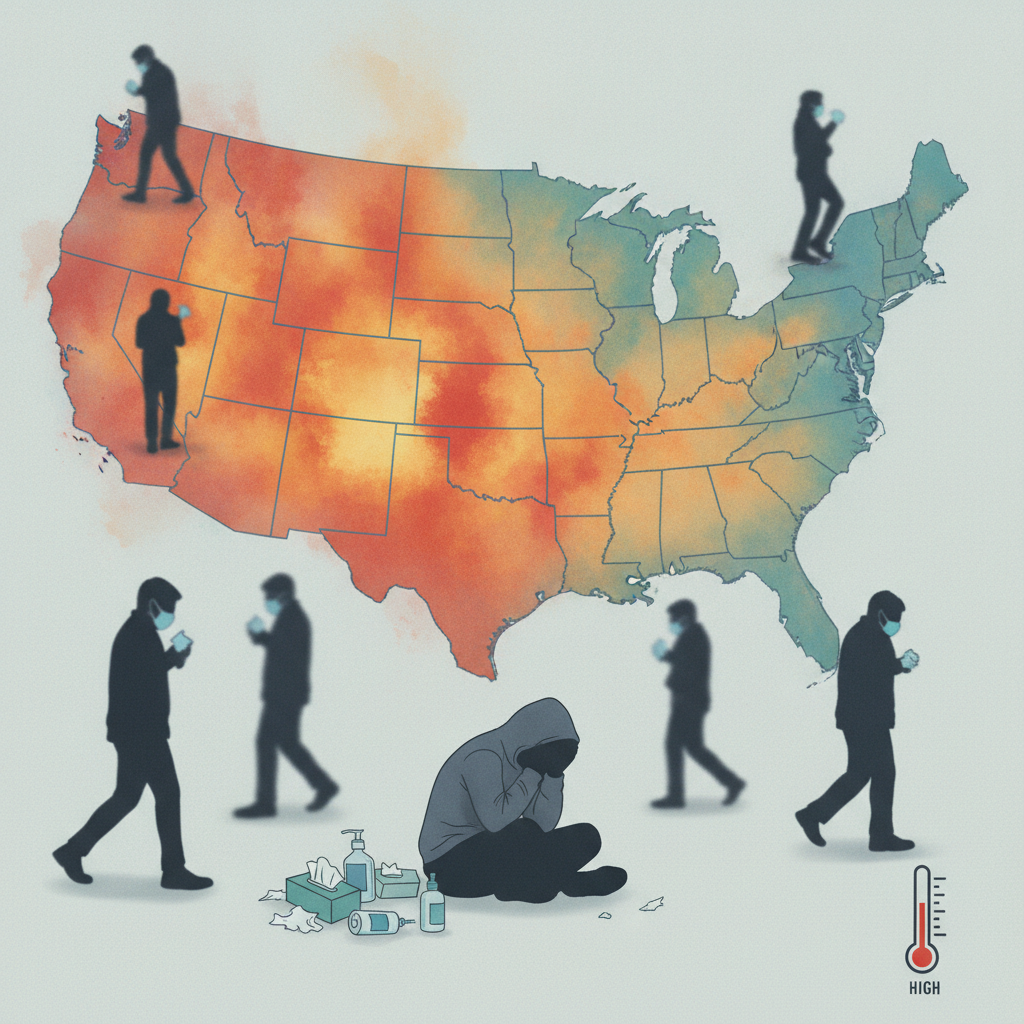
Which hardest hit flu states are seeing the sharpest rise?
Southern and Western regions experienced the initial brunt of the early winter outbreak. State monitoring shows elevated respiratory illness activity spreading quickly across state lines. As a result, public health departments in these regions are monitoring facility capacity. They want to ensure emergency services remain responsive to patient needs.
Louisiana recorded the highest level of influenza-like activity early in November. Meanwhile, several other states quickly entered high activity tiers. These include South Carolina, Texas, California, Tennessee, and Oregon. Within a single week, the number of states facing high or very high virus activity expanded to 11 jurisdictions.
What does the CDC flu report 2026 reveal about hospitalizations?
The CDC flu report 2026 highlights a dramatic surge in patient admissions compared to previous years. During the week ending November 14, U.S. hospitals admitted 11,734 lab-confirmed flu patients. In contrast, hospitals reported just 1,665 admissions during the identical timeframe one year prior.
This steep increase in hospitalizations places renewed pressure on local medical systems. Emergency rooms must balance routine care alongside sudden spikes in acute respiratory infections. Still, health officials emphasize that personal hygienic care and early clinical evaluation help prevent severe outcomes.
How is the New York flu surge 2026 impacting local emergency rooms?
The New York flu surge 2026 has accelerated rapidly. It is driving emergency room visits up across the state and inside New York City neighborhoods. Medical facilities in high-density areas report significant patient increases right before major holiday travel. Therefore, local leaders are tracking emergency room capacity closely to maintain quick response times.
New York State Health Commissioner Dr. James McDonald noted that the flu arrived nearly six weeks ahead of standard seasonal patterns. The virus achieved widespread distribution across 60 counties statewide. By mid-November, New York State recorded 43,000 confirmed cases. That total stands in stark contrast to the 7,000 cases documented during the exact same period last year.
Inside New York City, case counts jumped dramatically within days. New York City Health Commissioner Dr. Alister Martin reported 6,467 flu cases during the third week of November. That figure is more than double the 2,489 cases logged during the same week in 2025. Furthermore, respiratory illnesses accounted for nearly 12 percent of all emergency room visits citywide. In the Jamaica neighborhood of Queens, flu-like symptoms drove 15 percent of emergency room traffic. Meanwhile, city providers have administered vaccinations to more than 360,000 children to help curb neighborhood spread.
What is behind the shift in federal public health guidance?
Federal messaging around seasonal virus management has adopted a more decentralized approach this season. Under U.S. Health and Human Services Secretary Robert F. Kennedy Jr., federal agencies reduced traditional ad campaigns. Instead, officials are shifting focus toward individual health choices and broader wellness measures.
Following his confirmation in February 2025, Secretary Kennedy directed the end of the CDC’s paid ‘Wild to Mild’ flu shot media initiative. Consequently, federal health agencies did not run traditional seasonal promotional commercials this autumn. Additionally, CDC Director Dr. Erica Schwartz chose not to participate in televised public vaccination events. Earlier, HHS declined to discuss individual medical records. However, officials continue publishing standard technical tracking data for state and local partners.
This article was produced with the assistance of AI and reviewed by our editorial team.
Sources
Related: Democrats aim to emulate Republicans in building state power
Related: Surge in Cyclosporiasis Cases Across the U.S. Raises Concerns