
Louisiana
Appeals Court Rules Pregnant Workers Fairness Act Unconstitutional Over Proxy Votes
Appeals court says federal law requiring accommodations for pregnant workers is unconstitutional Pregnant workers ruling puts $1.7 trillion COVID-era House vote under scrutiny $1.7 trillion Biden-era government funding bill found unconstitutional, appeals court rules US House unconstitutionally passed spending bill…


Last updated:
Key points
- The 5th U.S. Circuit Court of Appeals ruled 9-8 that the Pregnant Workers Fairness Act was unconstitutionally passed using proxy votes.
- Judges declared that physical presence is required under the Quorum Clause to enact federal spending legislation.
- The ruling upholds an injunction blocking enforcement against the state of Texas and invalidates the act in Texas, Louisiana, and Mississippi.
NewsWK — A Federal Appeals Court has delivered a major ruling on constitutional limits regarding congressional voting procedures. On Friday, November 20, 2026, the New Orleans-based 5th U.S. Circuit Court of Appeals ruled the Pregnant Workers Fairness Act unconstitutional. The judges decided the legislation failed because House lawmakers relied on remote proxy voting during its passage.
What led to the 5th Circuit Pregnant Workers Fairness Act ruling?
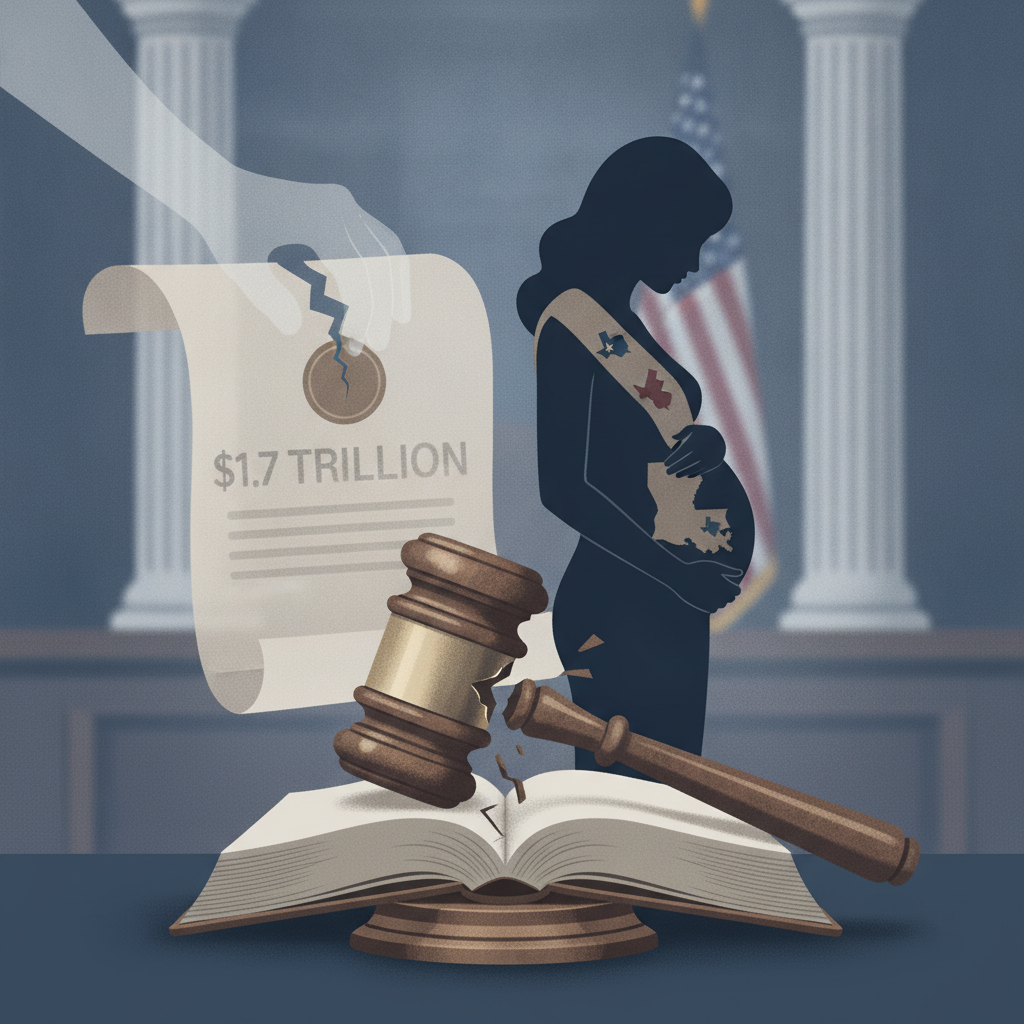
The court ruled 9-8 that Congress violated the U.S. Constitution’s Quorum Clause in December 2022. Because 226 of 431 House votes were cast by proxy, lawmakers lacked a physical majority on the floor. Therefore, the court declared the $1.7 trillion spending package unconstitutionally enacted.
Writing for the majority, Circuit Court Judge Cory T. Wilson emphasized strict adherence to constitutional rules. He wrote that lawmakers must physically appear on the floor, noting that “‘Proxy presence’ does not count.” However, eight dissenting judges observed that no House member raised an official objection to the missing physical quorum during the final vote.
What does the decision mean for state workers and employers?
The decision upholds an injunction blocking federal enforcement against the state of Texas for state employees. Broadly, the ruling invalidates the statute across Texas, Louisiana, and Mississippi. The law requires covered employers to grant workplace accommodations, including extra bathroom breaks, water access, and lifting exemptions.
How did the Proxy Voting Court ruling 2022 spending bill challenge begin?
Texas Attorney General Ken Paxton initiated the legal challenge by filing the Pregnant Workers Fairness Act Texas lawsuit in 2023. A Federal District Court agreed with the state in 2024 and issued an injunction.
Still, supporters of the federal mandate expressed strong disagreement with the outcome. Inimai Chettiar, president of advocacy group A Better Balance, called the decision “legally unsound and short-sighted.” She stated that advocates expect an appeal to the U.S. Supreme Court.
This article was produced with the assistance of AI and reviewed by our editorial team.
Sources
Related: Court Ruling Supports Trump Administration’s Immigration Detention Policy in Southern States
Related: 5th Circuit Immigrant Detention Without Bond Allowed in New Ruling


