Iowa
New Jersey Leads Nation in Decrease of Death Rates Since 2015
The nation’s death rate may have fallen to a historic low last year as many of the killers of young people such as drug overdoses, gun homicides and traffic accidents continued receding in 2025, according to new federal statistics. States…

Last updated:
Key points
- New Jersey has seen an 8.3% decrease in death rates since 2015, the highest in the nation.
- The state has lower rates of firearm deaths and traffic accident fatalities compared to national averages.
- Disparities in health outcomes persist, with socioeconomic status playing a crucial role.
NewsWK — Recent federal statistics indicate that the national death rate reached a historic low last year, driven largely by declines in drug overdoses, gun-related homicides, and traffic accidents. However, not all states have experienced the same level of success in reducing mortality rates.
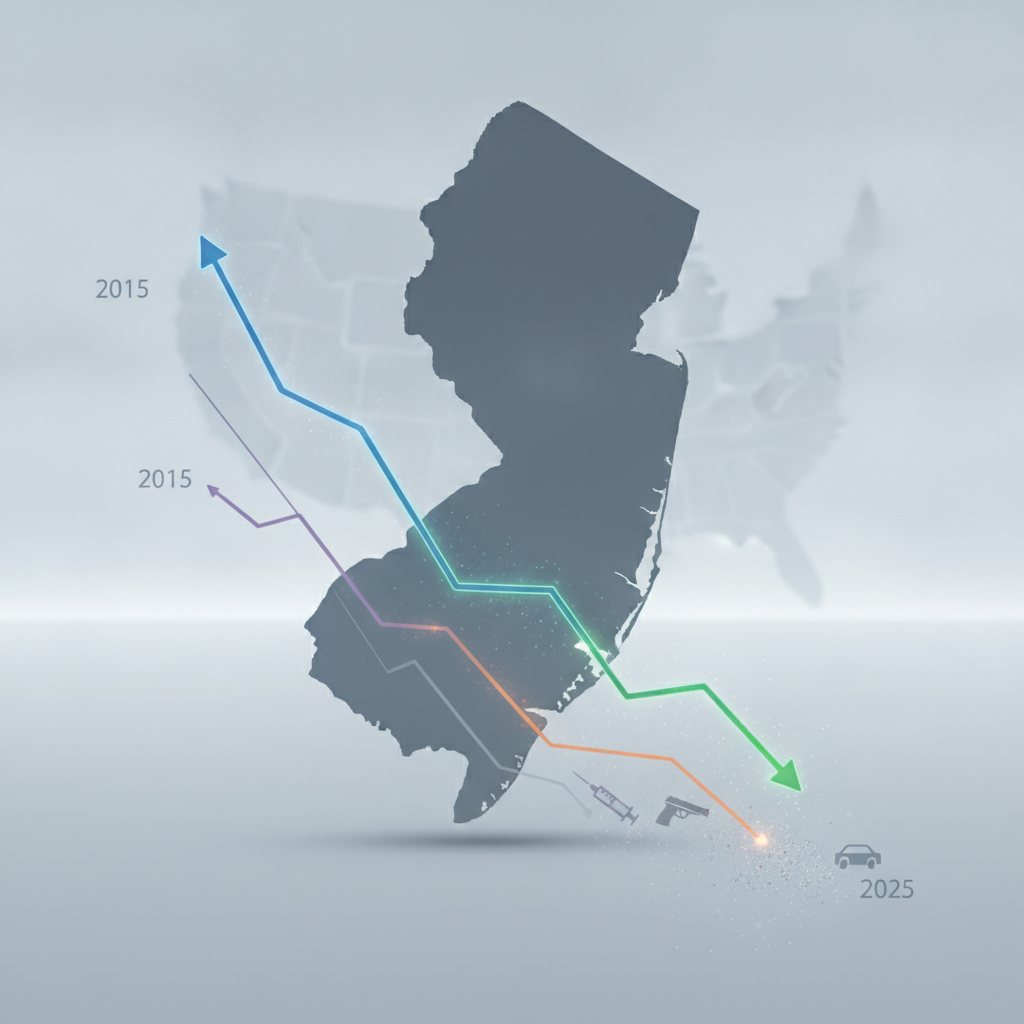
According to an analysis by Stateline, New Jersey has seen one of the most significant drops in death rates between 2015 and 2025, with a decrease of 8.3%. Other states in the Northeast, such as Rhode Island, New York, and Massachusetts, also reported substantial reductions in death rates during this period.
Experts attribute these improvements to a focus on healthcare access, traffic safety, and gun violence prevention. Stephen Crystal, director of Rutgers University’s Center for Health Services Research, noted that New Jersey’s long-term commitment to healthcare expansion has contributed to its success. “New Jersey has been doing this for a long time, and you’re seeing the effects in the lower mortality rates for the big killers,” Crystal stated.
New Jersey stands out with a firearm death rate—covering both suicides and homicides—less than half the national average. In addition, the state has lower rates of deaths from heart and kidney diseases related to high blood pressure, and traffic accident fatalities are significantly below the national rate.
Despite the positive trends in some states, others have struggled. For instance, New Mexico‘s death rate increased by 9% over the past decade, heavily influenced by ongoing issues with drug overdoses. In June, New Mexico Governor Michelle Lujan Grisham called for federal accountability regarding alleged failures by the Drug Enforcement Administration to control fentanyl trafficking.
Additional states like Iowa and Oklahoma have reported a 5% increase in death rates since 2015, with specific health concerns such as fall-related deaths becoming significant issues, particularly in rural areas.
Overall, the data suggests a growing disparity in mortality rates based on socioeconomic status, with wealthier regions experiencing better health outcomes. Mary Pat Campbell, an actuary and life insurance analyst, highlighted that traffic accidents are less common in New Jersey, partly due to the prevalence of public transportation.
While the national death rate has improved, the increase in gun suicide rates—up 14% since 2015—indicates that challenges still remain, particularly for younger generations. Ali Mokdad, a health metrics professor at the University of Washington, emphasized that while the nation is seeing improvements, many populations are still facing significant health challenges.
Based on reporting by Tim Henderson originally published by Stateline. Read the original story.