Arizona
School Districts Face Fiscal and Privacy Challenges as AI Edtech Spending Surges
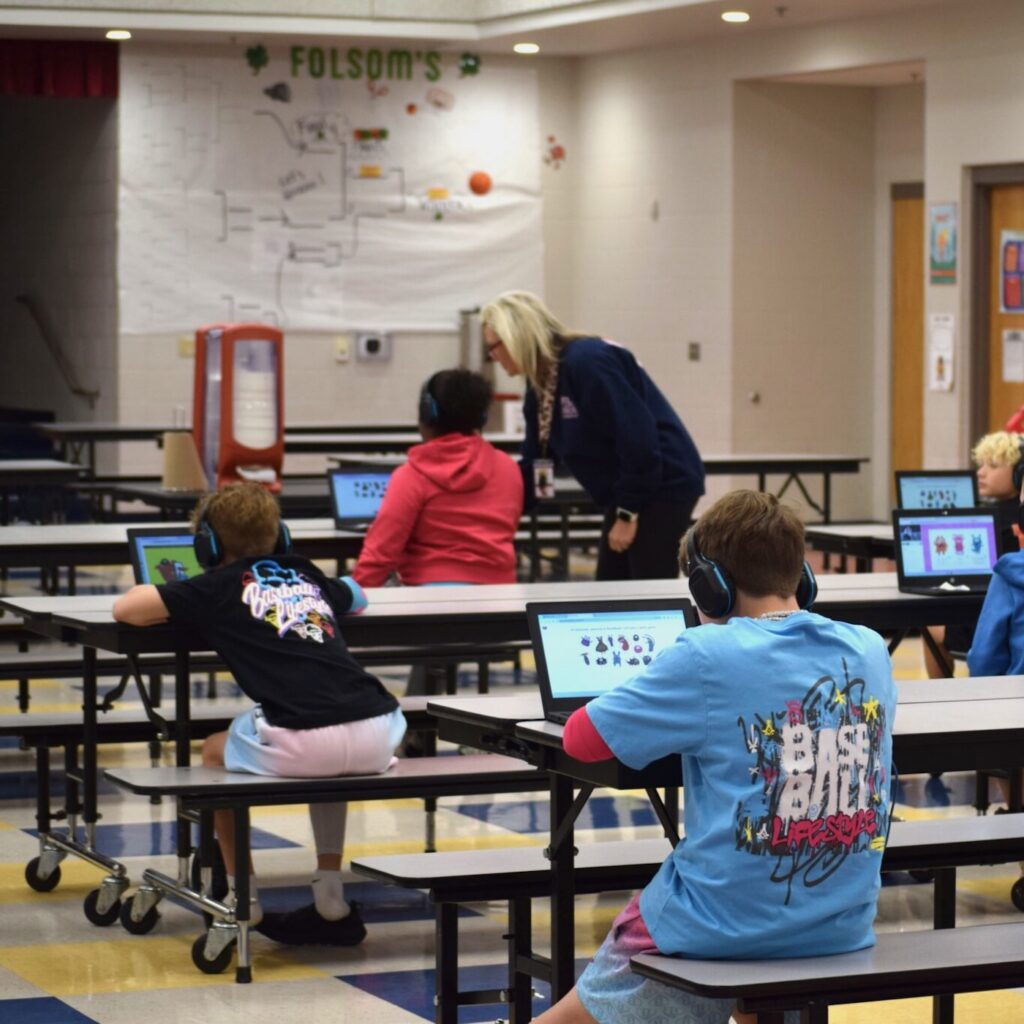
As a new school year begins, some classrooms may use artificial intelligence tools to flag a student struggling with classwork, track attendance or try to raise reading scores. But as school districts make decisions on which tools are safe and…

Last updated:
Key points
School Districts Face Fiscal and Privacy Challenges
- U.S. school districts face mounting fiscal pressure as AI edtech spending expands toward an estimated $15 billion by 2033.
- Data shows districts hold access to thousands of software tools on average, though educators and students regularly use only about four.
- School boards are implementing strict vetting protocols to guard against vendor fraud, wasteful spending, and student data privacy violations.
NewsWK — As a new academic year gets underway, public school districts across the country are facing mounting pressure to invest billions of taxpayer dollars in artificial intelligence software. Promised as groundbreaking solutions to monitor attendance, flag struggling students, and boost test scores, AI tools are rapidly expanding into K-12 classrooms. However, local school boards and education officials are raising serious concerns about fiscal waste, unproven efficacy, and severe student privacy risks.
Why it matters here
For taxpayers, parents, and community leaders across the nation, the surge in education technology spending represents a critical accountability test. School districts are making multi-million dollar procurement decisions in an environment where technological promises often outpace tangible academic results. With federal pandemic-era emergency funding now expiring, local school boards must scrutinize budgets tightly to prevent wasteful spending on software that fails to improve classroom outcomes.
Furthermore, the rapid deployment of AI platforms introduces significant constitutional and privacy concerns. Monitoring software and digital surveillance systems installed on school-issued devices have drawn legal challenges over potential infringements on student rights. Ensuring that sensitive student data is not monetized, exposed, or harvested to train commercial AI algorithms has become an essential priority for local school governance.
Rapid Market Growth and Digital Hoarding
The financial scale of the education technology industry is expanding exponentially. Market data from Grand View Research indicates that the broader U.S. edtech sector generated nearly $48 billion in revenue in 2024 and is projected to surpass $90 billion by 2030. Within that landscape, the K-12 AI segment alone generated approximately $2.5 billion last year and is anticipated to top $15 billion by 2033.
Despite this massive influx of investment, evidence suggests that much of the technology purchased by schools sits unused. A study by edtech company Instructure, analyzing user launch data across more than 12.6 million K-12 users, revealed that school districts maintained access to an average of 3,001 digital tools. However, teachers and students actively utilized an average of just four platforms. This phenomenon of digital hoarding has left districts managing thousands of redundant software licenses while exposing student data across dozens of third-party vendors without proportional educational benefit.
High-Profile Failures and Legal Vulnerabilities
The rushed adoption of unvetted AI tools has already produced costly administrative blunders and legal conflicts. In Los Angeles, the public school district lost $3 million after purchasing an AI chatbot platform from a vendor named AllHere, which subsequently filed for bankruptcy while its founder faced federal fraud charges. The district superintendent ultimately resigned following the fallout.
Concurrently, digital monitoring platforms have sparked civil liberties litigation. In Arizona and Kansas, parents and students filed federal lawsuits against districts utilizing Gaggle, a security application designed to scan activity on school-issued accounts, alleging the software violated constitutional privacy protections. These incidents highlight the legal and financial liabilities districts assume when entering hasty contractual arrangements with technology vendors.
The District Vetting Burden and Practical Results
Because federal oversight remains minimal, individual school systems carry the primary burden of evaluating, negotiating, and securing AI contracts. Mark Schneider, a nonresident senior fellow at the conservative-leaning American Enterprise Institute, noted that a major structural problem is the knowledge gap between software vendors and district leaders, creating an information asymmetry that disadvantages local decision-makers.
Some superintendents have adopted rigorous pilot testing to ensure tools deliver legitimate instructional value before committing long-term funding. In Tennessee, Sumner County Schools Superintendent Scott Langford tested an AI-driven literacy program, Coursemojo, to address stagnant middle school reading scores before expanding its use. Langford emphasized that districts must focus tightly on genuine needs rather than marketing promises, noting that “most of them don’t really do much that drives any kind of change for students.”
In Pennsylvania, the Allentown School District established a strict two-phase review process requiring vendors to guarantee that all student chat logs and data remain exclusive district property and are never sold or used to train third-party AI models. Allentown Superintendent Carol Birks underscored the administrative strain this creates for local authorities, stating, “A significant challenge is that the onus of making these decisions is placed entirely back on the individual school district.”
To reduce risk, organizations like the Southern Regional Education Board urge districts to enforce human oversight on any AI application involving grading or discipline, requiring adult educators to thoroughly evaluate software before deploying it in classrooms. As fiscal budgets tighten, school boards are increasingly prioritizing concrete educational returns over modern technological trends.
This article was produced with the assistance of AI and reviewed by our editorial team.
Sources
Related: Big Cities Lead as School Districts Ban AI Across the Country
Related: Empty Classrooms Force Tough Choices as Public School Consolidations Accelerate Nationwide
Related: Federal Survey Measures Violent Victimization at School 2024 for American Students
Related: How the New Indiana School Cellphone Ban Is Changing Classrooms
See a typo? Report it here.