
National News
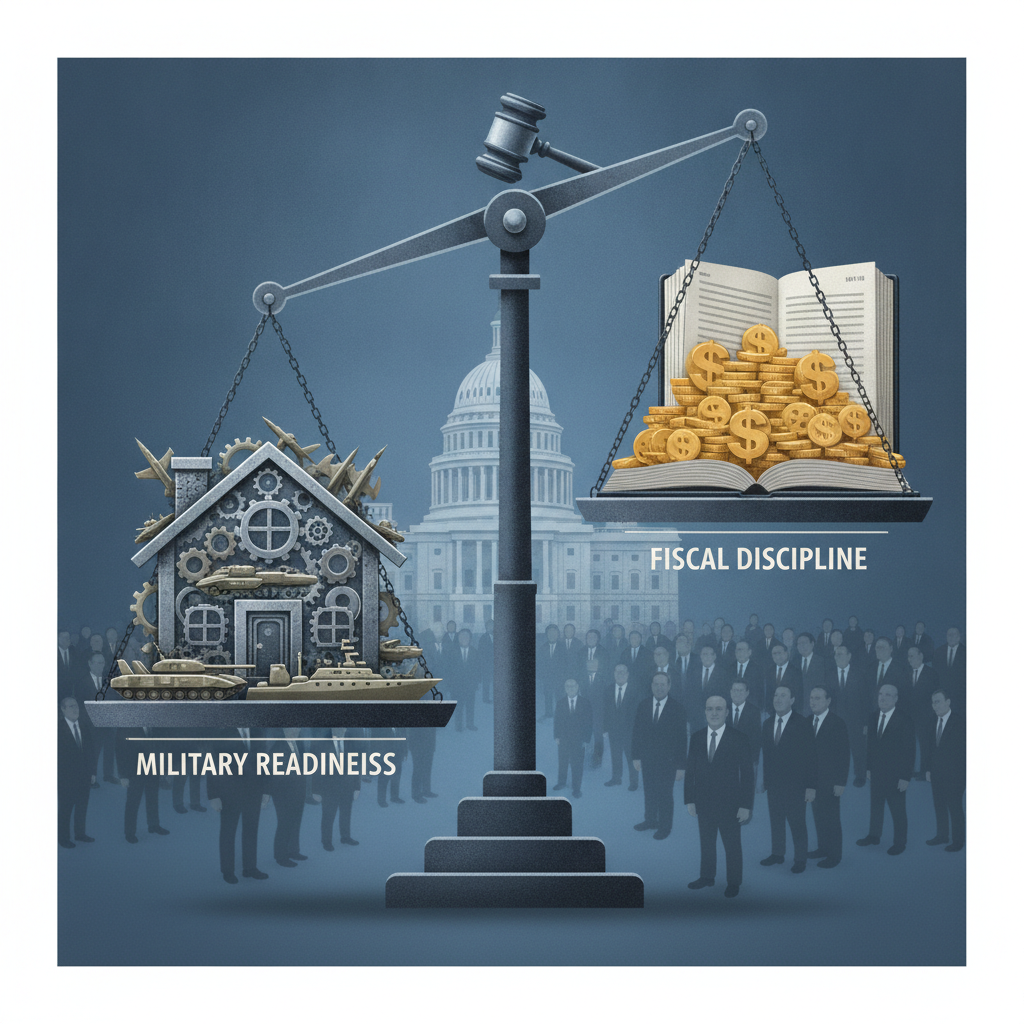
House Formally Advances Defense Appropriations Bill as Lawmakers Weigh Military Readiness and Fiscal Discipline
Content Files PDF XML TEXT Metadata download Descriptive Metadata (MODS) Preservation Metadata (PREMIS) All Content and Metadata files, including granules ZIP

Last updated:
Key points
defense appropriations bill
- The U.S. House of Representatives has formally advanced H.R. 9495, the annual Department of Defense Appropriations Act, marking a critical step in setting federal military spending levels.
- The legislation governs discretionary defense funding, covering service member compensation, base infrastructure, weapons procurement, and military readiness.
- Lawmakers now face floor debates over spending caps, financial oversight of Pentagon programs, and strategic modernization priorities.
NewsWK — Federal lawmakers are moving forward with key statutory funding measures for national security following the formal reporting of H.R. 9495, the Department of Defense Appropriations Act, in the United States House of Representatives. The official legislative milestone, designating the measure as reported in the House, marks a crucial stage in the federal budget process as Congress exercises its constitutional power of the purse to balance military readiness against fiscal accountability.
The annual defense appropriations measure is among the most consequential pieces of legislation considered on Capitol Hill each session. It determines the statutory funding levels across every branch of the Armed Forces, establishing clear budget authorities for military personnel, weapons procurement, equipment maintenance, intelligence activities, and research and development initiatives essential to modernizing the nation’s defense architecture.
Why it matters here
For taxpayers and communities across the country, federal defense spending exerts a direct and tangible influence on local economies, national sovereignty, and household budgets. Defense appropriations represent the largest segment of federal discretionary spending, making transparency and fiscal discipline paramount for fiscal watchdogs and working families concerned about the expanding national debt.
Beyond high-level strategy, the practical impacts of the legislation reach into virtually every state:
- Service Members and Military Families: The bill establishes funding streams for military pay adjustments, housing allowances, specialized healthcare services, and support programs for active-duty personnel, veterans, and military dependents.
- Local Defense Manufacturing and Small Business: Thousands of domestic suppliers, engineering firms, and industrial manufacturing plants throughout the United States rely on defense procurement contracts, supporting high-skilled manufacturing and engineering jobs.
- Community Infrastructure and Base Operations: Communities located near active military installations depend on steady appropriations for base infrastructure upkeep, local impact aid for public school districts, and joint civilian-military emergency services.
Legislative Process and Fiscal Oversight
The legislative version designated with the “RH” (Reported in House) suffix signifies that the legislation has successfully cleared the relevant House committee review and has been submitted to the full chamber for floor consideration. Under Article I, Section 9 of the U.S. Constitution, no federal money can be drawn from the Treasury except in consequence of appropriations made by law, placing the primary responsibility for military spending on the legislative branch.
As the appropriations package advances, committee members and legislative leaders are tasked with conducting thorough line-by-line oversight of Pentagon expenditures. Conservative lawmakers and budget watchdogs have consistently emphasized the need to eliminate redundant administrative programs, scrutinize procurement contracts for cost overruns, and redirect finite taxpayer resources toward core combat readiness, strategic deterrence, and stockpile replenishment.
Strategic Priorities and Readiness Challenges
The progression of annual defense spending legislation comes amid heightened geopolitical instability and evolving threats to American interests abroad. Lawmakers evaluating the Department of Defense budget must balance immediate operational requirements with long-term technological modernization.
Key focus areas under congressional review include:
- Deterrence and Conventional Superiority: Expanding naval fleet capabilities, upgrading next-generation aviation systems, and replenishing critical munition reserves to deter near-peer adversaries.
- Technological Innovation: Investing in secure cyber infrastructure, artificial intelligence integration, autonomous defense systems, and missile defense technologies to maintain tactical advantages on future battlefields.
- Recruitment and Troop Welfare: Addressing military recruitment challenges by improving quality-of-life standards, modernizing barracks facilities, and ensuring competitive compensation packages for all enlisted personnel.
- Auditability and Financial Accountability: Mandating strict accounting standards across the Department of Defense to achieve full financial audit compliance and curb systemic waste.
Next Steps for the Legislation
With H.R. 9495 reported to the full House, the bill awaits scheduling for floor debate, where members will have the opportunity to introduce amendments regarding specific program allocations, policy riders, and overarching expenditure caps. Once the House adopts its final version of the measure, congressional leaders will need to reconcile differences with the corresponding Senate appropriations package before sending a finalized spending bill to the executive branch for enactment.
As floor debate approaches, lawmakers from across the political spectrum will continue to negotiate the balance between strengthening national defense capabilities and maintaining spending restraints in an increasingly constrained fiscal environment.
This article was produced with the assistance of AI and reviewed by our editorial team.
Sources
Related: New Senate Bill S 5504 Explores DoD Cybersecurity University Partnerships
Related: How Will HR 10646 Defense Agencies Reform Affect Taxpayers?
Related: House Bill Seeks to Safeguard Golden Dome Missile Defense System Assets
Related: How the Texas Public Defender Shortage Threatens Justice and County Budgets
Related: How the Illegal War Refund Act Proposes Taxpayer Checks from Defense Budgets
See a typo? Report it here.