National News
Federal Lawmakers Target Public Utility Political Spending with Energy Utility Lobbying Ban Act
Content Files PDF XML TEXT Metadata download Descriptive Metadata (MODS) Preservation Metadata (PREMIS) All Content and Metadata files, including granules ZIP

Last updated:
Key points
- H.R. 10080, the Energy Utility Lobbying Ban Act, has been introduced in the U.S. House of Representatives during the 119th Congress.
- The legislation aims to restrict political lobbying activities and advocacy spending by regulated energy utility companies.
- Supporters emphasize protecting captive energy ratepayers from indirectly funding utility political agendas and rising power bills.
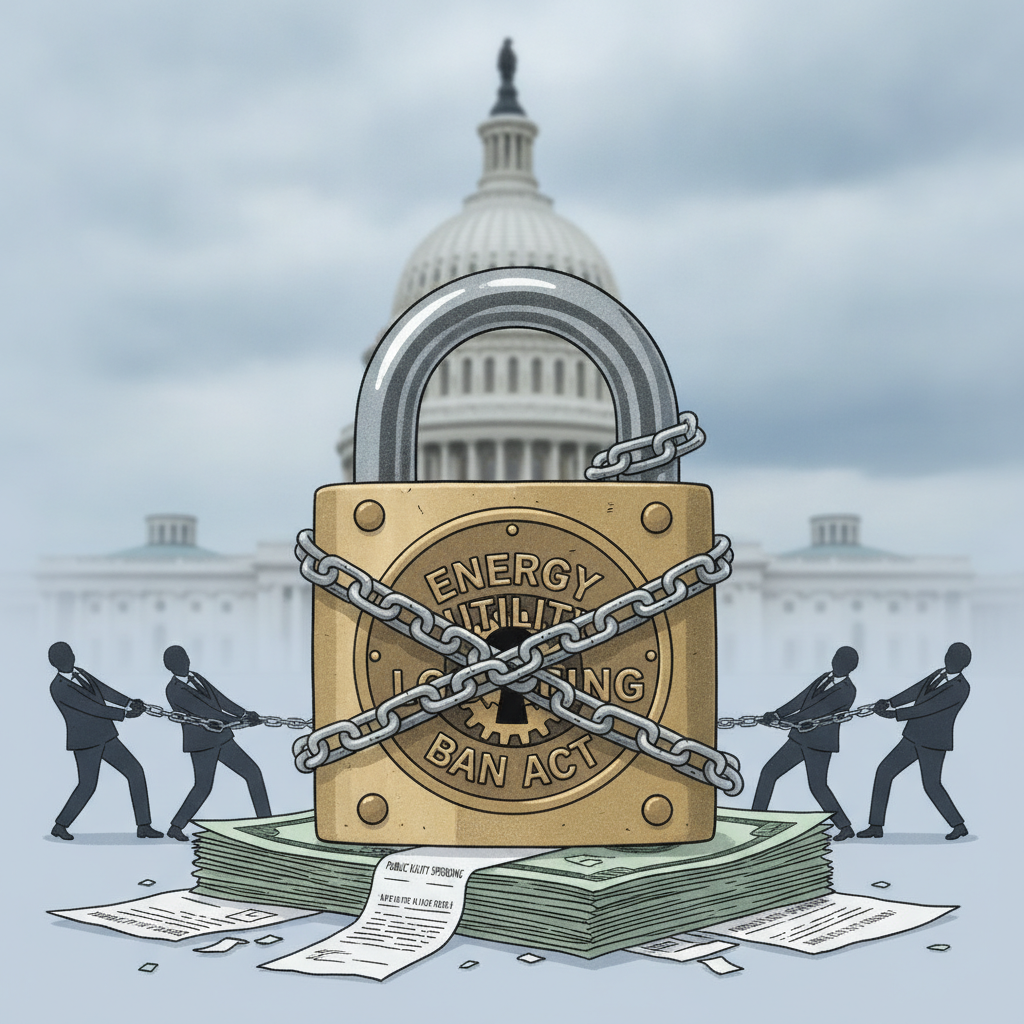
NewsWK — Federal lawmakers have officially introduced new legislation in the U.S. House of Representatives aimed at curbing the political influence and advocacy activities of energy utilities. Titled the Energy Utility Lobbying Ban Act, designated as H.R. 10080 in the 119th Congress, the measure targets the mechanisms through which public utility companies engage in political lobbying and regulatory advocacy.
Why it matters here
For millions of households and small business owners across the United States, monthly utility bills represent one of the most significant, non-negotiable fixed expenses in the family budget. Because electric and natural gas distribution companies typically operate as regional monopolies protected by government franchises, everyday consumers do not have the liberty to switch providers if they disagree with a utility company’s business practices, political activities, or regulatory positions.
When energy utilities engage in political advocacy or donate to influential trade groups, questions frequently arise regarding whether ratepayer funds are directly or indirectly supporting those political operations. Restricting utility lobbying is designed to ensure that captive consumers are not forced to subsidize legislative or regulatory advocacy that could ultimately result in higher energy rates, costly mandates, or reduced grid reliability. For local taxpayers and working families, ensuring strict financial transparency and preventing regulatory capture remain vital public priorities.
Understanding the Energy Utility Lobbying Ban Act
The introduction of H.R. 10080 reflects growing federal attention toward utility governance and the operational boundaries of regulated monopolies. While full regulatory details emerge as the bill moves through committee consideration, legislative proposals of this nature generally seek to draw clear legal boundaries around utility spending on political lobbying, advertising, and trade association dues.
Under traditional public utility regulatory models, state public utility commissions oversee rate cases to determine what expenses utilities can recover from their customer base. While direct political contributions are generally prohibited from being included in customer rates, policy analysts and consumer advocates point out that administrative overhead, executive salaries, and industry group memberships can create gray areas where customer revenues support broad political and regulatory agendas.
Monopoly Privilege vs. Ratepayer Accountability
From a free-market and constitutional perspective, the debate over utility lobbying touches upon key principles of government accountability and individual liberty. Unlike standard private sector corporations that operate in open, competitive markets, utility companies are granted exclusive geographic territories by state governments, guaranteeing them a captive customer base and, in many cases, a guaranteed return on equity on capital investments.
Critics of utility political spending argue that granting exclusive territorial monopolies while permitting those same entities to exert heavy political pressure creates an uneven playing field. Such arrangements can lead to cronyism, where regulated utilities lobby lawmakers for favorable subsidies, mandates, or legislation that insulates them from market competition at the expense of energy consumers.
At the same time, policy experts emphasize that any federal framework must carefully navigate constitutional speech protections and preserve the proper federalist division of authority between national legislators and state public service commissions, which traditionally manage local energy distribution and rate structures.
Legislative Outlook and Next Steps
Currently designated under Introduced in House status (IH), H.R. 10080 represents the initial stage of the federal legislative process in the 119th Congress. The bill must now be assigned to the appropriate House committees for formal review, potential hearings, and markup before it can be considered for a vote on the House floor.
As discussions around national energy policy, grid stability, and consumer inflation continue to dominate federal policy debates, H.R. 10080 highlights the ongoing effort to bring greater fiscal oversight to the power sector and protect American consumers from paying for corporate political agendas.
This article was produced with the assistance of AI and reviewed by our editorial team.
Sources
Related: Load Forecasting Enhancement Act Moves Forward to Safeguard American Power Grid
Related: Will the Inspectors General Modernization Act Shield Federal Watchdogs From Political Pressure?
Related: Study Links District Attorney Elections Prison Admissions Spikes to Tough-on-Crime Era
Related: Will the End Tax Breaks for Dark Money Act Change How Americans Donate to Advocacy Groups?
Related: Will the Affordable Power for Host Communities Act Lower Your Utility Bills?
Related: Data Center Backlash Midterm Elections: How Voters Are Reclaiming Local Control
See a typo? Report it here.