
National News
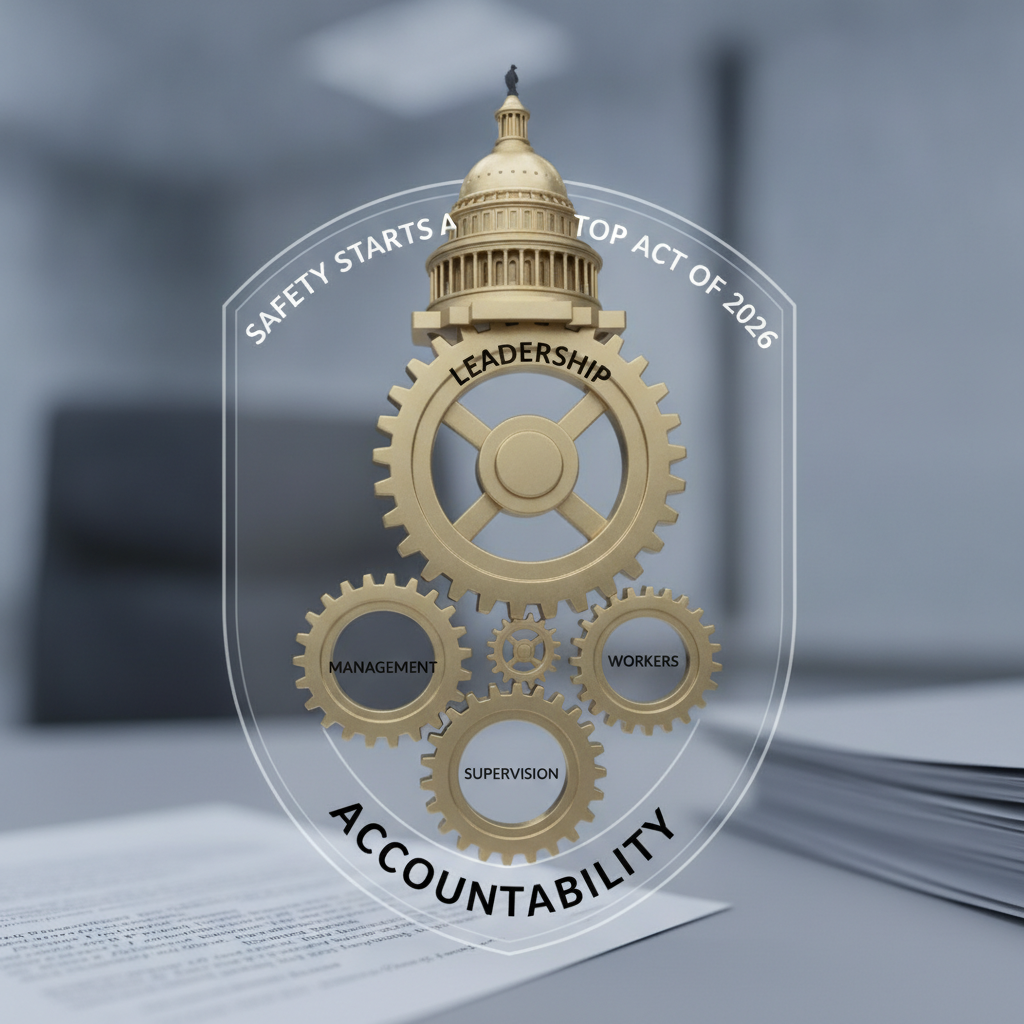
U.S. House Introduces ‘Safety Starts at the Top Act of 2026’ Targeting Leadership Accountability
Content Files PDF XML TEXT Metadata download Descriptive Metadata (MODS) Preservation Metadata (PREMIS) All Content and Metadata files, including granules ZIP

Last updated:
Key points
U.S. House Introduces ‘Safety Starts at the
- House Resolution 10077, titled the Safety Starts at the Top Act of 2026, has been formally introduced in the U.S. House of Representatives.
- The legislation was filed and indexed through the U.S. Government Publishing Office’s GovInfo platform as an introduced bill.
- The proposal centers on establishing executive leadership and administrative accountability regarding safety standards and compliance.
NewsWK — Federal lawmakers in the United States House of Representatives have formally introduced new legislation aimed at institutional oversight and leadership responsibility, according to official records published on the federal government’s legislative database. The measure, designated as House Resolution 10077 (H.R. 10077), is officially titled the “Safety Starts at the Top Act of 2026.”
The legislative measure was formally registered as “Introduced in House” (IH) within the official congressional repository managed by the U.S. Government Publishing Office through GovInfo. The formal index entry confirms that full text files, structural XML data, and descriptive metadata files are being made available for public examination as the bill begins its formal journey through the legislative process.
Why it matters here
For citizens, business operators, and taxpayers across the nation, federal safety policy and administrative accountability directly influence how government oversight functions. When legislative proposals focus on top-level management responsibility, they address core questions about institutional governance, regulatory burdens, and public safety across American communities.
Top-down accountability is a central principle in modern administrative management. When federal standards emphasize leadership responsibility, the practical consequences ripple out to workers, consumers, and local taxpayers. Efficient, accountable management at the upper levels of public and private institutions ensures that safety mandates do not turn into bloated bureaucracy, while maintaining high standards for leadership conduct and public protection.
Furthermore, maintaining strict oversight over how federal regulations are structured helps safeguard taxpayer dollars. Ensuring that safety protocols start with executive decision-makers prevents lower-level employees or front-line operations from bearing unfair operational burdens while leaders remain insulated from responsibility.
Understanding H.R. 10077 and the Federal Legislative Process
The designation of H.R. 10077 as an “IH” document indicates that the bill has been officially dropped into the House hopper and assigned its formal tracking number. Under federal legislative protocols, once a measure is introduced, it is indexed and made available in multiple digital formats, including standard text, portable document format (PDF), and extensible markup language (XML) for legal parsing and archival purposes.
While the full detailed statutory language and specific statutory amendments contained within the “Safety Starts at the Top Act of 2026” are processed for complete digital publishing and committee distribution, the title itself highlights an overarching legislative priority: reinforcing executive and leadership-level obligation toward safety standards.
In standard legislative drafting, measures carrying this operational focus typically examine leadership protocols, reporting chains, executive liability, administrative transparency, or management compliance standards within covered entities or federal agencies. Precise policy mechanisms, enforcement thresholds, and implementation timelines will be evaluated as the bill receives formal committee referral and review.
Government Accountability and Institutional Oversight
Congress maintains a constitutional mandate to oversee federal administrative agencies, set standards for public welfare, and ensure that institutional management acts in good faith. In recent legislative sessions, lawmakers have increasingly focused on structural reforms that hold decision-makers directly accountable for organizational failures or safety lapses.
From a constitutional and legal perspective, ensuring rule-of-law principles inside administrative bodies requires clear statutory guidelines. When leadership is explicitly tied to safety compliance and organizational outcomes, executive agencies and corporate entities alike are incentivized to establish proactive risk management strategies rather than reactive damage control.
Lawmakers evaluating H.R. 10077 will likely weigh how the proposed standards impact operational costs, compliance requirements, and regulatory efficiency. Ensuring that mandates are clear, enforceable, and focused on core safety objectives remains vital for preventing bureaucratic overreach while upholding essential public safeguards.
Next Steps in the House of Representatives
Following its formal introduction in the House of Representatives, H.R. 10077 will be referred by the Speaker of the House to the appropriate standing committee or committees with jurisdiction over the bill’s specific subject matter. Committee members will examine the proposed statutory language, conduct staff reviews, and determine whether to hold public hearings or legislative markups.
During the committee stage, lawmakers have the opportunity to offer amendments, refine statutory language, request formal fiscal cost estimates from the Congressional Budget Office (CBO), and hear testimony from relevant policy experts, industry representatives, and public safety officials.
If approved by the committee of jurisdiction, the Safety Starts at the Top Act of 2026 would then advance to the full House floor for consideration, debate, and a final vote. To become law, the bill must successfully pass both the House of Representatives and the U.S. Senate in identical form before being presented to the President of the United States for signature.
As additional official documentation, committee assignments, and detailed section-by-section summaries are released by federal legislative authorities, the specific legislative impacts of H.R. 10077 will become fully clarified for the public and lawmakers alike.
This article was produced with the assistance of AI and reviewed by our editorial team.