Washington
Taxpayer-Funded Drug Pricing Bill Introduced in Congress: What American Patients and Families Need to Know
Content Files PDF XML TEXT Metadata download Descriptive Metadata (MODS) Preservation Metadata (PREMIS) All Content and Metadata files, including granules ZIP

Last updated:
Key points
taxpayer-funded drug pricing bill
- H.R. 10094, the Affordable Pricing for Taxpayer-Funded Prescription Drugs Act of 2026, has been introduced in the U.S. House of Representatives.
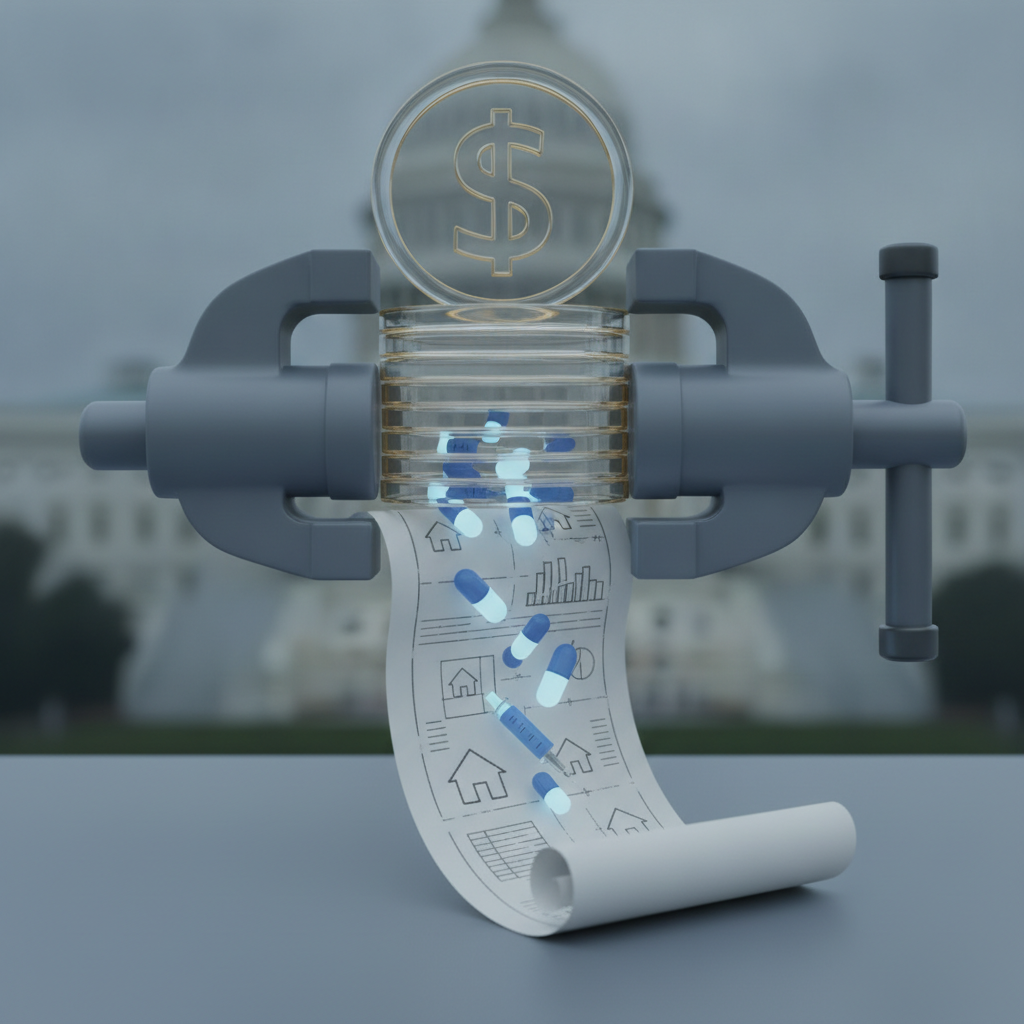
- The bill addresses the intersection of federal research spending and consumer pricing for prescription medications.
- Lawmakers face a delicate balance between protecting taxpayer investments and maintaining market incentives necessary for private pharmaceutical innovation.
NewsWK — Federal lawmakers have introduced new legislation in the U.S. House of Representatives aimed at altering how prescription drugs developed with public funds are priced for American consumers. The measure, designated as H.R. 10094 and titled the Affordable Pricing for Taxpayer-Funded Prescription Drugs Act of 2026, marks the latest legislative effort in Washington to address the rising cost of healthcare while examining the relationship between government-funded scientific research and private pharmaceutical manufacturing.
Why it matters here
For millions of families, seniors, and small businesses across the United States, out-of-pocket healthcare expenses and the cost of vital medications remain central household budget concerns. When medical treatments are derived from research initially financed by public tax revenue, citizens often question why those therapies carry high price tags at the pharmacy counter.
The debate surrounding this legislation touches key aspects of the American economy and healthcare system:
- Household Budgets: Working families and retirees on fixed incomes frequently face steep co-pays and deductibles for brand-name treatments.
- Taxpayer Accountability: Billions of federal dollars flow annually into basic biomedical research through agencies like the National Institutes of Health (NIH), creating ongoing discussions over whether taxpayers receive fair value for that investment.
- Employer Health Plans: Small businesses and local enterprises struggle with increasing group insurance premiums driven in large part by high-cost specialty pharmaceuticals.
- Medical Innovation: The preservation of strong intellectual property protections and market incentives remains critical to ensuring biotechnology firms continue taking financial risks to develop life-saving cures.
The Policy Debate Over Federal Research and Drug Pricing
The core policy question raised by H.R. 10094 involves balancing government fiscal stewardship with the free-market dynamics that drive American pharmaceutical leadership. The United States has long led the world in biomedical breakthroughs, largely due to a competitive private market supported by foundational research conducted at federal laboratories and public universities.
Proponents of pricing restrictions argue that when public funds help identify drug targets or support early-stage clinical trials, federal agencies should impose conditions ensuring that resulting medications remain accessible and reasonably priced for domestic consumers. From this perspective, requiring fair pricing provisions prevents taxpayers from effectively paying twice—first through their tax dollars to fund the research, and again at the pharmacy counter.
Conversely, healthcare economists, conservative policy analysts, and industry leaders caution that overly restrictive government price mandates risk unintended consequences. Developing a new drug often requires hundreds of millions, if not billions, of private capital investment to navigate rigorous clinical trials, regulatory review, and manufacturing scale-up. Critics of government price controls emphasize that if private firms cannot earn a competitive return on investment, capital will shift away from high-risk medical research, potentially delaying or preventing the discovery of treatments for rare diseases, cancer, and chronic illnesses.
Background and Legislative Path Ahead
Federal policy regarding federally funded discoveries has historically centered around the Bayh-Dole Act of 1980. That landmark legislation enabled universities, non-profit institutions, and small businesses to retain patent ownership of inventions developed with federal grants, encouraging commercialization and public-private partnerships.
In recent years, members of Congress have proposed various mechanisms to tie federal grant conditions to consumer pricing, including the use of march-in rights and mandatory domestic reference pricing. H.R. 10094 represents the newest proposal in this ongoing debate.
As an introduced bill, H.R. 10094 will be referred to relevant congressional committees for initial consideration. Lawmakers will have the opportunity to review the statutory language, hold hearings, and evaluate the economic and scientific ramifications of the proposal. Any movement on the measure will require broad scrutiny from lawmakers tasked with protecting taxpayer investments while safeguarding the nation’s capacity for medical innovation.
This article was produced with the assistance of AI and reviewed by our editorial team.
Sources
Related: Senator Cassidy Introduces the Taxpayer Funded Compensation Accountability Act
See a typo? Report it here.