National News
House Lawmakers Introduce ‘Ratepayer Bill of Rights Act’ to Address Rising Utility Costs and Consumer Protections
Content Files PDF XML TEXT Metadata download Descriptive Metadata (MODS) Preservation Metadata (PREMIS) All Content and Metadata files, including granules ZIP

Last updated:
Key points
House Lawmakers Introduce ‘Ratepayer Bill of
- H.R. 10139, the Ratepayer Bill of Rights Act of 2026, has been introduced in the U.S. House of Representatives to address rising utility costs and consumer transparency.
- The measure seeks to strengthen consumer protections, improve utility bill disclosures, and provide greater oversight on rate increases impacting American households and businesses.
- The bill enters congressional consideration amid broader national discussions over grid modernization, energy reliability, and the balance between federal standards and state regulatory authority.
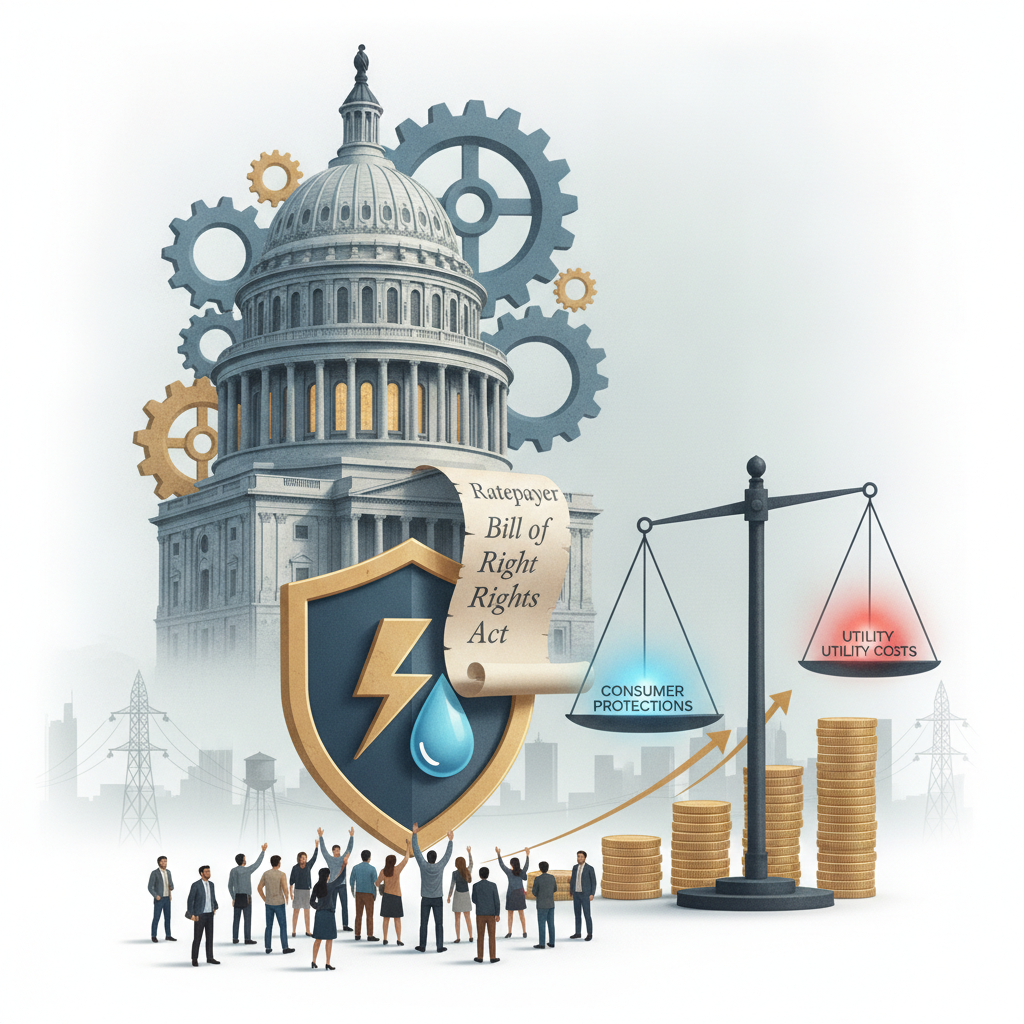
NewsWK — Federal lawmakers in the U.S. House of Representatives have formally introduced legislation titled the Ratepayer Bill of Rights Act of 2026, aimed at strengthening consumer protections and increasing transparency for household energy and utility expenses across the country. Designated as H.R. 10139, the measure enters the congressional docket as families and small businesses nationwide continue to grapple with elevated utility bills, grid reliability concerns, and complex regulatory frameworks governing retail energy services.
The introduction of H.R. 10139 marks a legislative effort to establish clear baseline standards for utility consumers, addressing long-standing grievances regarding billing transparency, rate hike procedures, and service reliability. As utility rates continue to outpace general inflation in many regions of the United States, federal policymakers are taking a closer look at the mechanisms that govern how public and private utilities pass infrastructure and regulatory compliance costs onto residential consumers.
Why it matters here
For working families and small business operators across the United States, monthly utility expenses represent a non-negotiable cost of living. When electricity, natural gas, or water rates increase, the economic pressure is felt immediately in household budgets and operational overhead for local enterprises. The Ratepayer Bill of Rights Act seeks to directly address the balance of power between regulated utility monopolies and everyday consumers who have limited or no alternative service providers.
High energy costs function as a regressive tax, disproportionately impacting fixed-income seniors, rural communities, and lower-to-middle-income wage earners. Proponents of ratepayer protection measures argue that consumers deserve robust disclosures regarding the specific factors driving rate hikes, including capital expenditures, regulatory mandates, and fuel cost adjustments. Establishing greater oversight and standardized rights gives local communities more leverage when state and federal regulators evaluate utility rate adjustment requests.
Background and Policy Context
The legislative debate surrounding utility regulation comes during a period of significant structural shifts in the American energy landscape. Power generation facilities, transmission developers, and local distribution companies are navigating major capital investment cycles to upgrade aging infrastructure, integrate diverse energy sources, and respond to surging electricity demand driven by industrial reshoring, data centers, and advanced manufacturing facilities.
Historically, retail utility regulation has predominantly fallen under the jurisdiction of state public utility commissions (PUCs), while wholesale electricity markets, interstate natural gas transmission, and regional grid reliability remain subject to federal oversight through the Federal Energy Regulatory Commission (FERC). Balancing federal legislative standards with traditional state-level regulatory authority is expected to be a central focus as H.R. 10139 moves through congressional committees.
Critics of unchecked utility rate hikes emphasize that without strong statutory accountability, regulated utilities have financial incentives to expand capital expenditure programs—on which they earn guaranteed rates of return—while passing the entire financial burden onto captive ratepayers. Conversely, industry representatives and utility providers often argue that rate increases are essential to maintain system resilience against severe weather events, modernize cybersecurity defenses, and comply with evolving federal environmental standards.
Key Provisions and Congressional Outlook
While the full statutory text of H.R. 10139 will undergo rigorous review in designated House committees, ratepayer advocacy frameworks generally emphasize several core principles designed to protect consumers:
- Billing Clarity and Transparency: Requiring utility bills to clearly itemize generation, delivery, administrative, and regulatory surcharge costs so customers understand exactly what they are paying for.
- Notice and Due Process: Enhancing mandatory advance notice requirements before rate adjustments or service modifications take effect, ensuring consumers and local municipal representatives have adequate opportunity to participate in public hearings.
- Disconnection Safeguards: Providing reasonable procedural protections for vulnerable households during extreme weather conditions while balancing the operational solvency of service providers.
- Accountability in Capital Spending: Encouraging regulators to scrutinize utility spending projects to prevent excessive consumer cost-shifting for unproven or non-essential projects.
As the 119th Congress reviews the legislation, lawmakers will need to evaluate how federal ratepayer standards interact with existing state regulatory compacts. For conservative and market-focused policy analysts, the priority will remain safeguarding consumer pocketbooks, reigning in regulatory bloat, and ensuring that American energy remains both affordable and reliably delivered to households and industrial job creators across the nation.
This article was produced with the assistance of AI and reviewed by our editorial team.
Sources
Related: Utilities Seek $18 Billion in Utility Rate Hikes Affecting Millions of Households
Related: May Inflation Rate Hits 4.2%, a Three-Year High
Related: May Inflation Rate Spikes to 4.2%, a Three-Year High
Related: Will the Ratepayer Protection Act HR 9340 Shield Local Utility Bills From Rising Data Center Costs?
Related: Will the Affordable Power for Host Communities Act Lower Your Utility Bills?
See a typo? Report it here.