
Alabama
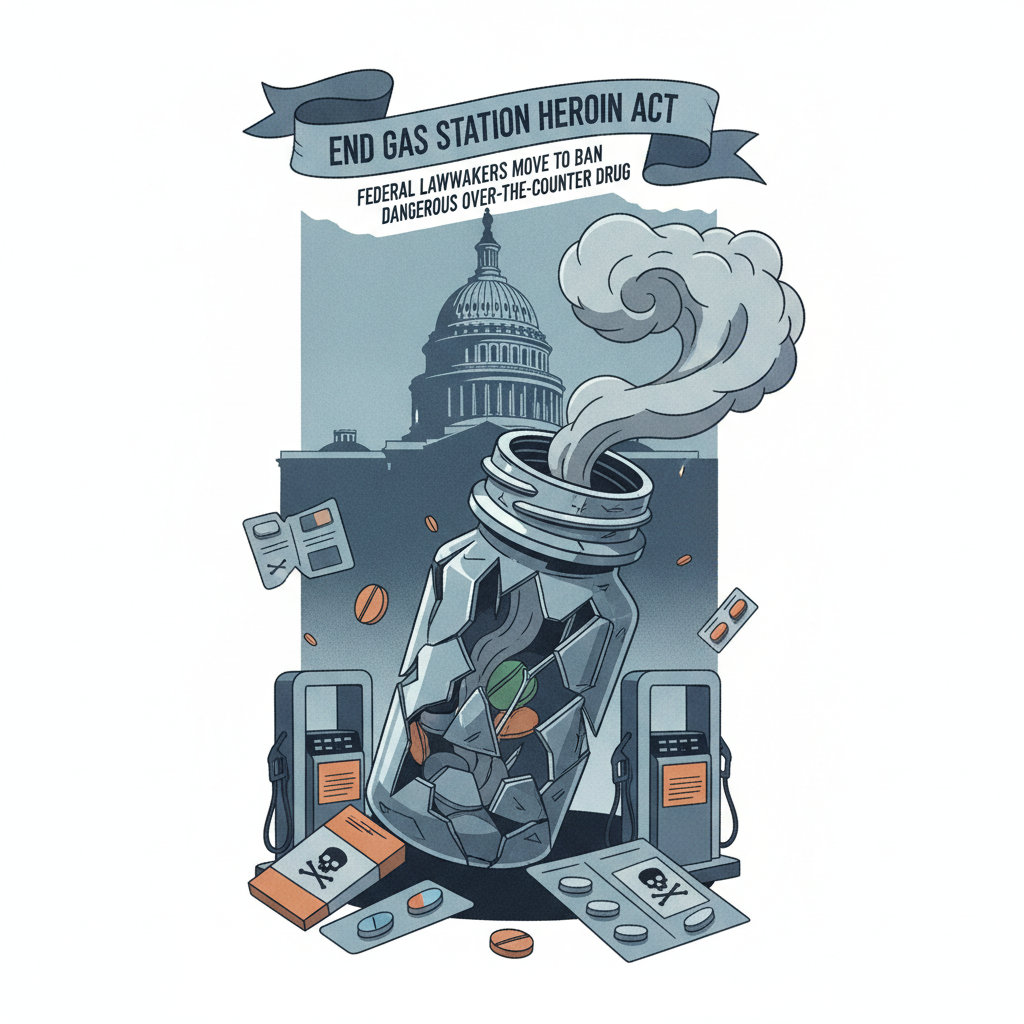
Federal Lawmakers Move to Ban Dangerous Over-the-Counter Drug with ‘End Gas Station Heroin Act’
Content Files PDF XML TEXT Metadata download Descriptive Metadata (MODS) Preservation Metadata (PREMIS) All Content and Metadata files, including granules ZIP

Last updated:
Key points
Federal Lawmakers Move to Ban Dangerous
- Federal legislation (S. 5383), known as the End Gas Station Heroin Act, aims to ban the over-the-counter sale and distribution of tianeptine nationwide.
- Tianeptine produces opioid-like effects and has led to surges in poison control calls, severe addiction, and emergency hospitalizations across the country.
- A federal ban is designed to resolve the current patchwork of state laws and grant federal agencies full authority to block imports and halt commercial sales.
NewsWK — Federal lawmakers are moving to eliminate a dangerous, addictive compound from convenience store shelves nationwide through new legislation titled the End Gas Station Heroin Act. The bill, introduced in the United States Senate as S. 5383, targets the unregulated sale and distribution of tianeptine—a chemical substance marketed under various brand names that produces opioid-like effects and poses severe risks to public health and consumer safety.
Why it matters here
For families, local law enforcement agencies, and healthcare providers across the country, the proliferation of unregulated mood-altering substances in neighborhood retail locations has created a growing public safety hazard. Often packaged as dietary supplements, energy enhancers, or cognitive boosters, tianeptine products have been openly sold at gas stations, vape shops, and convenience stores, frequently evading standard drug enforcement mechanisms.
First responders and emergency rooms across American communities have faced an increasing number of poisonings, severe withdrawals, and overdoses linked directly to these over-the-counter products. By establishing a uniform national standard, federal legislation aims to protect consumers from deceptive marketing, support parents in keeping dangerous substances away from teenagers, and relieve local healthcare systems and law enforcement officers who have been forced to respond to an unchecked neighborhood drug trend.
The Risks Behind Tianeptine
Tianeptine is an atypical compound approved in some foreign nations as a prescription antidepressant, but it has never received approval from the U.S. Food and Drug Administration (FDA) for medical use. While marketed in low doses abroad under strict medical supervision, the products sold over the counter in the United States typically contain concentrated, unregulated quantities.
At high doses, tianeptine binds to the brain’s mu-opioid receptors, producing a euphoric high similar to traditional opioids. This mechanism leads to rapid physical dependence, severe tolerance, and painful withdrawal symptoms that mirror opioid withdrawal. Medical experts have warned that individuals attempting to self-treat chronic pain, depression, or substance use disorders frequently fall into severe addiction cycles after purchasing these products at retail counters.
The FDA has repeatedly issued consumer warnings regarding tianeptine products—often sold under names such as Neptune’s Fix, ZaZa Red, Tianaa, and Pegasus—cautioning the public against severe side effects including seizures, loss of consciousness, respiratory failure, and death. Testing conducted by public health agencies has also discovered that some tianeptine products were adulterated with other illicit substances, including synthetic cannabinoids, further increasing the risk of acute poisoning.
A Fragmented State Response Prompts Federal Action
Prior to federal intervention, individual states attempted to tackle the issue through emergency rules and legislative prohibitions. More than a dozen states—including Alabama, Florida, Georgia, Ohio, Tennessee, and Mississippi—have enacted measures to ban tianeptine or classify it as a Schedule I controlled substance under state law.
However, state-by-state prohibitions have created a fractured regulatory landscape. In regions where tianeptine is outlawed, consumers and illicit distributors have frequently circumvented local bans by purchasing products online or crossing state borders into neighboring jurisdictions where sales remain legal. Law enforcement officials have consistently argued that without federal scheduling and border interdiction, stopping the influx of bulk chemical powders—primarily imported from overseas manufacturers—remains an uphill battle.
Strengthening Public Safety and Accountability
The End Gas Station Heroin Act aims to close these regulatory loopholes by placing tianeptine under strict federal control, granting the Drug Enforcement Administration (DEA) and federal prosecutors the statutory authority needed to halt commercial distribution, seize imported chemical shipments, and penalize manufacturers who target American consumers.
Supporters of the measure emphasize that holding bad actors accountable protects legitimate small business owners who operate ethical retail businesses, while removing deceptive and dangerous products from retail shelves. As S. 5383 moves through the federal legislative process, congressional committees are expected to review regulatory timelines, enforcement mechanisms, and interagency coordination between the FDA, DEA, and U.S. Customs and Border Protection to ensure complete commercial eradication of the substance.
This article was produced with the assistance of AI and reviewed by our editorial team.
Sources
Related: Sanctuary Policies Block Federal Jail Transfers as ICE Ramps Up Enforcement Across U.S. Communities
See a typo? Report it here.