
Washington
Chama Basin Watershed Protection Act Introduced in Senate to Address Western Water and Land Management
Content Files PDF XML TEXT Metadata download Descriptive Metadata (MODS) Preservation Metadata (PREMIS) All Content and Metadata files, including granules ZIP

Last updated:
Key points
Chama Basin Watershed Protection Act Introduced in
- Senate Bill 5282, titled the Chama Basin Watershed Protection Act, has been officially introduced in the 119th Congress.
- The legislation aims to address watershed health and resource management across the critical Chama Basin region.
- Stakeholders and local water users are monitoring the bill for details on federal funding, land management mandates, and state water rights protections.
NewsWK — Federal lawmakers in Washington have officially introduced new legislation aimed at environmental management and land stewardship with the introduction of Senate Bill 5282, known as the Chama Basin Watershed Protection Act. Introduced in the United States Senate during the 119th Congress, the proposal targets federal resource planning and protection measures across the critical Chama Basin watershed.
While full statutory details and specific committee assignments are being processed through official legislative publication channels, the introduction of S. 5282 signals renewed federal focus on watershed health, land management, and water supply security in key Western river basins.
Why it matters here
For residents, agricultural producers, and local communities across the region, federal watershed legislation carries significant long-term implications. Watershed protection initiatives frequently involve multi-agency coordination between the U.S. Forest Service, the Bureau of Land Management, and state water agencies. Depending on the final language of the legislation, such designations can influence water allocation rights, timber management practices, wildfire prevention funding, and recreational land access.
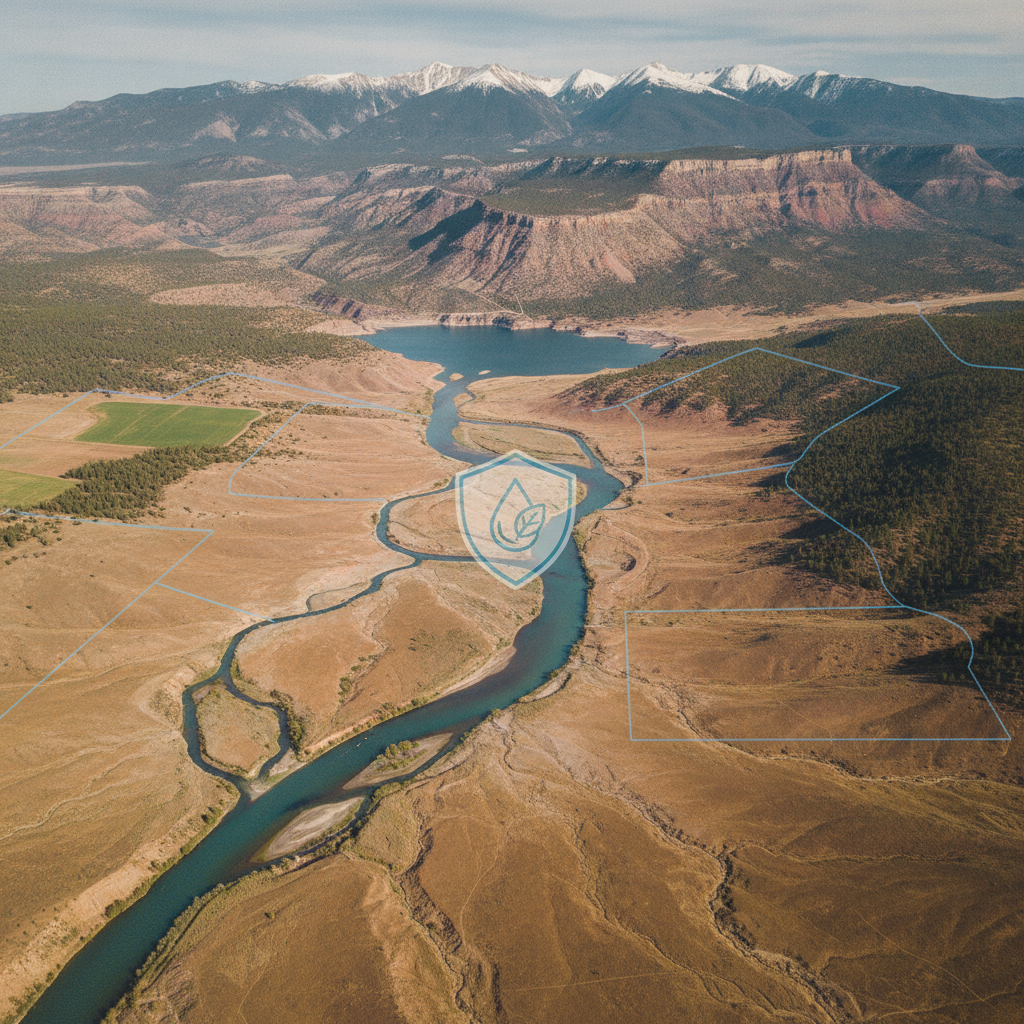
Water security remains one of the premier economic and regulatory issues facing Western states. The Chama River basin serves as a vital tributary within the broader Rio Grande system, supplying municipal drinking water, irrigation for agricultural operations, and essential flows for regional ecosystems. Any federal statutory changes affecting land treatment, runoff management, or conservation mandates within the basin directly affect upstream landholders, downstream municipal water users, and rural farming communities.
From a public policy and taxpayer perspective, federal watershed bills also determine how public funds are allocated toward forest thinning, erosion control, and infrastructure resilience. Conservative land managers and local officials continually emphasize that federal interventions must respect existing state water rights, preserve local economic vitality, and refrain from over-regulating private property or traditional land uses.
Background and legislative context
The introduction of S. 5282 represents the preliminary step in the federal legislative process. As an “Introduced in Senate” bill, the measure must be formally referred to the appropriate Senate committee—typically the Senate Committee on Energy and Natural Resources—where lawmakers will review its specific provisions, assess its fiscal impact, and consider potential amendments.
Western watershed management has increasingly drawn bipartisan legislative attention due to compounding challenges related to severe drought, forest overgrown conditions, and heightened wildfire risks. When catastrophic wildfires strike forested headwaters, municipal water systems face severe sedimentation and contamination challenges, costing taxpayers millions in remediation. Consequently, targeted watershed protection bills often attempt to balance forest health restoration with regulatory safeguards.
However, federal land designations frequently spark debate over the balance between federal authority and local control. Property rights advocates and regional stakeholders closely scrutinize federal watershed bills to ensure that federal agencies do not impose overly restrictive land-use classifications—such as wilderness designations or stringent timber harvesting bans—that could restrict active forest management or inhibit local economic development.
What comes next for S. 5282
At present, the official legislative metadata and primary document files for S. 5282 have been registered with the U.S. Government Publishing Office. As the Senate processes the bill text and associated committee documentation, federal analysts, local governments, and water districts will closely examine the precise statutory mechanisms proposed under the Chama Basin Watershed Protection Act.
Key items that stakeholders will be monitoring include:
- Funding allocations and fiscal scope: Whether the bill mandates direct federal appropriations, establishes grant programs, or relies on existing agency operational budgets.
- Inter-agency jurisdiction: How the bill assigns administrative authority between federal forestry officials, land managers, and state environmental departments.
- Impact on private and working lands: Specific safeguards included to protect historic water rights, agricultural grazing allotments, and private property boundaries within the watershed.
- Wildfire mitigation directives: Provisions establishing proactive mechanical thinning, controlled burns, or emergency rehabilitation mandates for critical headwaters.
As the 119th Congress progresses, S. 5282 will require committee consideration, potential public hearings, and approval by both houses of Congress before reaching the president’s desk to become law. Residents and local water users are encouraged to stay informed as full statutory language and official committee reports are made available for public review.
This article was produced with the assistance of AI and reviewed by our editorial team.
Sources
Related: Senate Passes Crystal Reservoir Conveyance Act Ouray Residents Need for Water Security
Related: Senate Passes Snow Water Supply Forecasting Program Reauthorization Act to Protect Western Water
Related: What Does the HR 10776 Marine Mammal Protection Act Bill Proposal Change?
See a typo? Report it here.