National News
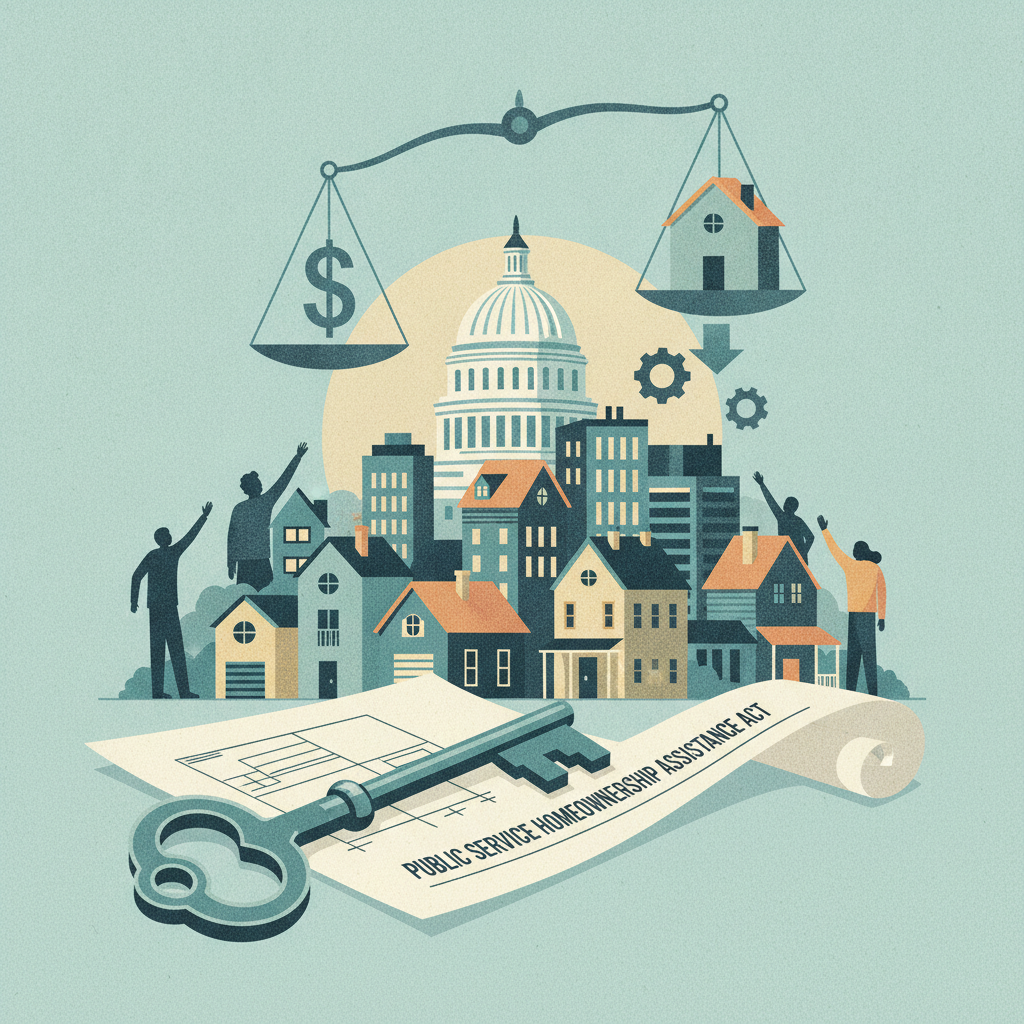
Federal Lawmakers Introduce Public Service Homeownership Assistance Act to Address Housing Costs
Content Files PDF XML TEXT Metadata download Descriptive Metadata (MODS) Preservation Metadata (PREMIS) All Content and Metadata files, including granules ZIP

Last updated:
Key points
Federal Lawmakers Introduce Public Service
- H.R. 10053, the Public Service Homeownership Assistance Act, has been introduced in the 119th Congress to help public sector workers afford homes.
- The bill aims to assist first responders, teachers, and healthcare workers facing high mortgage rates and elevated home prices.
- The legislation faces committee review in the House of Representatives as lawmakers weigh public safety workforce needs against fiscal considerations.
NewsWK — As elevated interest rates and persistently high housing costs continue to squeeze American households, federal lawmakers in the 119th Congress have formally introduced H.R. 10053, titled the Public Service Homeownership Assistance Act. The legislation aims to provide targeted federal support to help essential public service employees—including law enforcement personnel, emergency responders, public school educators, and healthcare workers—achieve homeownership in the communities where they work.
The introduction of H.R. 10053 reflects growing concern on Capitol Hill over the worsening home affordability crisis across the United States. With median home prices remaining near record highs and mortgage rates lingering well above historic lows, middle-income public servants increasingly find themselves priced out of local residential markets.
Why it matters here
For municipal leaders and local residents across the country, the relationship between housing affordability and public service staffing has reached a critical point. When police officers, firefighters, teachers, and municipal workers cannot afford to live in or near the jurisdictions they serve, local communities face significant operational challenges.
Extended commute times for key public safety personnel can hamper response times during emergencies. Furthermore, high living costs contribute directly to recruitment shortages and retention difficulties in local police departments, fire districts, and public school systems. Enabling public service workers to put down roots locally fosters stronger community bonds, improves public safety responsiveness, and reinforces neighborhood stability.
At the same time, fiscal policy experts and taxpayers monitor federal housing initiatives closely. Conservative policy analysts emphasize that federal programs assisting specific workforce sectors must be structured responsibly to protect taxpayer funds, prevent market distortions, and ensure fiscal discipline while assisting frontline public servants.
Understanding the Proposed Legislation
The bill, officially designated as H.R. 10053 in the 119th Congress, was introduced in the U.S. House of Representatives and referred to the appropriate committee for legislative consideration. While specific legislative text undergoes committee review, public service homeownership initiatives generally focus on easing the financial hurdles associated with purchasing a primary residence.
Key mechanisms often considered under public service housing proposals include down payment assistance grants, reduced closing cost structures, specialized loan guarantees, or tax credits designed for public sector employees. Proponents argue that such incentives offer a tangible benefit that aids workforce retention without imposing blanket government price controls on private real estate markets.
Economic Context and Market Pressures
The introduction of H.R. 10053 comes against a backdrop of broader economic friction in the U.S. housing sector. Severe inflation over recent years prompted the Federal Reserve to raise benchmark interest rates, driving standard 30-year fixed mortgage rates significantly higher than the sub-3% rates seen earlier in the decade.
Simultaneously, a persistent inventory shortage of single-family homes has kept purchase prices elevated nationwide. This combination of higher borrowing costs and elevated valuation has disproportionately affected salary-based public workers, whose wage growth often lags behind rapid surges in private-sector living expenses.
While advocates contend that public service homeownership programs provide crucial relief for essential workers, free-market economists note that long-term housing affordability ultimately depends on increasing housing supply, reducing regulatory burdens on residential construction, and curbing inflationary federal spending.
Legislative Process and Next Steps
As H.R. 10053 begins its path through the House of Representatives, the measure must clear committee evaluation, undergo potential amendments, and receive a formal cost assessment before advancing to a full floor vote. Lawmakers on both sides of the aisle are expected to examine how the bill balances support for essential public workers with responsible federal budget management.
Residents, local public safety organizations, and educational associations will be watching closely as Congress debates the bill in the coming months.
This article was produced with the assistance of AI and reviewed by our editorial team.