
Illinois
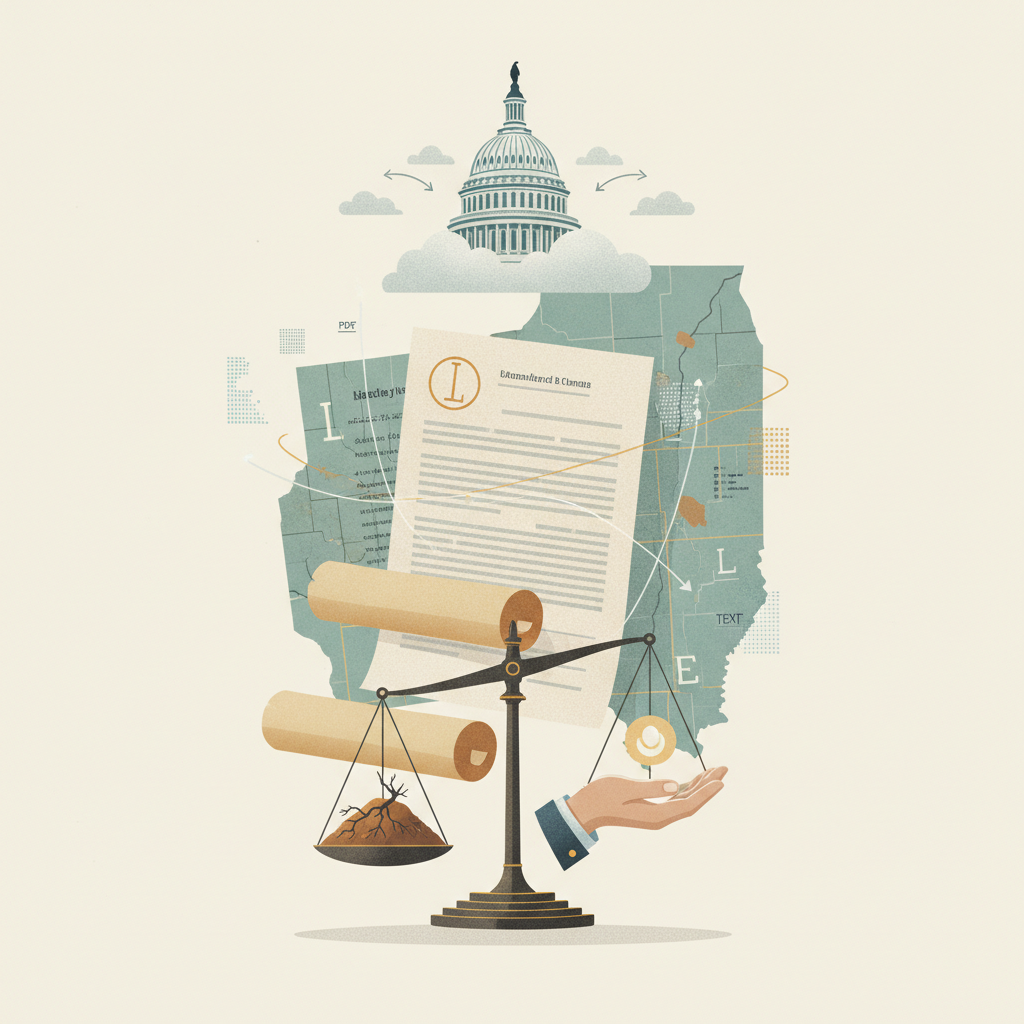
Federal Measure Moving Through Congress Addresses Longstanding Illinois Land Settlement Claims
Content Files PDF XML TEXT Metadata download Descriptive Metadata (MODS) Preservation Metadata (PREMIS) All Content and Metadata files, including granules ZIP

Last updated:
Key points
Federal Measure Moving Through Congress Addresses
- H.R. 2827 has been reported out of committee in the U.S. House of Representatives, advancing a framework to settle historical Indian land disputes in Illinois.
- The legislation aims to establish legal certainty for land titles, protecting private property rights and clarifying local jurisdiction.
- Congressional action provides a transparent, statutory remedy to resolve complex historical claims while preserving stability for local communities and taxpayers.
NewsWK — Federal lawmakers are advancing legislation aimed at resolving historical land claims in Illinois, seeking to provide legal clarity and finality to property disputes involving tribal land rights. The measure, designated as House Resolution 2827 and recently reported out of committee in the U.S. House of Representatives, addresses longstanding questions surrounding title certainty, federal jurisdiction, and equitable settlements within the state.
As federal legislative records indicate, the bill establishes a formal framework to settle contested land disputes regarding specific tracts in Illinois. By addressing these claims through standard congressional authorization rather than protracted litigation, lawmakers intend to balance historical obligations with the fundamental legal certainty required by current property owners, municipal governments, and local taxpayers across the region.
Why it matters here
For communities across Illinois and observers of federal land policy nationwide, the resolution of historical land disputes is deeply tied to the rule of law and the stability of local property rights. When real estate titles face clouding due to unresolved historical claims, the consequences can ripple across multiple sectors:
- Property Title Stability: Clear legal title is the bedrock of local real estate markets, agricultural commerce, and private development. Without definitive federal action, uncertainty can complicate property transactions, mortgage underwriting, and municipal land-use planning.
- Local Tax Bases: Unsettled jurisdictional questions can affect local property tax assessments, public school funding, and the delivery of essential county services. Resolving disputes legislatively ensures that local governments have a reliable roadmap for fiscal planning.
- Economic Predictability: Businesses, farmers, and residential property owners depend on transparent, enforceable rules. Legislative settlements offer an orderly alternative to decades of uncertain court battles that impose substantial legal costs on public and private entities alike.
Background and Legislative Framework
Under Article I, Section 8 of the United States Constitution, the federal government maintains plenary authority over Indian commerce and treaty relations. Historically, disputes involving 19th-century treaties, land cessions, and reservation boundaries have often resulted in complex legal challenges that span generations. When such disputes arise in states like Illinois—where federally recognized tribal reservation boundaries were largely altered or extinguished over a century ago—congressional action is frequently required to achieve a permanent, equitable resolution.
H.R. 2827 has advanced through the committee stage, earning the legislative designation of being officially reported to the full House of Representatives. This procedural milestone indicates that the relevant committee of jurisdiction has examined the statutory language, reviewed the scope of the claims, and prepared the legislation for broader consideration by lawmakers.
While specific terms of settlement measures typically involve federal extinguishment of conflicting historical claims in exchange for designated remedies or federal trust land determinations, the ultimate goal of such statutes is establishing an enduring legal status that respects constitutional parameters and protects existing private property holders from unexpected liabilities.
Rule of Law and Moving Forward
Advocates of structured legislative settlements point out that resolving complex land questions through the U.S. Congress ensures public transparency, open committee debate, and accountability to taxpayers. Rather than relying on open-ended administrative actions or unpredictable judicial rulings, statutory settlements establish definitive boundaries and explicit legal safeguards.
As the legislation proceeds through the federal legislative process, it will require further review, floor consideration, and concurrence between both chambers of Congress before potentially reaching the President’s desk. For Illinois residents, local officials, and property owners, the ongoing progress of the bill highlights how federal law intersects directly with local governance, private ownership, and constitutional administration.
This article was produced with the assistance of AI and reviewed by our editorial team.
Sources
Related: How the Historic Preservation and Land Conservation Certainty Act Aims to Resolve Tax Disputes
See a typo? Report it here.