Justice and Law
How Fragmented State Laws and Forensic Limits Complicate Independent Death Investigations
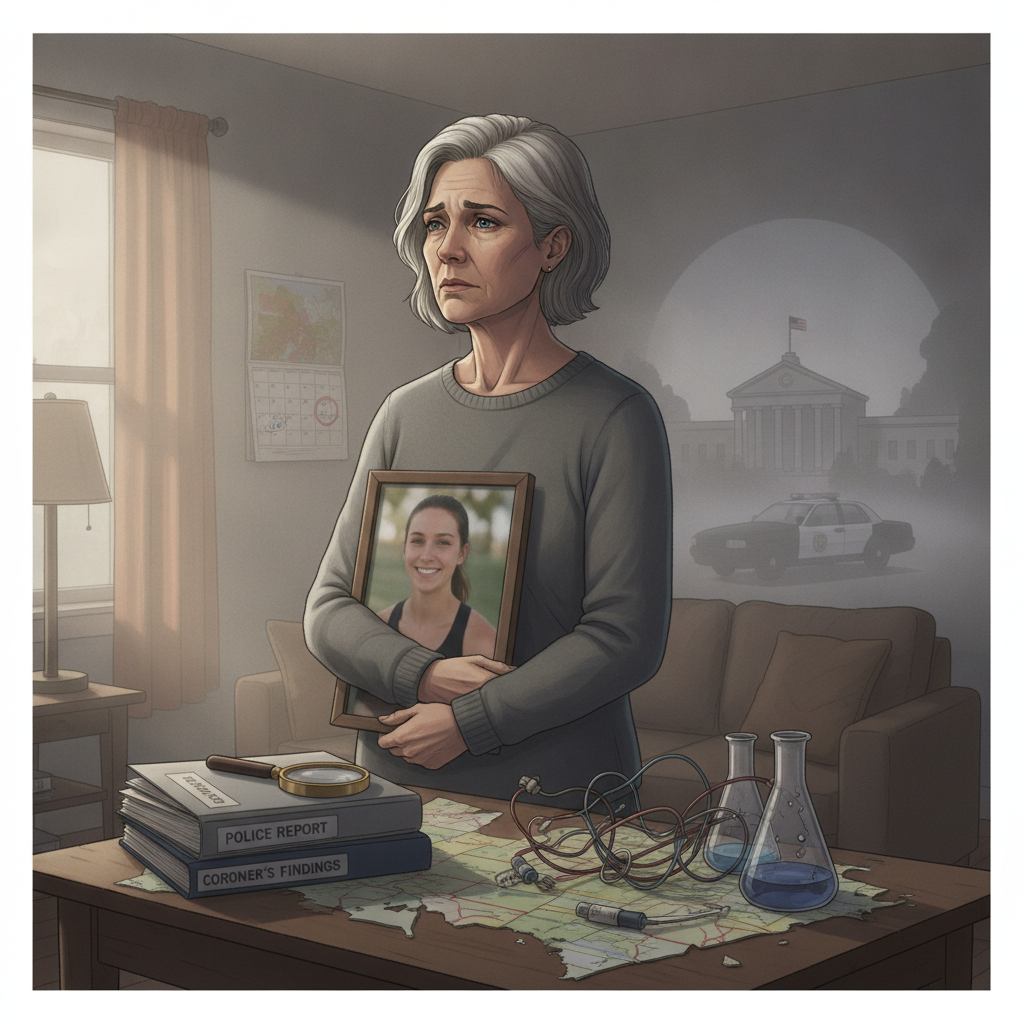
After investigators ruled 31-year-old high school counselor and coach Kelsey Harris’ death a suicide in 2021, her mother, Kellee, said she was not convinced the inquiry had answered the most important questions. About a week before Kelsey died, police had…

Last updated:
Key points
independent death investigations
- Death investigation protocols vary widely nationwide, with 20 states using centralized medical examiners while others rely on local coroners or hybrid systems.
- Forensic experts note that secondary autopsies face technical limits because primary examinations offer the most complete window for evidence collection.
- Law enforcement officials emphasize that thorough investigations require extended timeframes to ensure determinations are grounded in physical evidence.
NewsWK — When families experience the sudden loss of a loved one, navigating the official death investigation process can present significant challenges. Across the United States, decentralized state systems, evidence limitations, and conflicting expectations often lead grieving relatives to request independent autopsies, according to a report first published by Stateline.
A Patchwork of State and Local Systems
The United States lacks a single, standardized framework for conducting death investigations. Instead, oversight is divided among a patchwork of state, county, and local authorities. A Stateline analysis reveals that 20 states and Washington, D.C., operate centralized medical examiner systems headed by trained forensic pathologists. Conversely, nine states rely primarily on county-level coroners—who are often elected officials with varying degrees of medical training—while the remaining states utilize hybrid arrangements.
This structural fragmentation was highlighted in a 2025 report by the National Academies of Sciences, Engineering, and Medicine, which noted that the nation’s medicolegal investigation network lacks consistent oversight, uniform operating standards, and adequate funding. As a result, procedures for reviewing contested findings can differ dramatically depending on where a death occurs.
The Limits and Role of Second Autopsies
When families question an official finding—such as a ruling of suicide, an accidental death, or a fatal encounter with law enforcement—some turn to private forensic pathologists or independent investigators. However, medical experts emphasize that a second autopsy cannot always resolve open questions, as the initial examination remains the primary window for collecting unaltered physical evidence.
“The first autopsy is more than likely going to be the most valuable autopsy,” Dr. Michelle Jorden, president of the National Association of Medical Examiners, told Stateline.
Recent high-profile cases illustrate these technical limitations. In Mississippi, the family of 18-year-old Nolan Xavier Wells commissioned an independent autopsy after his body was recovered following a July Fourth boat trip. The private pathologist classified the cause and manner of death as “undetermined,” noting that missing internal organs from the primary state examination restricted the scope of the secondary review. Official toxicology results from the Mississippi State Medical Examiner’s Office remain pending.
Law Enforcement Transparency and Realistic Timelines
Contested determinations also arise in domestic cases. In Oregon, the mother of Kelsey Harris questioned a 2021 medical examiner determination that her daughter’s fatal gunshot wound was self-inflicted, pointing to a prior domestic violence report involving Harris’s boyfriend. Local law enforcement, however, maintains that the physical evidence collected at the scene conclusively supported the original finding.
“All of the evidence points to, unfortunately, a suicide,” Linn County Sheriff Michelle Duncan told Stateline, adding that investigators met with the family and reviewed outside opinions before standing by their conclusion.
Law enforcement professionals note that statutory restrictions and investigative protocols frequently limit how much information can be shared while inquiries remain active. Furthermore, retired law enforcement instructors point out that public expectations regarding the speed of forensic testing are often skewed by fictional media depictions. Comprehensive death investigations require rigorous evidence processing and interviews that routinely take months or years to complete, ensuring determinations are backed by factual evidence rather than premature conclusions.
Based on reporting by Amanda Watford originally published by Stateline. Read the original story.