Colorado
How Will a Record Number of Women in State Legislatures Impact State Policy Nationwide?
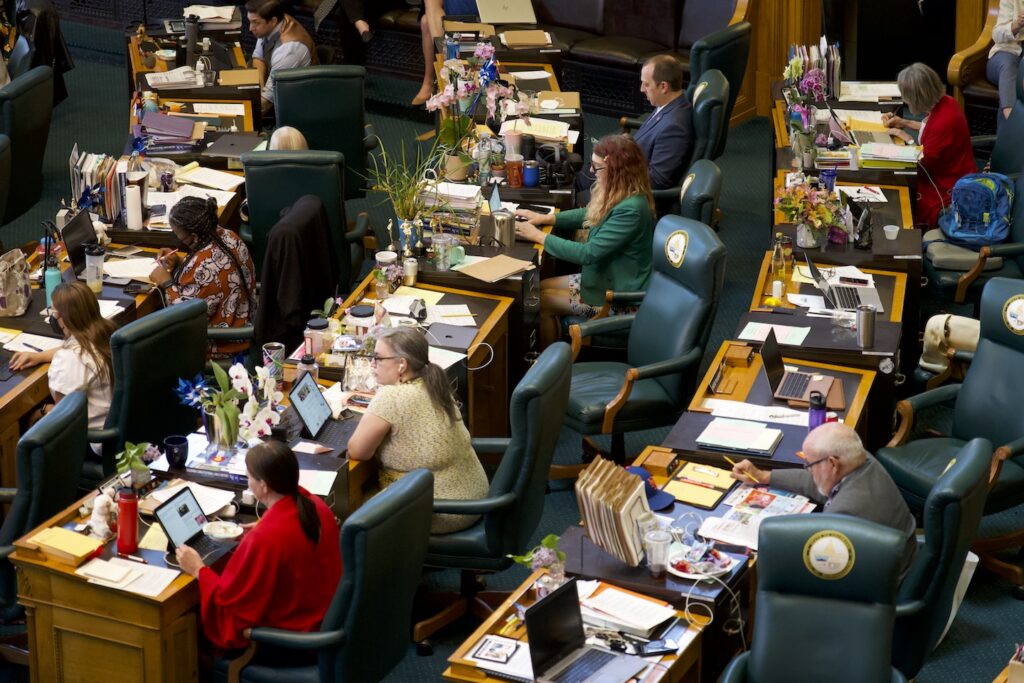
The number of women serving in state legislatures will set a new record following strong Democratic performance in last week’s midterm elections. Though many races remain too close to call, an analysis by the Center for American Women and Politics…

Last updated:
Key points
- A record 2,559 women will serve in state legislatures next year, representing nearly 35 percent of all state lawmakers nationwide.
- Six states reached gender parity with at least 50 percent female lawmakers, but overall gains were driven entirely by Democratic victories while Republican women saw a decline.
- At least 18 women will serve as state governors next year, alongside milestone victories in executive and congressional races across the country.
NewsWK — Statehouses across the United States are preparing for major legislative shifts following recent midterm elections. Updated vote counts show a record number of female lawmakers entering state capitols next year. However, national figures reveal a widening partisan gap behind these overall gains. As a result, conservative leaders and political analysts are examining how candidate recruitment impacts representation. Meanwhile, local communities are assessing how shifting capitol dynamics will influence taxation, regulation, and governance.
How many women elected to state legislatures will serve next year?
Following recent elections, at least 2,559 women will hold state legislative seats nationwide next year. This tally represents nearly 35 percent of all state lawmakers across the country. Furthermore, the new total surpasses the previous record of 2,488 set earlier this cycle.
Data from the Center for American Women and Politics at Rutgers University confirms this historic figure. Before this election, the National Conference of State Legislatures tracked female representation at 32.43 percent. Additionally, data from MultiState shows a 40 percent expansion in female representation over the past decade.
Still, representation rates vary widely across individual state legislatures. For example, women hold more than half of all legislative seats in Colorado, Nevada, and New Mexico. By contrast, women comprise less than 15 percent of lawmakers in West Virginia, South Carolina, and Mississippi. Therefore, political trends create vastly different legislative environments from state to state.
What does this shift mean for local communities and state policy?
Specifically, lawmakers will debate taxes, education, and economic growth. Local voters will see these choices play out in annual legislative sessions.
For example, state legislatures determine annual funding for public infrastructure, law enforcement, and municipal services. Shifts in legislative majorities often alter committee assignments and leadership roles. Consequently, local business owners and taxpayers must monitor state capitols. They should watch for potential changes in tax policy and compliance mandates.
Also, state lawmakers establish regulatory frameworks for energy, healthcare, and property rights. Because legislative decisions directly touch daily life, constituents closely track policy proposals in their state capitols. Still, voters across all districts share common concerns. They prioritize government efficiency, fiscal accountability, and public safety.
How is gender parity in state legislatures changing party dynamics?
Six states will achieve equal representation between men and women in their legislative chambers next year. However, national figures reveal a growing partisan gap between the two major political parties. Democratic gains account for the overall increase. Meanwhile, Republican female representation experienced a decline.
Analysis shows that six state legislatures will reach gender parity with at least 50 percent female members:
But overall national increases stem entirely from Democratic electoral gains. In upcoming sessions, the number of Republican women in state legislatures will drop from 867 to at least 675. Meanwhile, Democratic women currently hold about 64 percent of all female-held state legislative seats.
“While these are impressive gains for the overall number of women and Democratic women in state legislatures around the country, this is a significant decline for Republican women,” said Debbie Walsh, director of the Center for American Women and Politics.
“It is past time the Republican Party put in the work to mitigate the ever-widening partisan gap in women’s representation,” Walsh stated.
Why are Democratic women in state legislatures seeing larger gains?
Researchers point to ongoing structural challenges in candidate recruitment across political parties. Consequently, these factors highlight different organizational strategies between conservative and progressive political groups.
Across the political spectrum, academic research shows lower levels of initial political ambition among female candidates. For example, women often underestimate their professional qualifications when deciding whether to run for public office. Also, female candidates frequently face greater aversion to intense political competition. In addition, many potential candidates manage full-time employment alongside primary family caregiving duties.
Because of these challenges, targeted recruitment programs play a crucial role. They encourage candidates to enter state races. Therefore, party leadership networks often determine how effectively political parties recruit and support qualified candidates.
What record number of female state lawmakers and executives won office?
State executive branches and national offices also set milestone records during this election cycle. At least 18 women will serve as state governors next year. Additionally, voters elected a historic number of minority leaders to executive and congressional offices across the United States.
Beyond state legislatures, executive leadership experienced major historical milestones. For instance, the 18 women serving as governor represent a new high mark for female executive leadership nationwide.
Furthermore, the midterm elections resulted in five Black governors serving simultaneously for the first time in U.S. history. Voters elected the nation’s first Black female governor and the first Black Republican governor. Additionally, voters elected the first Native American female governor.
At the federal level, the United States Congress will also seat a record number of female lawmakers. The Center for American Women and Politics tracked historic high numbers for Black, Latina, and Native American women in Congress. Thus, election outcomes signal broad changes across state capitols and federal halls of government.
This article was produced with the assistance of AI and reviewed by our editorial team.
Sources
Related: Study Examines Women on Parole Mental Health and Reentry Crises Across the US
Related: House Resolution 1499 Clears Way for Critical Votes on Mining, Higher Education, and Maritime Rules
See a typo? Report it here.