
Washington
Legislative Branch Agencies Clarification Act: New Federal Measure Targets Agency Rules
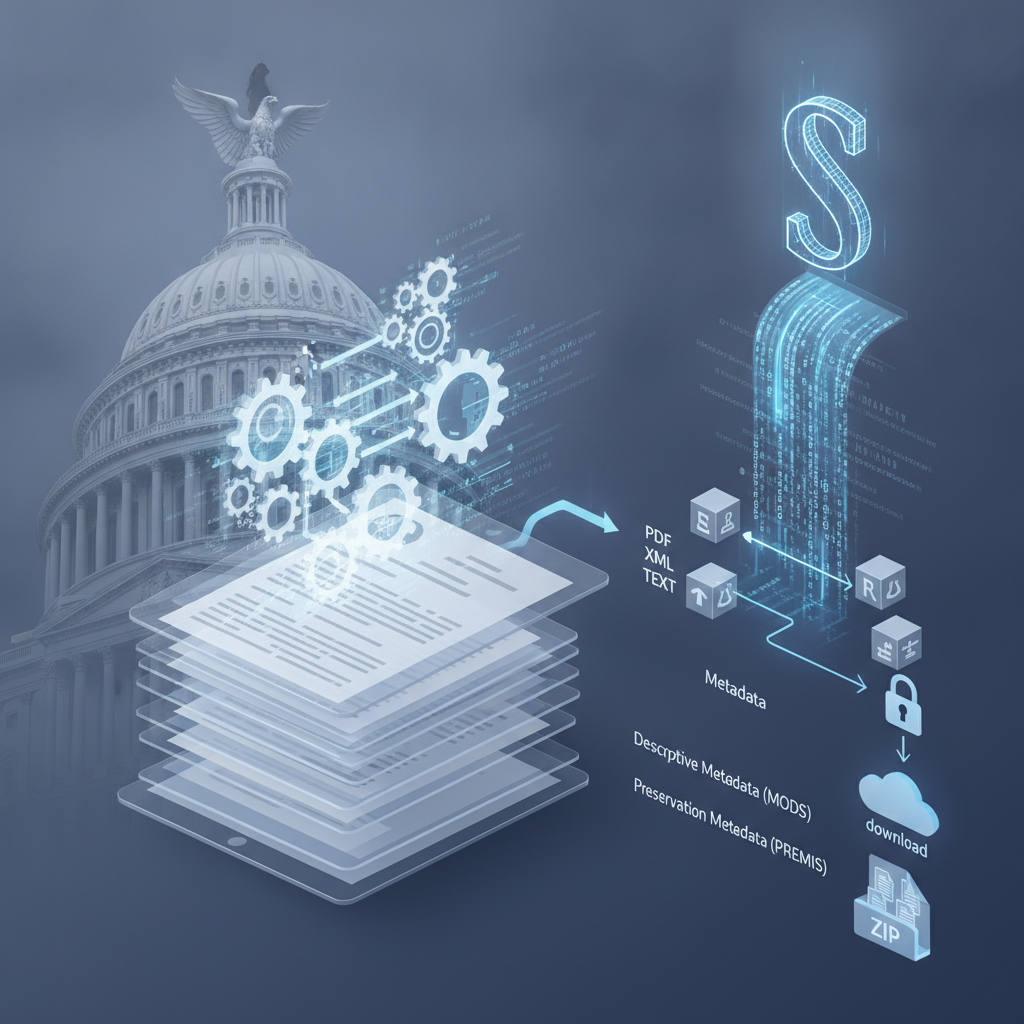
Content Files PDF XML TEXT Metadata download Descriptive Metadata (MODS) Preservation Metadata (PREMIS) All Content and Metadata files, including granules ZIP

Last updated:
Key points
- The Legislative Branch Agencies Clarification Act (HR 10204) was introduced in the House to refine statutory definitions for congressional support agencies.
- The legislation aims to strengthen the constitutional separation of powers by clarifying non-executive agency operations and administrative guardrails.
- The bill currently awaits committee review and potential hearings before advancing through the legislative process.
NewsWK — Lawmakers in Washington have introduced a new federal measure for legislative branch operations. Known as the Legislative Branch Agencies Clarification Act, the bill targets non-executive entities. Across the nation, taxpayers expect clear boundaries between government branches. Therefore, this measure resolves ambiguities in how congressional support offices operate.
Why it matters here
Constitutional balance matters directly to citizens in every state and district. When federal entities lack crisp statutory definitions, bureaucratic overreach often follows. Thus, clearly defining legislative support entities protects public funds. In addition, it preserves direct congressional accountability to voters across the nation.
Every federal office relies on tax dollars from American families and small businesses. Therefore, statutory clarity for these offices is not just an inside-the-Beltway technicality. For example, congressional oversight entities audit federal programs across the country. These programs fund local infrastructure, defense jobs, and community grants. However, legal confusion slows down vital oversight work. As a result, wasteful federal spending can slip through the cracks without notice.
What is the Legislative Branch Agencies Clarification Act bill?
Designated as HR 10204, the Legislative Branch Agencies Clarification Act bill clarifies legal definitions for congressional entities. Lawmakers formally introduced the proposal in the House of Representatives to set precise administrative boundaries. Consequently, it modernizes statutory language governing support offices created under Article I of the Constitution.
Congress maintains several dedicated agencies that assist lawmakers with research, audits, and administration. However, past statutes sometimes blurred distinctions between executive departments and legislative bodies. Specifically, the following key support offices fall within the legislative orbit:
- The Government Accountability Office, which audits executive agency spending.
- The Congressional Budget Office, which analyzes federal budget projections and costs.
- The Library of Congress and the Congressional Research Service.
- The Architect of the Capitol, which maintains federal legislative grounds.
- The Government Publishing Office and United States Capitol Police.
Each of these entities plays a distinct role in keeping the legislative branch functional. Yet questions occasionally arise regarding applicable personnel laws and operational standards. Therefore, HR 10204 addresses these statutory issues directly.
How does the HR 10204 bill impact federal oversight?
The HR 10204 bill reinforces congressional independence by keeping non-executive offices outside executive control. By establishing clear legal definitions, the bill shields legislative auditors from executive interference. Furthermore, this clarity helps congressional investigators maintain independent scrutiny over executive branch spending and administrative actions.
Separation of powers remains a cornerstone of the American constitutional system. When legislative offices perform investigations, they must operate without executive pressure. Meanwhile, strong statutory guardrails ensure legislative agencies remain accountable to elected representatives. Without clear rules, agency officials face legal uncertainty during normal duties. Therefore, formal statutory updates provide needed stability for congressional personnel.
What are the next steps for congressional bill HR 10204?
The congressional bill HR 10204 currently awaits committee review in the House of Representatives. Committee leaders will examine the measure and may hold hearings on its operational details. Then, lawmakers will decide whether to advance the text to the full House floor for an official vote.
The measure must navigate several legislative hurdles before reaching the president’s desk. First, the relevant committee must review the proposed statutory language. Next, members may propose amendments to refine definitions or clarify administrative protocols. If the House passes the legislation, the Senate must approve identical text. Only then would the bill head to the White House for signature.
Lawmakers have not yet announced public hearings or a formal markup date for the proposal. Still, Capitol observers view the text as part of an ongoing oversight effort. In addition, conservative watchdogs consistently urge Congress to protect taxpayer resources. They also encourage leadership to tighten internal procedures. As committee work begins, citizens can follow this legislation to monitor administrative modernization.
This article was produced with the assistance of AI and reviewed by our editorial team.
Sources
Related: Sanctuary Policies Block Federal Jail Transfers as ICE Ramps Up Enforcement Across U.S. Communities
Related: Congress Receives New Legislation Aimed at Local Health Care Protection
See a typo? Report it here.