Washington
Senate Measures on Election Accountability Face Scrutiny as New Reform Bill Reaches Capitol Hill
Content Files PDF XML TEXT Metadata download Descriptive Metadata (MODS) Preservation Metadata (PREMIS) All Content and Metadata files, including granules ZIP

Last updated:
Key points
Senate Measures on Election Accountability Face
- Legislation designated as S. 5369, the Restoring Electoral Fairness and Opposition Rights through Mandates for Accountability Act of 2026, has been introduced in the U.S. Senate.
- The bill addresses federal oversight, opposition rights, and accountability mandates within the electoral system.
- The measure will proceed through standard committee referral, where lawmakers will weigh its constitutional implications and practical impact on state and local election administration.
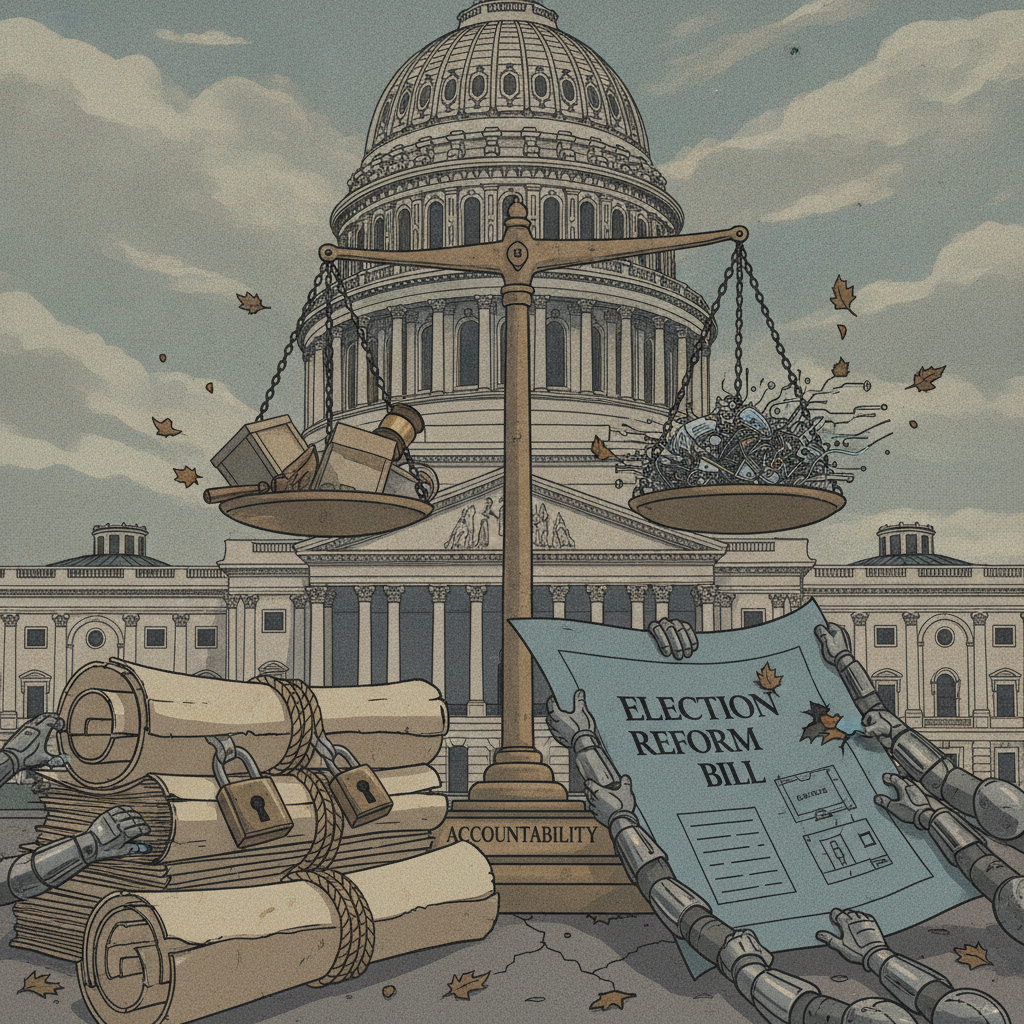
NewsWK — Federal lawmakers are once again turning their attention toward the mechanisms governing American campaigns and ballots with the formal introduction of new legislation in the United States Senate aimed at election accountability and procedural oversight. Designated as S. 5369, the measure titled the “Restoring Electoral Fairness and Opposition Rights through Mandates for Accountability Act of 2026” has been formally received in the Senate, marking the latest entry into Capitol Hill’s ongoing debate over federal election standards.
The measure represents a continuing effort among federal legislators to establish codified requirements surrounding electoral administration, transparent campaign conduct, and the protection of minority and opposition party participation in the democratic process. While the bill has only recently entered the legislative pipeline, its introduction signals key priorities for lawmakers examining how federal statutes interact with state-level balloting rules and administrative accountability.
Why it matters here
For citizens, local election officials, and taxpayers across the United States, any federal statute touching upon electoral administration carries significant real-world consequences. Under the United States Constitution, states maintain the primary authority to set the time, place, and manner of holding elections for senators and representatives, subject to congressional oversight. Federal mandates can reshape local compliance costs, alter ballot processing timelines, and impose new administrative burdens on county clerks and municipal election boards.
Taxpayers often bear the financial responsibility when local election offices must adjust technical infrastructure, update auditing software, or adhere to expanded reporting guidelines dictated from Washington. Conversely, proponents of standardized accountability mandates emphasize that clear rules ensure uniform legal protections for all candidates and help prevent arbitrary administrative practices at the precinct level.
Legislative Background and Constitutional Context
The introduction of S. 5369 comes during an era defined by intensified public scrutiny over election administration, voting procedures, and government accountability. Over several legislative cycles, members of Congress have proposed competing approaches to election governance. Conservative lawmakers have generally championed policies centered on decentralization, ballot security, strict voter verification, and safeguarding the constitutional prerogatives of individual state legislatures. In contrast, alternative legislative proposals have frequently sought broader federal guidelines to standardize registration procedures and campaign oversight across state lines.
As an introduced Senate bill (designated with the ‘IS’ status code in federal records), S. 5369 begins its journey at the committee level. The typical legislative pathway requires referral to the appropriate committee of jurisdiction—such as the Senate Committee on Rules and Administration or the Senate Committee on the Judiciary—where lawmakers examine statutory language, evaluate fiscal impact assessments, and determine whether to schedule hearings or committee markups.
The Road Ahead in the Senate
Securing passage for election-related measures in the upper chamber remains a rigorous procedural challenge. Under regular Senate order, major statutory overhauls typically require broad bipartisan consensus to clear procedural hurdles, including the 60-vote threshold necessary to overcome a filibuster and advance to a final vote.
As federal legislative staff process the formal text, civic organizations, legal scholars, and state election authorities across the country are closely monitoring how the bill defines opposition rights and accountability mandates. Whether the proposal advances through committee hearings or serves as a framework for future legislative negotiations, S. 5369 underscores that the structural rules governing American democracy remain at the very forefront of the national policy agenda.
This article was produced with the assistance of AI and reviewed by our editorial team.
Sources
Related: Bipartisan Senate Bill 5611 Serbia Legislation Aims To Boost Balkan Accountability
See a typo? Report it here.