Alaska
Study Reveals High Ballot Measure Reading Level Across 2026 State Questions
This year’s statewide ballot measures are written, on average, at a graduate-school reading level, according to a new report. The readability of 2026’s ballot questions — which ask voters to weigh in on issues as varied as abortion, property taxes,…

Last updated:
Key points
- State ballot measure titles in 2026 require an average reading level equivalent to a first-year graduate student.
- Research shows complex ballot language leads to voter confusion and lower participation on crucial referendum questions.
- Several states have introduced plain-language laws, but average national ballot readability has remained mostly unchanged since 2017.
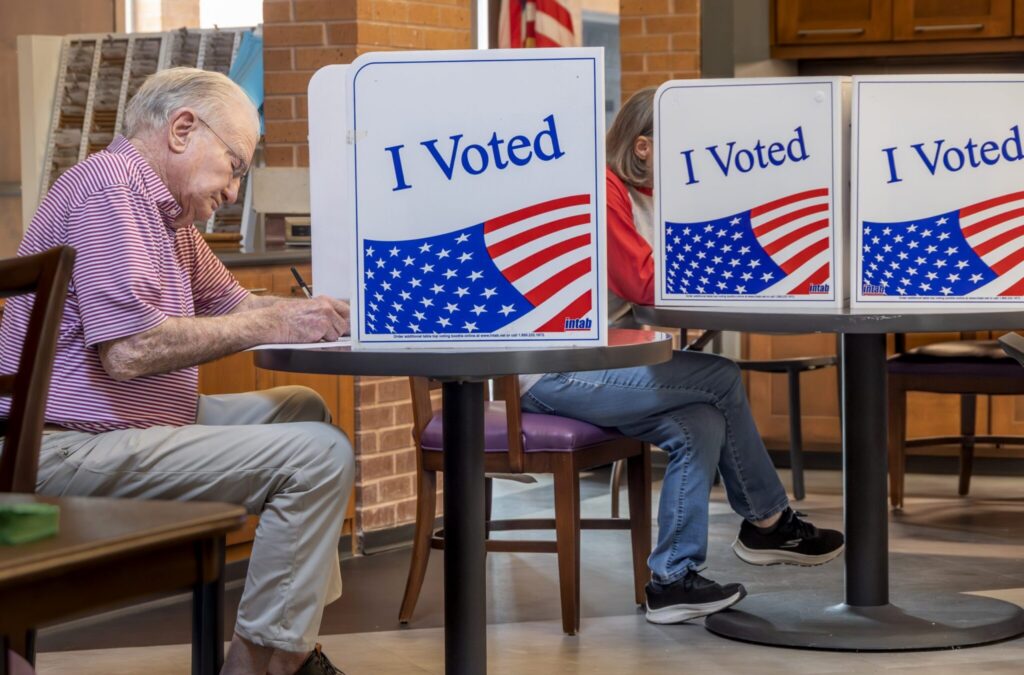
NewsWK — American voters face extraordinarily complex legal text on their ballots this election cycle. Millions of citizens must evaluate key policy questions. However, they often lack clear or accessible explanations. State measures also address vital topics such as property taxes, voter identification, and firearms. Yet, official descriptions often require advanced academic training to understand properly.
How does state ballot language complexity affect local voters?
State ballot language complexity directly impacts civic participation in local communities nationwide. When ballot measures feature convoluted legal phrasing, many voters skip those questions entirely. Consequently, major public policy decisions fall onto a much smaller voter pool. This directly affects local tax rates, voter requirements, and public safety.
Research consistently demonstrates that confusing wording leads to significant voter drop-off during elections. Most voters never read past the brief title printed on their physical ballot. Furthermore, many state ballots omit supplemental summaries that explain a proposal in simple terms. Census data indicates that only 42% of adults aged 25 to 54 hold a bachelor’s degree or higher. Therefore, measures written at a post-secondary level exclude a large portion of the electorate.
What does the 2026 ballot measure readability analysis reveal?
The 2026 ballot measure readability analysis reveals that measure titles require an average of 17 years of formal education. This educational benchmark equals the reading skills of a first-year graduate student. Meanwhile, official ballot summaries average a 15th-grade reading level across all participating states.
Researchers examined 164 statewide measures scheduled across 40 states in 2026. In addition, the findings appear in the newest Ballotpedia readability report on ballot language. Analysts evaluated readability using standardized scoring formulas. Specifically, these formulas measure word lengths, syllables, and sentence structures. Ryan Byrne oversees the ballot research team at Ballotpedia. “The most significant factor driving readability differences isn’t the type or topic of the ballot measure, but which state it’s in,” Byrne stated. The report highlighted extreme variation among individual state questions. For instance, Idaho voters considered an official state gun proposal written at a fifth-grade reading level. In contrast, Colorado put forth a hunting and fishing constitutional amendment. It scored at a 48th-grade reading level. That score represents an extraordinarily dense syntactic structure well beyond standard educational scales.
How does ballot question readability vary by state?
State-by-state data demonstrates wide disparities in ballot question readability across the country. Voters in Kentucky, Massachusetts, and Tennessee encounter titles averaging a 10th-grade reading level. Conversely, voters in Colorado, Hawaii, and Nevada face much harder questions. Those states present measures averaging well above graduate school educational levels.
Length differences also create major hurdles for voters reading through their ballots. For example, Kansas voters faced a massive 927-word title during an August 2026 vote. That constitutional amendment proposed changes to Supreme Court justice selection methods. Voters ultimately rejected the lengthy proposal at the ballot box. On the other end of the spectrum, Alaska presented a brief five-word title. That concise measure asked whether to restrict voting strictly to United States citizens.
Key readability metrics across select states include:
- Lowest complexity states: Kentucky, Massachusetts, and Tennessee average a 10th-grade reading level.
- Highest complexity states: Colorado averages 33 years, Hawaii averages 31 years, and Nevada averages 26 years.
- Most concise question: Alaska features a five-word title on voter citizenship.
- Most lengthy question: Kansas featured a 927-word title on judicial selection.
What steps are states taking to simplify ballot language?
State lawmakers increasingly recognize the need for clearer language on citizen ballots. Earlier this year, Maryland enacted legislation requiring clear and plain wording on future ballot measures. Similarly, Arkansas established a new law in 2025. That statute caps ballot titles at an eighth-grade reading level.
Roughly half of all states have established statutory guidelines aimed at simplifying ballot question text. However, long-term trends show that national progress remains slow. Tracking data since 2017 shows average ballot titles still require nearly 18 years of formal education. That average mirrors the literacy demands of a second-year graduate student. When state agencies use overly complex phrases, voters struggle to hold elected officials accountable. Clear language helps voters manage public spending and preserve local self-government.
This article was produced with the assistance of AI and reviewed by our editorial team.
Sources
Related: Study Examines Women on Parole Mental Health and Reentry Crises Across the US
Related: House Resolution 1499 Clears Way for Critical Votes on Mining, Higher Education, and Maritime Rules
See a typo? Report it here.