California
Supreme Court Assault Weapons Ban Review Could Restore Second Amendment Rights Nationwide
The Supreme Court will decide whether assault weapons bans violate the Second Amendment Supreme Court to tackle AR-15 bans in blockbuster Second Amendment case Essay | Has the AR-15 Become Too Big to Ban? Years after Sandy Hook massacre, US…


Last updated:
Key points
- The U.S. Supreme Court scheduled oral arguments for December 2, 2026, to determine if state and local assault weapons bans violate the Second Amendment.
- The case challenges restrictions in Connecticut and Cook County, Illinois, directly testing constitutional protections for standard semiautomatic rifles like the AR-15.
- An estimated 26 million Americans own an AR-15, which gun rights advocates contend is in common use and protected Under Landmark Supreme Court precedent.
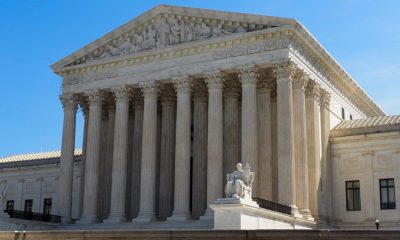
NewsWK — The United States Supreme Court will hear oral arguments on Wednesday, December 2, 2026. Specifically, the justices will review a landmark Second Amendment assault weapons case. On June 30, 2026, the justices agreed to review state and local bans on popular semiautomatic rifles. Now, the 6–3 Conservative-majority Court will review firearm restrictions in multiple jurisdictions. Ultimately, they will decide whether these laws violate constitutional protections for law-abiding citizens.
How will the Cook County assault weapons ban challenge impact firearm owners across America?
Law-abiding gun owners in Cook County, Illinois, could soon regain the right to purchase standard semiautomatic rifles. Furthermore, the High Court decision will establish uniform Second Amendment protections across America. Therefore, local governments could no longer restrict firearms in common use by millions of law-abiding citizens.
Currently, gun owners in Chicago and Surrounding Cook County face strict prohibitions on semiautomatic rifles. These local rules also ban standard-capacity magazines. Local officials originally passed the restriction after a 1989 school shooting in California.
Furthermore, procedural changes recently emerged in the Illinois litigation. In late October 2026, attorneys at Cooper & Kirk filed a motion in the case. They asked to remove lead plaintiff Cutberto Viramontes from the lawsuit. Because of that motion, Cook County asked the Supreme Court in early November 2026 to dismiss the case. However, the legal fight against Connecticut‘s ban remains before the justices regardless of that procedural request.
How does the Connecticut assault weapons ban factor into the court challenge?
Connecticut enacted strict prohibitions following the 2012 Sandy Hook Elementary School tragedy in Newtown. In that incident, a shooter killed 20 children and six educators. However, legal advocates argue that state-level prohibitions directly violate federal constitutional guarantees. Therefore, the Supreme Court will examine state lawmakers’ authority. The justices will decide whether states can restrict firearms that citizens widely own for self-defense.
Because Connecticut expanded its prohibitions after 2012, thousands of lawful gun owners face severe restrictions. Specifically, state law limits their right to own modern sporting rifles. Meanwhile, defenders of Second Amendment rights stress that punishing responsible citizens does not stop criminals. Therefore, striking down state-level prohibitions would ensure equal constitutional protections across state lines.
What does the AR-15 Ban Supreme Court review mean for constitutional precedent?
The pending AR-15 Ban Supreme Court decision will directly apply recent Second Amendment precedents to state firearm restrictions. In 2022, the landmark ruling in New York State Rifle & Pistol Association v. Bruen expanded firearm rights. Specifically, that decision established that firearm laws must align with the historical tradition of national gun regulation. Consequently, lower courts must evaluate whether prohibitions target weapons that are in common use today.
Today, estimates indicate that as many as 26 million Americans currently own an AR-15 rifle. Consequently, gun rights advocates emphasize that common ownership protects these firearms under established constitutional standards. In a 2025 court opinion, Supreme Court Justice Elena Kagan noted that the AR-15 “is the most popular rifle in the country.” Moreover, she observed that ordinary consumers widely buy the weapon legally.
Additionally, a federal ban previously restricted the sale and manufacture of modern semiautomatic rifles. However, that federal law expired in 2004. Since then, millions of Americans have safely purchased modern semiautomatic rifles.
Who supports and opposes the nationwide legal challenge?
The legal challenge brings sharp debate between constitutional advocates and gun control proponents before the High Court. Notably, the Trump administration and Republican state officials back the legal challenge. They argue that local prohibitions violate individual constitutional rights. Conversely, Democratic state officials and gun control organizations are asking the justices to preserve existing regulations.
Meanwhile, gun rights leaders view the upcoming oral arguments as a pivotal moment for civil liberties. Bill Sack serves as senior director of legal operations at the Second Amendment Foundation. He voiced strong criticism of state bans. Specifically, he called the bans “the biggest and most pernicious problem we have in the gun control space.” Also, he described the case as the most significant gun rights battle in years.
On the other hand, defenders of the state laws argue that municipal restrictions protect public safety. For instance, Cook County State’s Attorney Eileen O’Neill Burke is defending the local ordinance. She stated that AR-15s and AK-47s are “weapons of war that were designed to inflict mass carnage.” Furthermore, she added that these firearms pose severe dangers in densely populated areas.
Similarly, gun control advocates from Everytown Law support state restrictions. Janet Carter is the managing director of Second Amendment litigation at Everytown Law. She described the bans as critical public safety measures. Meanwhile, Sandy Hook Promise co-founder Nicole Hockley plans to travel to Washington, D.C., for the oral arguments. Her 6-year-old son Dylan died in the 2012 Newtown shooting. Therefore, she will join other survivors and families in urging the court to uphold local restrictions.
What lies ahead for firearm regulations across the United States?
The upcoming ruling will impact firearm laws far beyond Illinois and Connecticut. Currently, 11 states and Washington, D.C., enforce prohibitions on semiautomatic rifles. Furthermore, several major metropolitan areas enforce similar local restrictions. Therefore, a Single Supreme Court decision could reshape firearm regulations for millions of residents nationwide.
Specifically, these 11 states include California, Connecticut, Delaware, Illinois, Maryland, and Massachusetts. The list also includes New Jersey, New York, Rhode Island, Virginia, and Washington state. Additionally, major cities like Los Angeles, Chicago, Denver, Philadelphia, and New York City enforce similar restrictions. Meanwhile, Second Amendment supporters remain optimistic that the Supreme Court will defend individual liberties. Ultimately, this decision would secure gun rights across the nation.
This article was produced with the assistance of AI and reviewed by our editorial team.
Related: Supreme Court AR-15 Ban Case: Justices Set to Decide Semiautomatic Rifle Restrictions
Related: Supreme Court Lifts Injunction on Federal Mail-In Ballot Security Standards Ahead of Midterms