Local Business
Thanksgiving Travel Disrupted After Chicago O’Hare Flight Delays Triggered by FAA Radar Outage
Equipment outage delays several flight at O’Hare Delays reported after brief ground stop at Chicago’s O’Hare on busiest day of Thanksgiving holiday Radar issue delaying flights at Chicago O’Hare airport, FAA says O’Hare Airport under ‘constrained facilities’ advisory due to…

About Chicago O'Hare Flight Delays

Last updated:
Key points
- An ASDE-X ground radar equipment outage at Chicago O’Hare International Airport forced air traffic controllers to cut landing capacity on Tuesday, November 24, 2026.
- The FAA issued and later lifted a regional ground stop, resulting in over 370 flight delays averaging 47 minutes on the busiest Thanksgiving travel day.
- The disruption marked O’Hare’s second straight day of air traffic issues following staffing shortages at the regional TRACON facility on Monday.
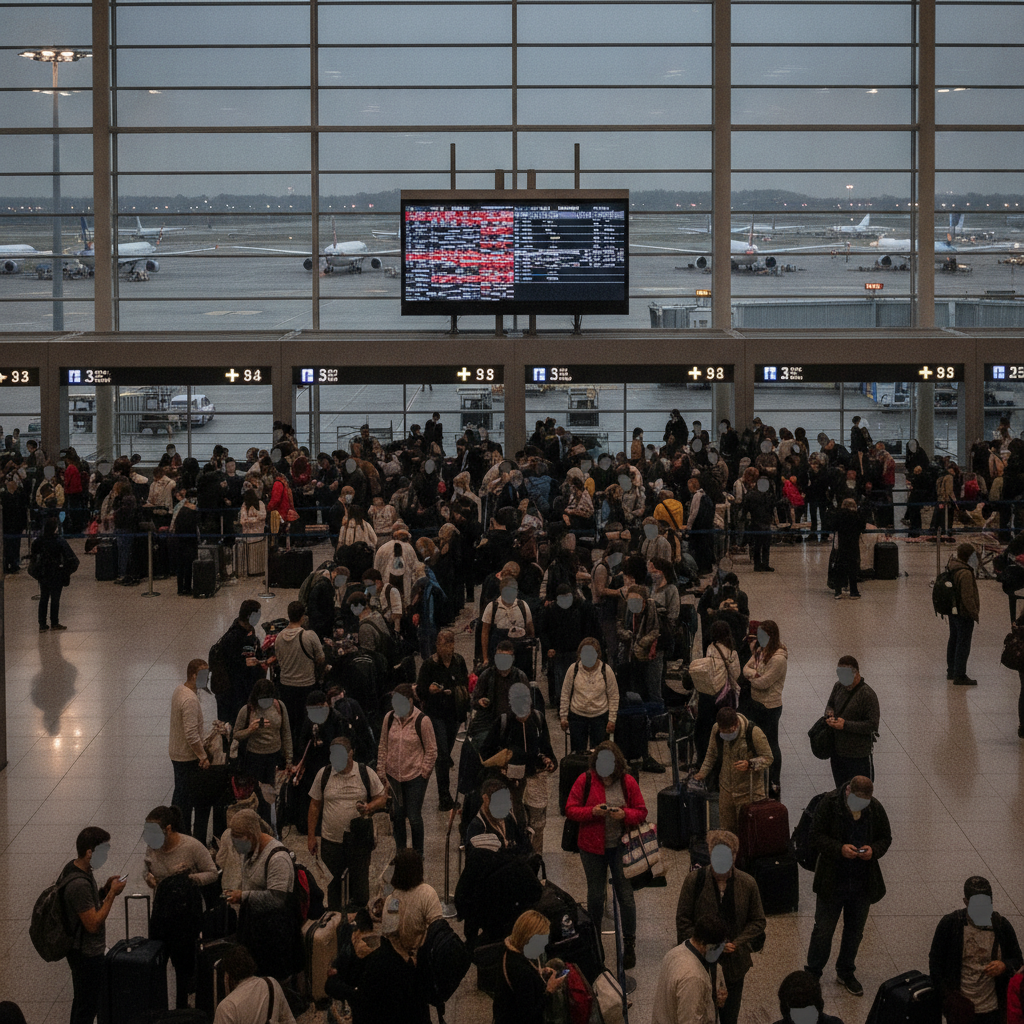
NewsWK — Thousands of holiday travelers encountered severe travel disruptions on Tuesday, November 24, 2026. Specifically, a critical radar system failure crippled operations at Chicago O’Hare International Airport. Meanwhile, federal officials worked to resolve the issue on the busiest flight day of the Thanksgiving travel period.
The sudden technical failure forced the Federal Aviation Administration to limit incoming flights at the airport.
What Caused the O’Hare Airport Equipment Outage During Peak Holiday Travel?
A ground surveillance radar failure disrupted operations at Chicago O’Hare International Airport on Tuesday, November 24, 2026. The U.S. Federal Aviation Administration reported a malfunction in its Airport Surface Detection Equipment, Model X system. Consequently, air traffic controllers reduced hourly landing capacity. This reduction triggered hundreds of flight delays during peak Thanksgiving travel.
The ASDE-X system provides essential ground tracking data for airport operations. Specifically, air traffic controllers rely on this technology to monitor planes and ground vehicles across taxiways and runways. When the system failed on Tuesday afternoon, controllers had to increase safety buffers between aircraft.
Because safety remains paramount, the FAA reduced O’Hare’s arrival capacity significantly. Typically, the airport manages approximately 100 incoming flights every hour. However, the radar outage forced controllers to drop the landing rate to just 72 arrivals per hour. Technicians quickly dispatched to repair the hardware. They also confirmed that the issue stayed strictly at O’Hare.
Subsequently, the FAA issued an official statement explaining the operational posture during the outage.
“The FAA is temporarily delaying some flights while technicians work to repair a piece of air traffic equipment,” the agency stated during the response.
How Are O’Hare Thanksgiving Flight Delays Affecting Holiday Travelers?
The sudden drop in arrival rates left hundreds of passenger flights stranded on taxiways or held at origin airports. O’Hare serves as a primary national hub for both United Airlines and American Airlines. Therefore, domino-effect delays quickly spread across the country. Passengers faced missed connections, prolonged terminal waits, and severe schedule disruptions.
Furthermore, data from flight tracking services showed extensive operational strain across the airport network. By Tuesday evening, airlines reported significant schedule disruptions. These issues affected hundreds of domestic and international flights.
- Total Delayed Flights: Airlines delayed at least 373 flights by Tuesday evening. This figure represented roughly 13% of all scheduled hub operations.
- Average Delay Duration: Standard flight delays averaged 47 minutes. Meanwhile, peak delays reached up to 99 minutes.
- Airborne Holding Times: Pilots held planes in airborne traffic patterns for up to 30 minutes before receiving landing clearance.
- Scope of Impact: International flights from major Canadian airports in Toronto, Montreal, Ottawa, and Halifax also faced extended delays.
Ultimately, these disruptions created major inconveniences for families traveling to celebrate the holiday season. Furthermore, ORD airport flight delays ripple rapidly through the national airspace system. As a result, they place heavy financial burdens on commercial carriers and travelers alike.
How Did the FAA Ground Stop O’Hare Impact Midwest Air Hubs?
Federal regulators halted incoming flights from multiple regional centers to manage congested runways at O’Hare. Consequently, departure airports in Minneapolis, Milwaukee, Green Bay, and Des Moines held grounded planes at the gate. Later advisories expanded the pause to five control regions. Officials eventually canceled the stop and shifted to airborne holding patterns.
The operational disruption unfolded rapidly throughout Tuesday afternoon. Specifically, FAA regulators tracked the growing congestion through a series of tactical decisions:
First, at 2:33 p.m. CT, the FAA placed O’Hare on an official watch list for potential ground restrictions. Controllers identified the surface radar malfunction as a major operational hazard.
Then, by 3:06 p.m. CT, regulators formally issued a ground stop. This order instructed regional airports to keep O’Hare-bound planes on the ground. Initial restrictions applied to departure centers in Chicago and Minneapolis.
Next, at 3:38 p.m. CT, federal managers expanded the ground stop to encompass five full air traffic control regions. Outbound departures from O’Hare continued, but incoming traffic ground to a halt.
Finally, around 4:00 p.m. CT, the FAA lifted the full ground stop. Instead, officials implemented a Ground Delay Program. Then, at 4:56 p.m. CT, regulators canceled the formal delay program. Still, officials warned that lingering equipment problems could force additional airborne holds throughout the night.
Why Are Infrastructure Vulnerabilities and Staffing Shortages Raising Concerns?
Tuesday marked the second consecutive day of major operational disruptions at the Chicago aviation hub. Previously, on Monday, staffing constraints at the regional radar control facility caused a 90-minute ground stop. These back-to-back failures highlight growing concerns regarding federal air traffic infrastructure reliability. They also underscore chronic workforce shortages during critical holiday travel periods.
On Monday, November 23, 2026, a separate 90-minute ground stop occurred near noon. That earlier disruption stemmed from controller staffing shortages at the Chicago Terminal Radar Approach Control facility.
Additionally, federal officials projected another staffing shortfall at the same TRACON facility starting at 8:30 p.m. CT on Tuesday. Equipment failures combined with labor shortages demonstrate ongoing vulnerabilities in government-managed infrastructure.
This article was produced with the assistance of AI and reviewed by our editorial team.
Sources
Related: Delta Flight Delays MSP Travelers Ahead of Busy Thanksgiving Rush
Related: FAA Nationwide Ground Stop Halts Domestic Air Travel Across the U.S.
Related: FAA Nationwide Ground Stop and NWS Radar Outage Disrupt Aviation and Weather Tracking
Related: Hundreds of Thousands Stranded After FAA Nationwide Ground Stop Halts U.S. Air Travel
Related: FAA Nationwide Ground Stop Strands Hundreds of Thousands at U.S. Airports
Related: Travel Gridlock Across U.S. as Nationwide FAA Ground Stop and Tech Failures Strand Passengers