Alaska
Wildfire Smoke Erasing Decades of Air Quality Gains for Pregnant Women, Study Finds
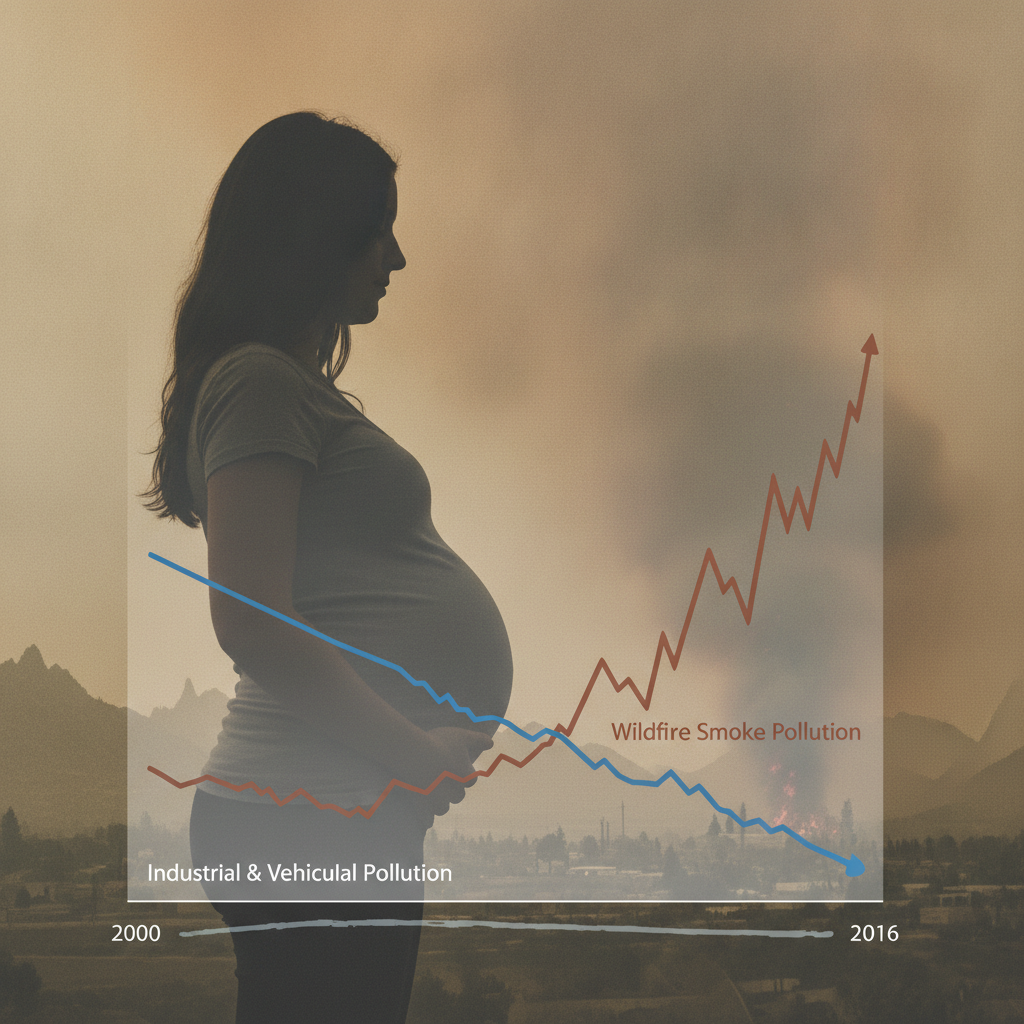
A new study examining pollution levels across a 16-year span found that while general pollution levels from sources such as cars and industry have significantly declined, recent increases in wildfire smoke air pollution have offset those gains and could be…

Key points
Wildfire Smoke Erasing Decades of Air Quality Gains
- Wildfire smoke accounted for nearly 65% of days exceeding federal air safety standards between 2003 and 2019.
- Rising wildfire smoke is offsetting decades of air quality progress achieved through reductions in factory and vehicle emissions.
- Prenatal exposure to smoke is associated with elevated risks of preterm birth, lower birth weight, and placental complications, particularly impacting rural and healthcare-scarce areas.
NewsWK — According to a report first published by Stateline, broad reductions in industrial and vehicle emissions across the United States are increasingly being offset by fine particulate pollution from wildfire smoke, presenting serious health considerations for expectant mothers and newborns.
The study, published in Frontiers in Environmental Health, analyzed data from approximately 64.5 million pregnancies across more than 2,800 counties in 48 states between 2003 and 2019. Researchers found that while conventional air pollution sources steadily decreased over those 16 years, expanding wildfire smoke erased a major share of those long-term air quality improvements.
Throughout the study timeframe, roughly 65% of the days that exceeded National Ambient Air Quality Standards were tied directly to wildfire smoke. Lead author Menglu Liang, an assistant clinical professor of biostatistics at the University of Maryland, stressed that regulatory reductions in standard pollution remain essential despite the growing smoke hazard.
blockquote>
“Those gains have genuinely protected pregnant people and unborn babies, and without them, exposures today would be considerably worse,” Liang said in statements cited by Stateline. “What our findings show is that wildfire smoke is offsetting a growing share of these hard-won improvements.”
Health researchers connect wildfire smoke exposure to heightened risks of preterm birth, low birth weight, stillbirth, and potential congenital anomalies. Medical experts indicate that smoke inhalation can trigger inflammatory responses in the body that interfere with placental function, while minute toxic particulates may cross the placental barrier to restrict fetal growth.
blockquote>
“These outcomes matter well beyond the delivery room and harms experienced before birth can echo for decades,” Liang told Stateline. “That makes prenatal exposure a particular public health concern.”
The report highlighted significant regional disparities, showing that wildfire-related air pollution more than doubled in the Northwest. The heaviest burdens fell on rural communities, American Indian and Alaska Native populations, and regions already experiencing severe shortages in local maternity care services.
Based on reporting by Kelcie Moseley-Morris originally published by Stateline. Read the original story.
Wildfire Smoke Erasing Decades of Air Quality Gains coverage on NewsWK includes background, context, and related reporting for readers following this story.
NewsWK publishes local and national news with clear headlines, source context, and follow-up when developments change. This article is part of ongoing coverage intended to help readers stay informed.
For more on Wildfire Smoke Erasing Decades of Air Quality Gains, browse related NewsWK stories and check back for updates as new information becomes available.
Our editors review developing stories and update articles when material facts change, so readers can rely on NewsWK for clear, timely reporting.
See a typo? Report it here.