
Environment
Colville Reservation Wildfires Destroy Dozens of Homes and Threaten Timber Economy
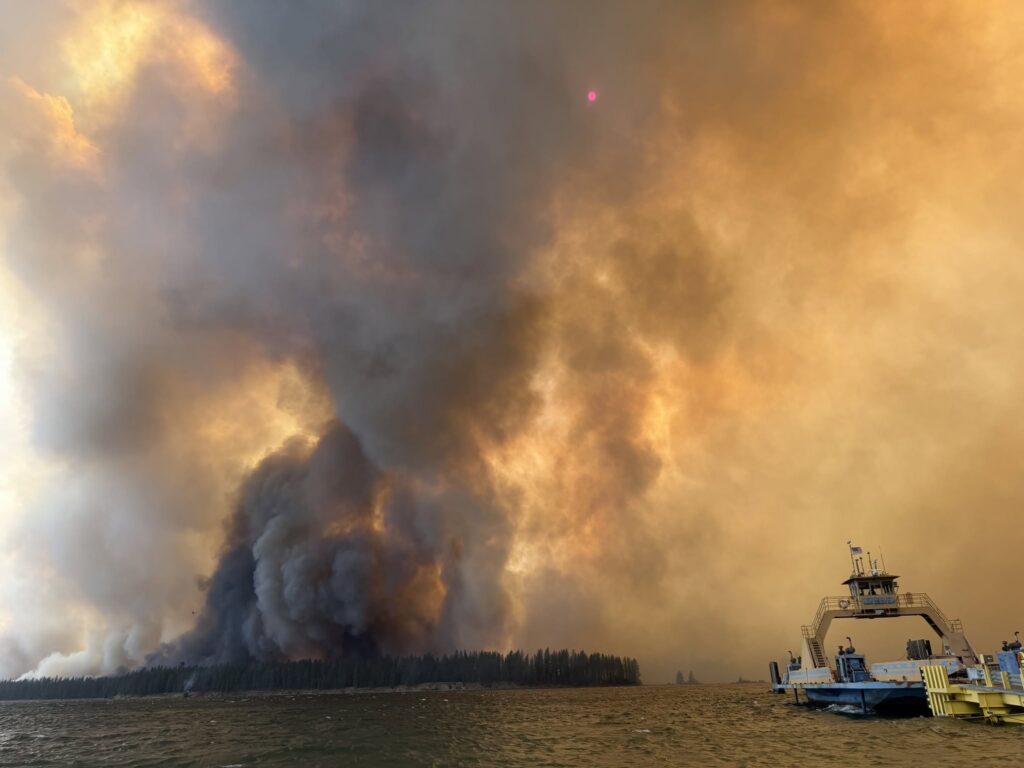
Neighbors across the Colville Tribes communities in Washington state knew Matilda Bob’s log home as the “rainbow house,” for its brightly painted exterior. Now it’s gone. Sparked by a lightning strike in mid-July, the Kaiser Canyon Fire destroyed Bob’s home…

Key points
- The Kaiser Canyon Fire destroyed 43 homes and 100 outbuildings across the Colville Reservation, consuming over 138,000 acres.
- Approximately half of the destroyed homes carried no insurance coverage due to high costs and strict underwriting rules in Ferry County.
- Federal reports indicate tribal trust forests receive only one-third of the per-acre management funding allocated to federal national forests.
NewsWK — Wildfires tore through northeastern Washington this summer. As a result, rural communities must pick up the pieces. The blazes swept across rough terrain and incinerated dozens of family homes. In addition, the flames wiped out vital commercial timberland. Now, local families face a long and costly recovery.
Why it matters
The destructive fires hit rural working families hard. Furthermore, they disrupted vital natural resource revenues. Commercial timber sales generate significant revenue for tribal operations. In Ferry County, these sales also fund municipal services. In addition, destroyed infrastructure and missing insurance coverage threaten local budgets. Consequently, these losses could displace long-term residents.
How did the Kaiser Canyon Fire cause such severe Colville Tribes fire damage?
Lightning triggered the Kaiser Canyon Fire in mid-July. The flames quickly overwhelmed local defenses in dry brush and timber. Strong winds pushed the fire across 138,000 acres. Ultimately, the blaze destroyed 43 residences and 100 outbuildings. The fast-moving inferno spared little in its path, leaving families without shelter or livestock facilities.
Meanwhile, dry forest floors fueled extreme fire behavior across the region all summer. A sparse winter snowpack left timberlands primed for ignition. In addition to Kaiser Canyon, the Modrite Fire consumed over 57,000 acres south of Inchelium. Consequently, total fire acreage on the Colville Reservation reached roughly 200,000 acres in two months.
Moreover, property losses hit low-income families especially hard. Ferry County holds the second-lowest median household income in Washington. Many damaged structures carried no insurance at all. Private policy premiums were often unaffordable. In other cases, older homes failed inspection standards. Chairwoman Cindy Marchand of the Confederated Tribes of the Colville Reservation addressed the crisis. She noted that roughly half of the destroyed structures lacked coverage.
“The rates are just astronomical in the sense that a lot of people in our area are not able to afford this,” Marchand said. “We have elders living on a single income, they’re on a fixed income, and so they’re having a hard time making it as it is.”
What is the broader Washington tribal wildfire impact across the region?
Beyond Colville territory, fierce wildfire activity battered tribal lands and private property across the Pacific Northwest. For example, Oregon crews fought the Wrights Spring Fire across 55,000 acres in Klamath County. Meanwhile, the Warm Springs Reservation lost six homes over 60,000 acres. Thick smoke then settled into low-lying river valleys, creating major respiratory hazards.
How the Washington tribal wildfire impact strains community health and public services
Heavy wildfire smoke triggered severe respiratory emergencies among vulnerable residents, including elderly veterans and infants. Chronic conditions like asthma and obstructive pulmonary illness flared under dense particle blankets. In response, local civic groups delivered emergency food and portable air filtration units. These relief efforts became urgent after widespread power outages spoiled stored household meat reserves.
Public health volunteers worked around the clock to assist displaced families. For instance, Faith Zacherle-Tonasket coordinated temporary emergency shelters and relief supplies. She directs the nonprofit River Warrior Society. Furthermore, she pointed out that protective equipment remains scarce across remote settlements. Ash cleanup also introduces fresh health concerns for crews exposed to hazardous debris.
In addition, environmental damage threatens traditional food gathering and local sports fisheries. Intense heat scorched wild berry fields and root supplies. Furthermore, forest runoff threatens river clarity. In Klamath territory, biologists worry about bare hillsides. Rain could wash sediment into mountain tributaries and smother new salmon spawning beds.
Why does federal forest policy complicate wildfire prevention?
Regulatory hurdles and funding discrepancies continue to handicap active forest management on tribal trust lands. Thinning overgrown brush through controlled burns can prevent catastrophic megafires. However, complex environmental review processes often cause severe delays. Federal red tape holds up prescribed burns until conditions become hazardous.
Federal funding inequities also compound the challenge for local land managers. For example, data from the Indian Forest Management Assessment Team revealed a major resource gap. Tribal trust forests receive roughly one-third of the per-acre management funding allocated to comparable federal national forests. Therefore, this funding deficit limits the staff and heavy machinery needed to clear excessive fuel loads.
Cody Desautel highlighted the changing nature of regional fire defense. He serves as executive director of the Colville Tribes and works as a veteran forester. “What typically used to be like a two-month fire season for us when I first started fighting fire about 25 years ago — now that’s at least three months and sometimes longer, depending on the year,” Desautel said.
Recently, lawmakers in Washington, D.C., have started addressing these management obstacles. The U.S. Senate Environment and Public Works Committee advanced legislation to streamline approval procedures for controlled burns. Proponents argue that cutting red tape helps local experts. As a result, managers gain the flexibility to treat dangerous fuels before lightning strikes again.
This article was produced with the assistance of AI and reviewed by our editorial team.
Sources
Related: House Resolution 1499 Clears Way for Critical Votes on Mining, Higher Education, and Maritime Rules
Related: Study Examines Women on Parole Mental Health and Reentry Crises Across the US
See a typo? Report it here.