California
States Train Private Landowners to Clear Forest Overgrowth as Prescribed Burning Gains Ground
AUBURN, Wash. — In the back row of a small community college classroom, I sip my coffee and consider a cumulus cloud, a puffy white pillar over an expanse of blue. I’m not staring out the window, but at a…

Last updated:
Key points
States Train Private Landowners to Clear Forest
- State agencies in more than 20 states are certifying private landowners and managers to conduct prescribed burns to clear hazardous forest fuel loads.
- Preventative low-intensity burning reduces high-intensity wildfire risk by up to 60 percent across public and private timberlands.
- Grassroots Prescribed Burn Associations and legal liability protections are helping property owners overcome heavy regulatory red tape and equipment shortages.
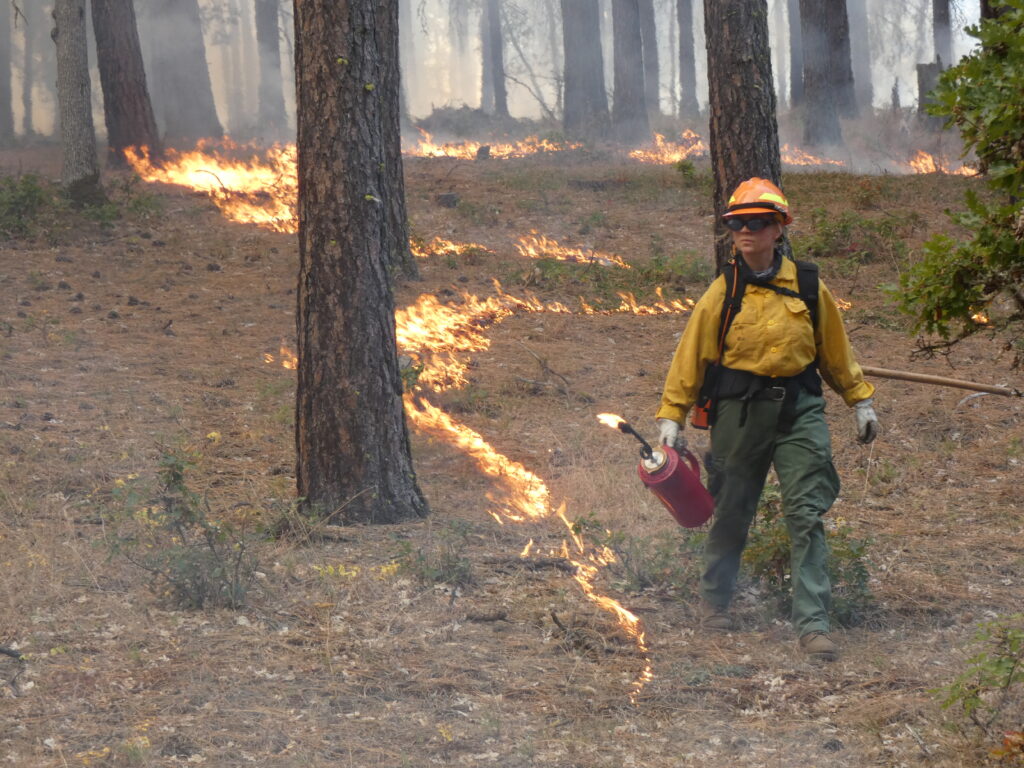
AUBURN, Wash. NewsWK — Decades of aggressive wildfire suppression have left millions of acres of American timberland overcrowded, cluttered with dry underbrush, and highly vulnerable to catastrophic megafires. In response, state natural resource agencies and local land managers are shifting away from passive forest management and encouraging property owners to take a direct, active role in clearing combustible fuels from the landscape through controlled burning.
Across more than twenty states, government forestry officials are conducting certified prescribed burn manager courses to instruct private landowners, tribal managers, timber operators, and local conservation specialists in the safe application of controlled fire. By teaching atmospheric science, fuel modeling, risk containment, and smoke mitigation, state programs aim to turn fire into a controlled management tool rather than an unpredictable disaster.
Why it matters here
Uncontrolled wildfires represent an escalating hazard to private property, rural economies, and local infrastructure across the country. Catastrophic fires routinely destroy homes, spike insurance premiums, strain taxpayer-funded disaster response budgets, and choke communities with hazardous smoke for weeks at a time. Proactive fuel reduction offers a cost-effective, proven countermeasure: research indicates that low-intensity prescribed burns can lower the incidence of catastrophic, high-intensity blazes by as much as 60 percent.
Because vast swaths of high-risk timberland are privately held, state and federal agencies cannot resolve the fire threat on their own. In states such as Washington, private citizens, timber firms, local municipalities, and tribes control more than 40 percent of forestland east of the Cascade Range. In California, private individuals and families own more than half of all high-risk timberlands, while in eastern states like Pennsylvania, private ownership accounts for roughly 83 percent of forested land. Empowering property owners to manage their own holdings is critical to establishing effective firebreaks around rural towns and residential developments.
A Century of Overgrowth and Fuel Accumulation
For most of the twentieth century, state and federal forest policies focused almost exclusively on extinguishing every spark as quickly as possible. While intended to protect timber and communities, complete suppression disrupted natural burn cycles that historically thinned out small brush, dead limbs, and pine needle beds. Over time, that policy resulted in unprecedented fuel buildup on forest floors.
Tony Craven, wildfire preparedness project manager with the Kittitas County Conservation District in Washington, highlighted how drastically forest density has increased over generations. “We have more trees than we’ve ever had, and the shrub layer is thicker than it’s ever been. We have 100 years of fire debt built up,” Craven stated, noting that overgrown terrain now poses severe risks to nearby residential communities.
Rather than waiting for summer heat and dry lightning to trigger unmanageable fires, forestry managers argue that deliberately setting low-intensity fires during mild spring or autumn conditions is the only viable long-term defense. As Washington state certified burner program manager Kyle Lapham explained: “We need to be burning ourselves out of the problem, not waiting for fire to show up when we don’t want it.”
Regulatory Burdens and Liability Protections
Despite the demonstrated benefits of prescribed burning, landowners and practitioners face significant administrative hurdles. Navigating state air-quality permits, strict environmental regulations, and narrow meteorological parameters frequently limits the practical windows during which burns can legally take place. While clean-air mandates are aimed at reducing short-term smoke exposure, practitioners note that these restrictions can inadvertently prevent preventative work, leaving communities exposed to far denser, prolonged smoke when out-of-control blazes erupt in summer.
Federal lawmakers have introduced bipartisan legislation to help ease regulatory bottlenecks and provide additional flexibility under clean air rules for certified land managers, though the measure has faced procedural delays. Meanwhile, formal certification courses provide an essential legal shield: landowners and managers who complete certified training programs often receive statutory liability protections that limit legal exposure should an approved burn escape containment lines.
Community-Led Associations Take the Lead
Executing a controlled burn requires substantial manpower, heavy machinery, water tankers, and containment hoses, resources that individual property owners rarely possess on their own. To overcome these logistical barriers, rural communities are organizing Prescribed Burn Associations (PBAs), drawing inspiration from traditional land-stewardship practices in Southeastern states such as Florida.
These grassroots associations enable neighboring landowners to pool equipment, share volunteer labor, and coordinate directly with local fire protection districts. By combining community-level cooperation with formal state training, private property owners are reasserting practical stewardship over their lands, creating resilient buffer zones, and reducing the threat of devastating wildland blazes for entire regions.
This article was produced with the assistance of AI and reviewed by our editorial team.
Sources
Related: Fighting Fire with Fire: How One Small Town Is Shielding Itself from Catastrophic Wildfire
Related: Private Equity Healthcare Acquisitions Slow Across the Nation as States Ramp Up Oversight
Related: Community-Led Prescribed Burns Create Critical Defensive Buffers Against Wildfires Across the West
Related: New Research Shows Mice, Not Deer, Drive Lyme Disease Surges Across the Country
Related: Federal Measure Targets Double Taxation on Remote Workers Across the United States
Related: What you need to know about the flesh-eating New World screwworm
Related: About
Related: Veteran Homelessness Drops to Historic National Low, but Half of States Report Rising Numbers
Related: FBI Reports Record Nationwide Drop in Violent Crime as 2025 Homicide Rates Match Historic Lows
Related: Flight 93 National Memorial Somerset County Stands as Lasting Testament to Courage
See a typo? Report it here.