
Environment
Fighting Fire with Fire: How One Small Town Is Shielding Itself from Catastrophic Wildfire
ROSLYN, Wash. — Francisco Martinez hefts a canister filled with a mixture of diesel fuel and gasoline. A tongue of flame dances above the nozzle. He tips the drip torch forward — whoosh — and a stream of blazing liquid…

Last updated:
Key points
Fighting Fire with Fire: How One Small Town Is
- Roslyn, Washington, has created a protective fuel-break buffer of over 500 treated acres to shield itself from catastrophic wildfires.
- Nearly 72 million homes nationwide face wildfire risks, largely exacerbated by a century of total fire suppression that left Western timber stands overgrown and loaded with fuel.
- Forestry experts emphasize that treating private land buffers adjacent to neighborhoods is critical to establishing defensible boundaries against uncontrolled blazes.
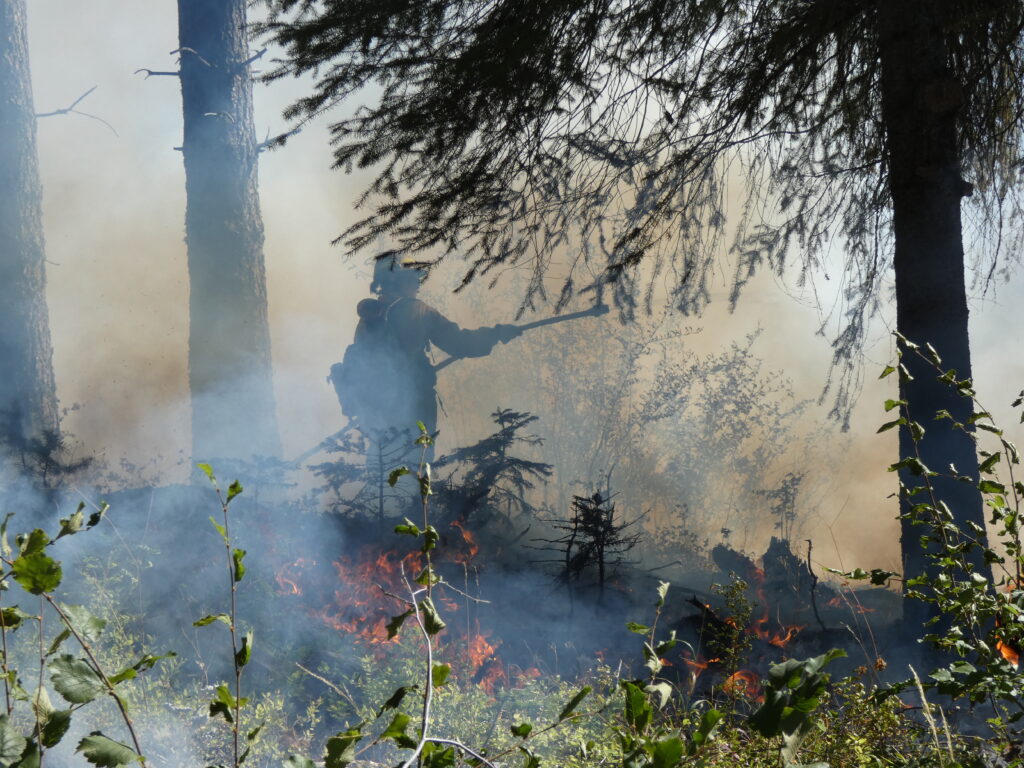
ROSLYN, Wash. NewsWK — High along a timbered ridgeline in central Washington, trained fire crews deliberately put torches to the dry brush and forest floor, creating a controlled wall of flame to consume combustible underbrush. While the sight of deliberate smoke plumes rising above a mountain hamlet might once have caused widespread panic, here in the historic town of Roslyn, it represents a calculated strategy to protect homes, businesses, and lives from disaster.
Roslyn, a community of roughly 950 residents nestled in the foothills of the Cascade Mountains, has spent years constructing a physical barrier against catastrophic wildfire. Rather than waiting for an unmanaged lightning strike or human accident to spark an uncontrolled blaze, municipal leaders and property owners have taken proactive steps, turning to controlled burns and mechanical thinning to strip dangerous fuel loads from the surrounding landscape.
Why it matters here
Across the United States, wildfire management has shifted from an abstract conservation issue into an urgent matter of public safety, municipal budgeting, and private property protection. Over 1,800 communities across the American West currently face high wildfire risks, and real estate analytics indicate that nearly 72 million homes nationwide sit in zones vulnerable to burning.
When unchecked infernos sweep through overgrown woodlands, the fallout devastates local tax bases, drives up private homeowners insurance rates, strains volunteer fire departments, and forces local and state taxpayers to foot massive recovery bills. By establishing defensive perimeters before disaster strikes, local leaders demonstrate how proactive forest management and clear-eyed fuel reduction can protect municipal infrastructure, preserve property values, and keep public firefighting resources from being completely overwhelmed during peak summer fire seasons.
The Legacy of Overgrown Forests and Fuel Buildup
For more than a century, federal and state forest policy relied almost entirely on total fire suppression. The conventional wisdom dictated that every spark had to be extinguished immediately. However, dry ponderosa pine ecosystems historically relied on low-intensity, frequent burns—often naturally occurring every decade—to clear out fallen needles, saplings, and brush without killing mature, thick-barked trees.
Decades of total suppression disrupted that natural cycle. Dense thickets of timber grew unchecked, competing for limited ground moisture and becoming increasingly prone to disease, beetle infestations, and severe drought. As suburban expansion and recreational housing pushed farther into forested areas, these overgrown stands turned into combustible tinderboxes right on the doorsteps of established neighborhoods.
For Roslyn, the reality of this hazard crystallized during Labor Day weekend in 2017, when the lightning-sparked Jolly Mountain Fire swept through the neighboring Wenatchee National Forest and bore down on the community. Emergency officials delivered a stark warning: if flames entered the overgrown woods surrounding the town, large sections of Roslyn would be impossible to defend.
Chris Martin, the emergency management coordinator for the Roslyn Fire Department, described the terrifying assessment as a critical wake-up call for municipal officials. “That was the change-of-underwear moment for Roslyn,” Martin said.
Building a Protective Ring Through Active Management
Although shifting winds spared Roslyn in 2017, the near-miss spurred municipal and private leaders into action. Soon after the fire, local property owners and fire officials began coordinating controlled burns on private holdings above town to clear out dangerous undergrowth.
Since that initial project, local emergency agencies, working alongside groups such as Upper Kittitas County Fuels and private conservation landowners like The Nature Conservancy, have established an extensive defensive buffer. By combining mechanical tree-thinning operations with prescribed fire, crews have treated more than 500 acres, creating a protective semicircle designed to deprive approaching wildfires of fuel and give ground crews a defendable line of resistance.
Such private-land initiatives address a critical blind spot in American wildfire defense. While public attention often focuses on vast tracts of federal wilderness, the parcels directly adjacent to residential properties are frequently privately owned.
“A lot of people have the perception that this is a problem with large federal and state land ownership and that private citizens don’t have a role to play,” explained Greg Dillon, director of the U.S. Forest Service’s Fire Modeling Institute. “But in many places, there’s a stretch of private lands between [public forests] and homes that can catch on fire. It’s a really important and less understood piece of the fire risk picture.”
Regulatory Hurdles and the Path Forward
Expanding proactive fuel management is not without significant practical and bureaucratic challenges. In Washington state, land managers conduct an average of 20,000 acres of controlled burns annually, yet forestry specialists estimate that three to five times that acreage must be treated each year to maintain healthy, fire-resilient timber stands.
Organizing a single burn—even one covering only 50 to 60 acres—demands weeks of advance preparation, dozens of skilled personnel, heavy water equipment, and close coordination across multiple fire districts. Furthermore, narrow regulatory burn windows imposed by state clean air standards frequently cancel planned operations on short notice due to air quality and smoke restrictions.
Despite these hurdles, the results in Roslyn illustrate that active forest stewardship delivers tangible returns. Forested parcels treated in recent years have transformed into open, park-like stands where thriving native grasses and wildlife have returned, and where ground fuels are significantly reduced. As more towns across the country confront the reality of wildfire season, the model of local cooperation, private land management, and planned prescribed burning offers a practical blueprint for safeguarding communities before the next blaze begins.
This article was produced with the assistance of AI and reviewed by our editorial team.
Sources
Related: States Train Private Landowners to Clear Forest Overgrowth as Prescribed Burning Gains Ground
Related: Protecting Local Control of Data Centers Act Introduced in Congress to Guard Municipal Authority
Related: Cities Deploy AI to Slash Building Permit Delays and Cut Red Tape for Homebuilders
Related: NewsWK App now available for Iphone and Android Users
Related: News That Works
Related: Space Ready 2.0 Act: Overview of H.R. 9651
Related: Colville Reservation Wildfires Destroy Dozens of Homes and Threaten Timber Economy
See a typo? Report it here.