Environment
Community-Led Prescribed Burns Create Critical Defensive Buffers Against Wildfires Across the West
Story and photos by Alex Brown ROSLYN, Wash. — In less than an hour, this hillside will be ablaze — sparks flying, smoke swirling, the forest floor turning into a black carpet. That’s all part of the plan. Here in…

Last updated:
Key points
Community-Led Prescribed Burns Create Critical
- Communities across the West are using proactive, controlled burns to build defensible firebreaks and protect municipal infrastructure from catastrophic wildfires.
- Rigorous training programs teach private landowners and emergency crews how to safely manage fuel loads, control smoke dispersal, and construct containment lines.
- Decades of total fire suppression created dangerous accumulations of brush and ladder fuels, making active forest stewardship critical for community safety.
NewsWK — As destructive wildfire seasons increasingly threaten towns and timberlands throughout the American West, rural communities and private landowners are taking proactive measures into their own hands. By deploying controlled, low-intensity fire, local officials and property owners are building strategic defensive lines designed to starve large-scale wildfires of the dry underbrush that fuels them.
In central Washington State, the historic community of Roslyn offers a working model of how localized fuel management can enhance municipal safety. Working across multiple local fire districts and regional organizations, emergency personnel and trained land managers recently completed a targeted 55-acre prescribed burn adjacent to the town. The operation brought together roughly 30 specialists to clear dense forest undergrowth while preserving the surrounding mature canopy.
Why it matters here
For communities situated in heavily forested regions, the threat of catastrophic wildfire carries immense economic and public safety consequences. Uncontrolled wildfires destroy private property, devastate municipal infrastructure, deplete local tax bases, and place intense operational burdens on emergency responders. By taking a proactive approach to land management, municipalities can substantially lower the risk of property destruction and reduce long-term firefighting expenditures.
In Roslyn, local planners are systematically executing burns a few dozen acres at a time to form a protective defensive semicircle around the perimeter of the town. This cleared buffer serves as a designated stand line, providing firefighters with a secure staging area to intercept and contain incoming blazes before they reach residential neighborhoods and commercial districts.
Precision Planning and Safety Controls
Controlled burns require precise execution and strict adherence to safety standards rather than haphazard burning. State agencies, including the Washington Department of Natural Resources, provide specialized training curricula where prospective burn managers study vegetation classifications, moisture saturation levels, and atmospheric dispersion rules to ensure compliance with clean air standards.
During field operations, crews rely on methodical containment tactics before lighting interior parcel acreage. Teams initially wet down peripheral vegetation to prevent unintended spread across property boundaries. Crew members then ignite a controlled “backing fire” that burns slowly against prevailing winds along perimeter roads. This establishes a blackened strip of non-combustible ground, creating a secure firebreak.
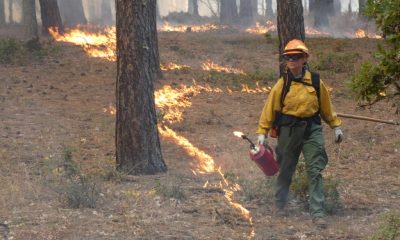
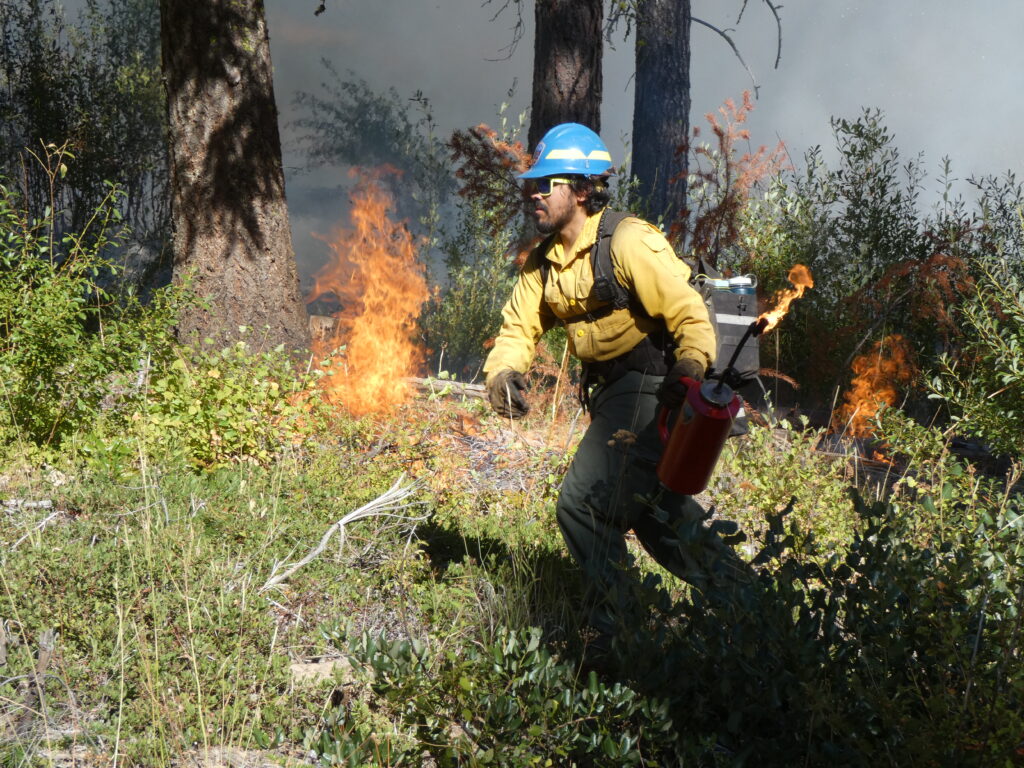
Once containment lines are solidified, crews advance across the landscape using drip torches to ignite the undergrowth. Radio teams coordinate across the terrain to immediately suppress any spot fires triggered by blowing embers, ensuring that low-intensity flames consume fallen limbs and brush without ascending into the upper forest canopy.
Background and Long-Term Land Stewardship
For more than a century, federal and state forest policies prioritized total fire suppression. While intended to protect timber resources, decades of extinguishing every natural blaze inadvertently allowed forests to become overgrown with dense brush, fallen debris, and small trees known as “ladder fuels.” When fires ignite under extreme summer conditions, these accumulated fuel loads allow ground flames to climb rapidly into tree crowns, generating unmanageable, high-intensity megafires.
Modern forestry experts and local land advocates increasingly recognize that active management is essential to restoring healthy, defensible landscapes. Grassroots organizations, such as the Mt. Adams Prescribed Burn Association, are actively training private citizens and coordinating resources across county lines to reintroduce controlled fire onto private lands. Regional Training Exchange events also assemble fire personnel from diverse jurisdictions to share operational tactics and refine safety protocols.
Rather than leaving landscapes permanently scarred, properly timed, low-temperature burns stimulate post-fire ecological recovery. In areas where treatment has concluded, forest floors rapidly regenerate with native grasses and vegetation beneath standing, fire-resistant timber. In Roslyn, town leaders have integrated these treated areas into the local economy by establishing the Forest Resilience Trail, an outdoor attraction that demonstrates how proactive resource stewardship can protect communities while preserving working natural lands.
This article was produced with the assistance of AI and reviewed by our editorial team.
Sources
Related: Fighting Fire with Fire: How One Small Town Is Shielding Itself from Catastrophic Wildfire
Related: States Train Private Landowners to Clear Forest Overgrowth as Prescribed Burning Gains Ground
Related: Private Equity Healthcare Acquisitions Slow Across the Nation as States Ramp Up Oversight
Related: Cities Deploy AI to Slash Building Permit Delays and Cut Red Tape for Homebuilders
Related: NewsWK App now available for Iphone and Android Users
Related: About
Related: FBI Reports Record Nationwide Drop in Violent Crime as 2025 Homicide Rates Match Historic Lows
See a typo? Report it here.