Florida
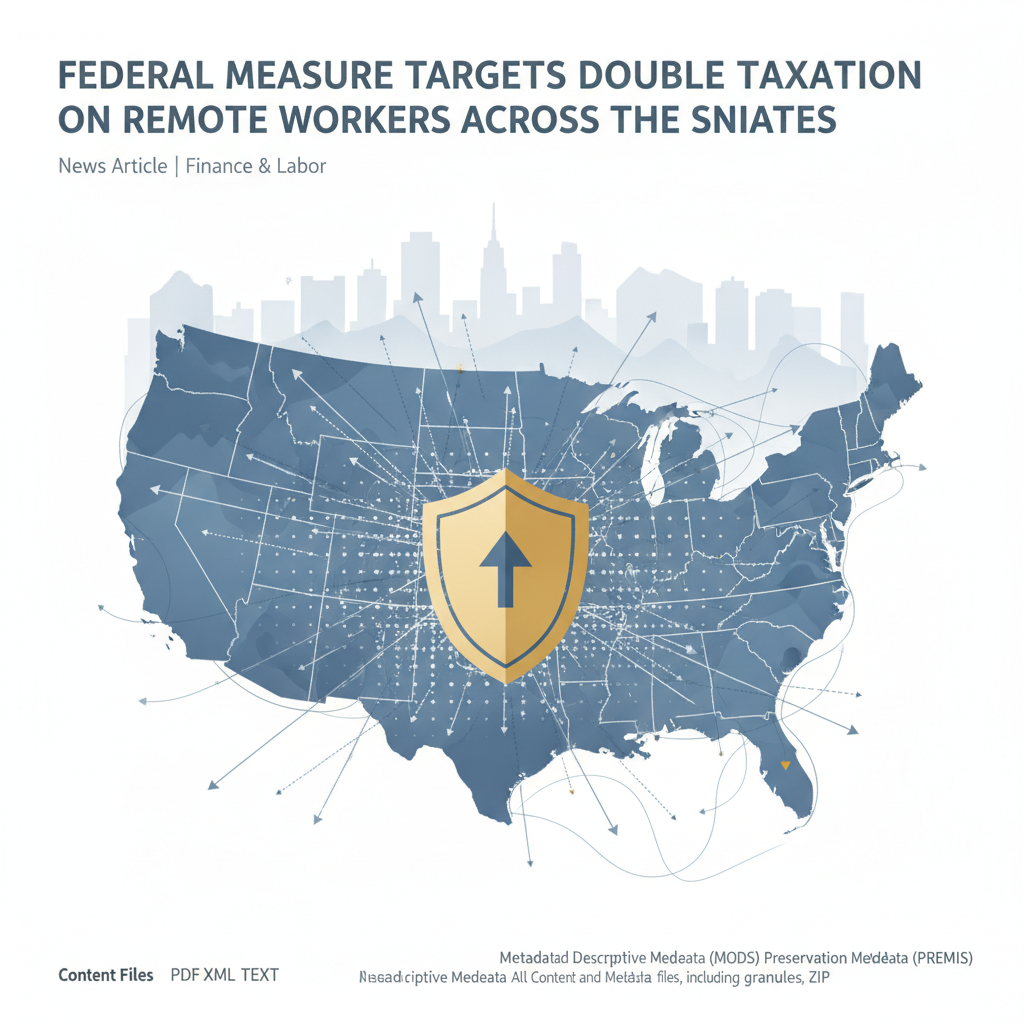
Federal Measure Targets Double Taxation on Remote Workers Across the United States
Content Files PDF XML TEXT Metadata download Descriptive Metadata (MODS) Preservation Metadata (PREMIS) All Content and Metadata files, including granules ZIP

Last updated:
Key points
Federal Measure Targets Double Taxation on Remote
- H.R. 10142, the Multi-State Worker Tax Fairness Act of 2026, seeks to prohibit states from taxing nonresident workers who perform their jobs outside state borders.
- The legislation establishes a physical-presence rule to prevent aggressive ‘convenience of the employer’ state tax policies and protect employees from double taxation.
- The measure addresses nationwide tax compliance burdens for remote employees and small businesses operating across state lines.
NewsWK — As remote and hybrid work arrangements remain a permanent fixture of the modern American economy, federal lawmakers are seeking to resolve longstanding disputes over how telecommuting employees are taxed across state lines. The introduction of H.R. 10142, designated as the Multi-State Worker Tax Fairness Act of 2026, represents a targeted legislative effort to establish clear national boundaries on nonresident state income taxation.
Under the proposed measure, introduced in the House of Representatives, states would face strict federal limits on their ability to levy personal income taxes on workers who reside and physically perform their duties in another jurisdiction. The legislation seeks to codify a uniform physical-presence standard, ensuring that an individual’s earnings are only subject to income taxes in the state where the work is physically executed, rather than where the employer’s home office or corporate headquarters happens to be located.
Why it matters here
For millions of American households that adopted telework or relocated to lower-tax jurisdictions in recent years, interstate tax compliance has created significant financial complexity and burdensome tax liabilities. Without a uniform federal standard, remote employees often find themselves caught in multi-state tax crosshairs, navigating confusing filing requirements and, in many cases, facing potential double taxation on the exact same earned dollar.
The issue hits particularly hard for families and workers living in states without an individual income tax—such as Florida, Texas, Tennessee, and Nevada—or in neighboring commuter states. When higher-tax jurisdictions assert taxing authority over wages earned entirely outside their borders, it diminishes the household savings workers sought by living in more affordable, lower-tax communities. Furthermore, small and mid-sized businesses managing distributed teams carry an escalating compliance burden, spending valuable resources tracking conflicting payroll withholding rules across multiple jurisdictions rather than investing in business expansion and wage growth.
The Dispute Over Remote Work Taxation
The core conflict addressed by H.R. 10142 stems from aggressive tax policies enforced by a handful of high-tax states, frequently referred to as the “convenience of the employer” rule. Under this regulatory doctrine, if an employee works remotely for their own convenience rather than out of strict employer necessity, the state where the employer’s primary office is based treats all of that employee’s working days as if they occurred within its own borders.
This framework has drawn substantial criticism from tax policy experts, state attorneys general, and taxpayer advocacy groups, who argue that taxing nonresidents who neither utilize local infrastructure nor receive municipal services during their workdays amounts to extra-jurisdictional government overreach. While several states have attempted to resolve these cross-border disputes through reciprocal agreements or state-level legal challenges, conflicting state court rulings have left the broader interstate conflict unresolved.
Congressional Authority and Constitutional Standards
Under the Commerce Clause of the U.S. Constitution, Congress possesses explicit authority to regulate commerce among the states and prevent state-level taxation that imposes an undue burden on interstate economic activity. Proponents of the Multi-State Worker Tax Fairness Act contend that federal intervention is necessary to protect interstate mobility, maintain fairness in government revenue collection, and uphold fundamental taxpayer rights.
By establishing a clear, federally protected rule that income is taxable solely where work is physically conducted, the legislation would eliminate the legal ambiguity that allows state tax authorities to reach across state lines. The bill would also protect workers from having to rely solely on patchwork state credits, which often fail to fully offset out-of-state tax burdens due to differing rate structures and calculation methods.
Legislative Outlook
H.R. 10142 has entered the federal legislative process following its introduction in the House of Representatives, where it awaits formal committee consideration and review. As lawmakers evaluate the proposal, discussions are expected to center on balancing federal protections for individual taxpayers against state sovereign revenue authorities.
With distributed work remaining an essential component of the national labor market, taxpayers and employers nationwide will be closely monitoring whether Congress takes decisive action to bring uniformity and fairness to interstate remote work taxation.
This article was produced with the assistance of AI and reviewed by our editorial team.
Sources
Related: Idaho Election Officials Defend Abortion Ballot Summaries as Initiative Backers File Lawsuit
Related: Private Equity Healthcare Acquisitions Slow Across the Nation as States Ramp Up Oversight
Related: States Train Private Landowners to Clear Forest Overgrowth as Prescribed Burning Gains Ground
Related: Sanctuary Policies Block Federal Jail Transfers as ICE Ramps Up Enforcement Across U.S. Communities
Related: Supreme Court Lifts Injunction on Federal Mail-In Ballot Security Standards Ahead of Midterms
Related: Twenty States File Lawsuit Over Federal Immigration Requirements on Law Enforcement Grants
Related: Congress Weighs Stricter Commercial Driver Oversight with STOP Improper Licensing Act
Related: States Boost In-Home Caregiver Pay as Senior Demographics Surge and Workforce Strains Mount
Related: Fighting Fire with Fire: How One Small Town Is Shielding Itself from Catastrophic Wildfire
Related: New Research Shows Mice, Not Deer, Drive Lyme Disease Surges Across the Country
Related: What you need to know about the flesh-eating New World screwworm
Related: About
Related: Federal Judge’s Idaho Abortion Ruling Sets Up Major Constitutional Clash Over State Laws
Related: Veteran Homelessness Drops to Historic National Low, but Half of States Report Rising Numbers
Related: FBI Reports Record Nationwide Drop in Violent Crime as 2025 Homicide Rates Match Historic Lows
Related: US Refugee Admissions Track Toward Historic Low Under Revised Federal Policy
Related: Democrats aim to emulate Republicans in building state power
Related: Meta Child Safety Settlement: Tech Giant Agrees to Landmark $17.1 Billion Multi-State Deal
Related: Congress Receives New Legislation Aimed at Local Health Care Protection
Related: ‘Not In My Barn Yard Act’ Introduced in Congress as Lawmakers Weigh Rural Property Protections
Related: Pregnancy Resource Centers Free Services Provide Vital Aid to Families Across Nation, Report Shows
Related: Tick Bites on the Rise Across U.S. as Health Officials Urge Precautions
Related: Congress Probes TANF and Child Care Funding Freeze Affecting Multiple States
Related: New York Data Center Moratorium Announced to Address Grid and Cost Concerns
Related: Concerns Grow Over Private Equity Hospice Care in Washington State
Related: Concerns Grow Over Private Equity Hospice Care in Washington State
Related: How Addressing Parking Minimums Can Ease the Housing Shortage
Related: Chronic Absenteeism State Laws: States Enact Measures to Keep Students in Class
Related: New State Contraception Access Laws Expand Across Several States
Related: States Rights vs Federal Government: States Play Crucial Role in Shaping America's Future
Related: States Navigate Offshore Wind Federal Buyouts as Clean Energy Goals Face Policy Shift
Related: States Rights Debate Gains Momentum in American Politics
Related: Abortion Medication Laws Take Effect Today in Three States
Related: States gird for new Medicaid ‘medically frail’ rule
Related: Supreme Court transgender athlete bans upheld in Idaho, West Virginia
Related: Supreme Court transgender athlete bans upheld in Idaho, West Virginia
Related: Supreme Court birthright citizenship ruling rejects Trump executive order
Related: Supreme Court mail in ballot ruling allows states to accept votes arriving after Election Day
Related: New Voting Laws Ahead of Midterm Elections: More States Tighten Voting Rules
Related: New Voting Laws Ahead of Midterm Elections: More States Tighten Voting Rules
Related: FCC Next Generation 911 rules adopted as states upgrade emergency networks
Related: State GDP Economic Growth First Quarter: Western, Southeastern States Lead Gains
Related: In More States, Older People Outnumber Children
Related: Auburn University Faculty Senate Dissolution Points to Growing Political Pressure on Higher Ed
Related: Auburn University Faculty Senate Dissolution Points to Growing Political Pressure on Higher Ed
Related: Minimum Wage Increases in July Set for Over 20 Cities and States
Related: 17 States Challenge Packaging Rules in California Plastics Law Lawsuit
Related: States Easing Child Labor Laws Ahead of Summer Hiring Season
Related: States Easing Child Labor Laws Ahead of Summer Hiring Season
Related: Single Stairway Building Codes Affordable Housing Debate Grows as Rules Shift
Related: Several Republican-led states rebrand Pride Month
Related: More Americans are hungry in the face of federal cuts, rising grocery prices
Related: More states enact 3D printed gun laws as home manufacturing expands
Related: More states enact 3D printed gun laws as home manufacturing expands
Related: Republican attorneys general urge EPA mifepristone water contaminant designation
Related: How States Are Expanding School Panic Alarms Across the Nation
Related: Labor Union Membership Growth Shows Sharp Divide Across States
Related: How Will the HR 10682 Sports Franchise Tax Impact Professional Athletics?
See a typo? Report it here.