
California
States Boost In-Home Caregiver Pay as Senior Demographics Surge and Workforce Strains Mount
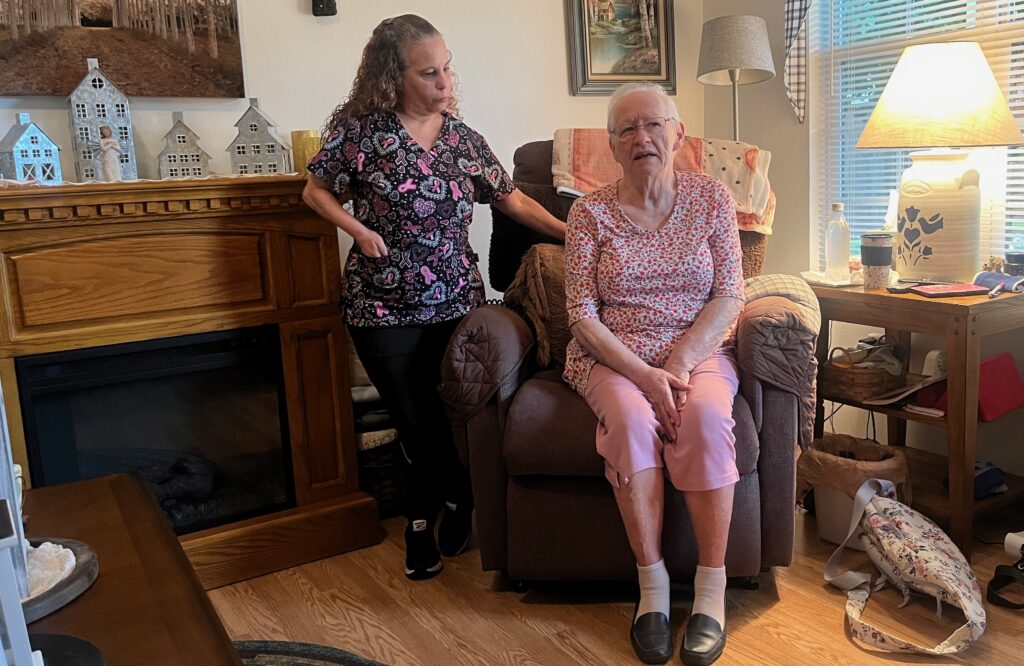
WILMINGTON, Ohio — From her recliner in her tidy townhouse, Donna Logan offers advice to the first baby boomers to hit the big ‘8-0’ this year: Life can be good, especially with someone like Helen Aponte helping with laundry and…

Last updated:
Key points
States Boost In-Home Caregiver Pay as Senior
- About 10,000 baby boomers turn 80 each day, driving a nationwide demand for more than 5 million home care aides by 2034.
- States including Ohio, Texas, New York, and California have raised caregiver wage baselines to recruit and retain workers amid tightening labor supplies.
- Local county levies and community-based aging agencies provide a cost-effective alternative to institutional care by funding in-home assistance for daily living.
WILMINGTON, Ohio NewsWK — As millions of American seniors enter their eighties, communities across the country are facing a pressing economic and demographic challenge: ensuring an adequate workforce of in-home caregivers so older adults can remain independent in their own residences rather than entering costly institutional facilities.
The demographic shift is accelerating rapidly. The baby boomer generation, comprising roughly 65 million Americans born between 1946 and 1964, has begun reaching age 80 at a rate of approximately 10,000 individuals per day. Federal forecasts indicate that by 2030, Americans aged 65 and older will outnumber children under 18. This significant shift is placing heightened demands on non-medical home care providers, who assist elderly residents with essential daily tasks such as housekeeping, meal preparation, transportation, and errands.
Why it matters here
For families and local taxpayers across the country, home care represents both a vital quality-of-life support and a fiscally responsible alternative to institutionalization. Nursing home care can cost thousands of dollars per month, often depleting family savings before shifting the financial burden onto taxpayer-funded Medicaid programs. When seniors can remain in their homes with modest part-time assistance, public costs remain significantly lower, while older citizens preserve their personal autonomy and stay active in their local neighborhoods.
However, securing qualified workers has grown increasingly difficult. Federal data from the U.S. Bureau of Labor Statistics showed the national median wage for home care aides stood at $16.78 per hour, or roughly $34,900 annually, in 2024. The demanding nature of the work, paired with competitive entry-level wages in other sectors, has contributed to a national labor shortage. While the United States currently employs approximately 4.3 million home care aides, federal workforce projections estimate that more than 5 million will be required by 2034.
State-Level Wage Adjustments and Budget Pressures
To address staffing shortages and maintain an adequate labor pool, several state legislatures and local governments have moved to lift reimbursement rates and baseline wages for home care workers within their Medicaid programs and local assistance initiatives.
- Ohio: State lawmakers approved pay increases that brought the average wage for Medicaid-funded home care aides to $16 per hour in 2025, up from previous base levels, supported by collaborative efforts between regional aging councils and state officials.
- California: The statewide baseline rose to $16.90 per hour, matching the state minimum wage, with regional adjustments pushing the rate to $19.64 per hour in Los Angeles County.
- New York: Hourly compensation was adjusted to $19.65 in New York City, Long Island, and Westchester County, and $18.65 across the remainder of the state.
- Illinois and Texas: Illinois increased state-supported caregiver rates to $18.75 per hour, while Texas adjusted its baseline from $10.60 to $13.00 per hour.
Ursel McElroy, director of the Ohio Department of Aging, pointed out the structural nature of the challenge facing states: “Our health care is a triumph of human ingenuity, but while we’re living longer, we’re spending more years in less than good health.”
Local Solutions and the Path Forward
Beyond state-run Medicaid systems, many seniors rely on locally funded programs administered through the nationwide network of more than 600 area agencies on aging, established under the Older Americans Act of 1965. In numerous jurisdictions, county-level property tax levies specifically fund senior service programs that directly subsidize non-medical home aides for residents who do not qualify for low-income federal assistance but still require a helping hand.
In southwestern Ohio, for example, the local Council on Aging uses county levy funds to compensate direct-care workers at $15 per hour to assist local seniors. Donna Logan, an 81-year-old resident of Wilmington, Ohio, utilizes weekly home visits for housekeeping and transportation, allowing her to stay in her townhouse rather than moving into a managed facility or relocating with family. Logan noted that “having Helen come in once a week gives me confidence.”
As federal fiscal constraints and statutory spending caps scheduled for 2027 put pressure on state budgets, policymakers at the state and county levels are increasingly looking to flexible, locally driven solutions to sustain home care workforces. By ensuring competitive wages and supporting targeted local assistance levies, communities aim to preserve affordable care models that respect the independence of aging citizens while protecting public resources.
This article was produced with the assistance of AI and reviewed by our editorial team.
Sources
Related: States Train Private Landowners to Clear Forest Overgrowth as Prescribed Burning Gains Ground
Related: Federal Measure Targets Double Taxation on Remote Workers Across the United States
Related: Fighting Fire with Fire: How One Small Town Is Shielding Itself from Catastrophic Wildfire
Related: Cities Deploy AI to Slash Building Permit Delays and Cut Red Tape for Homebuilders
Related: New Research Shows Mice, Not Deer, Drive Lyme Disease Surges Across the Country
Related: NewsWK App now available for Iphone and Android Users
Related: News That Works
Related: Two Gulf Breeze Residents Arrested on Animal Cruelty Charges in Santa Rosa County
Related: Pregnancy Resource Centers Free Services Provide Vital Aid to Families Across Nation, Report Shows
See a typo? Report it here.